
Discreet, removable orthodontic treatment for adults and teens who want to straighten their teeth without visible brackets.
At Dental Implants & Cosmetics, aligner treatment begins with an honest assessment of what clear aligners can and cannot achieve for your specific case. We match the treatment to your goals.
Serving patients from Plantation, Fort Lauderdale, Davie, Weston, Sunrise, and across Broward County.
Precision tooth movement,
without the hardware
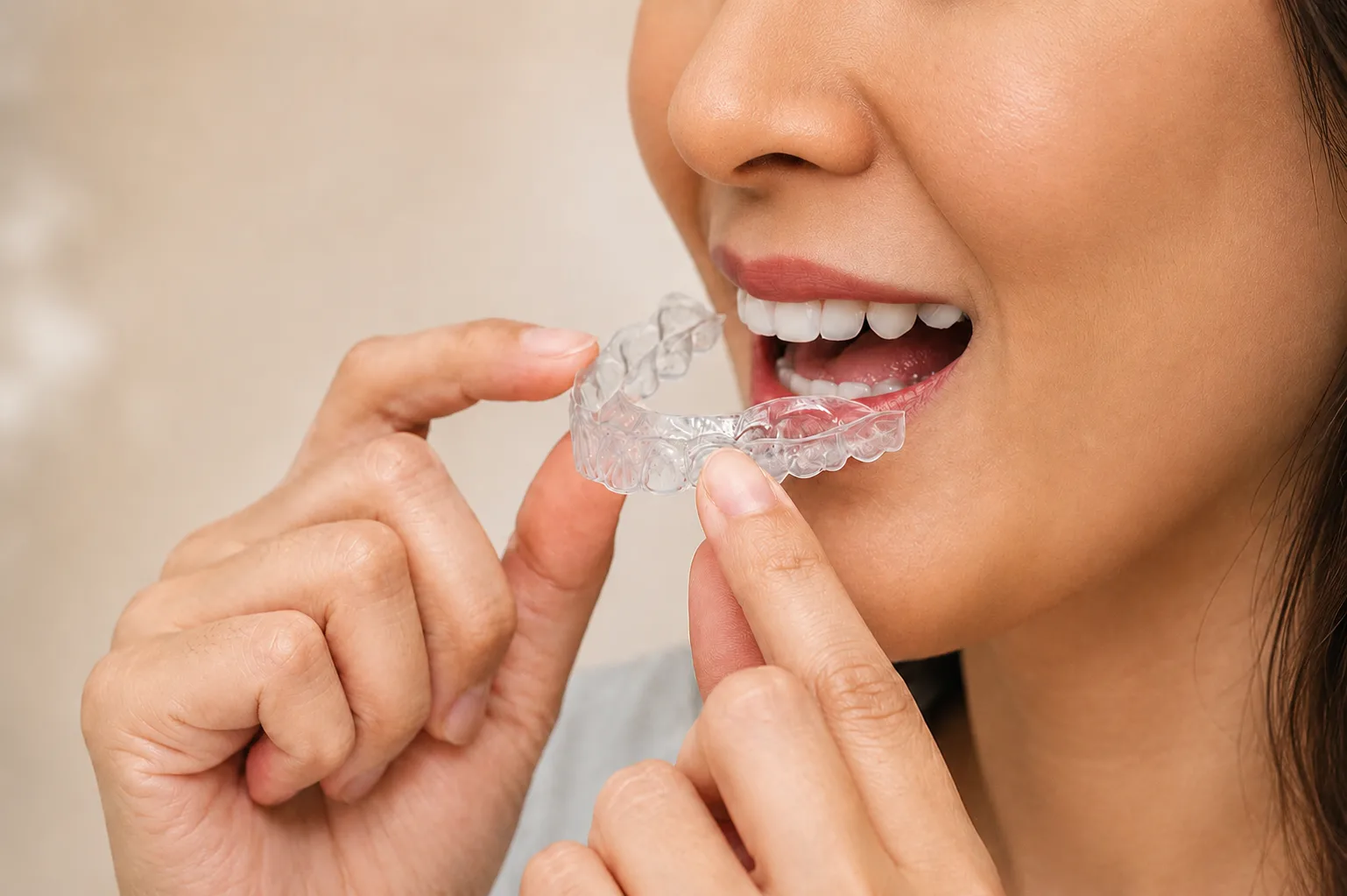
Clear aligners are a series of custom fabricated, removable trays that apply controlled pressure to move teeth incrementally toward a planned final position. Each tray in the series represents a small step in the overall movement plan.
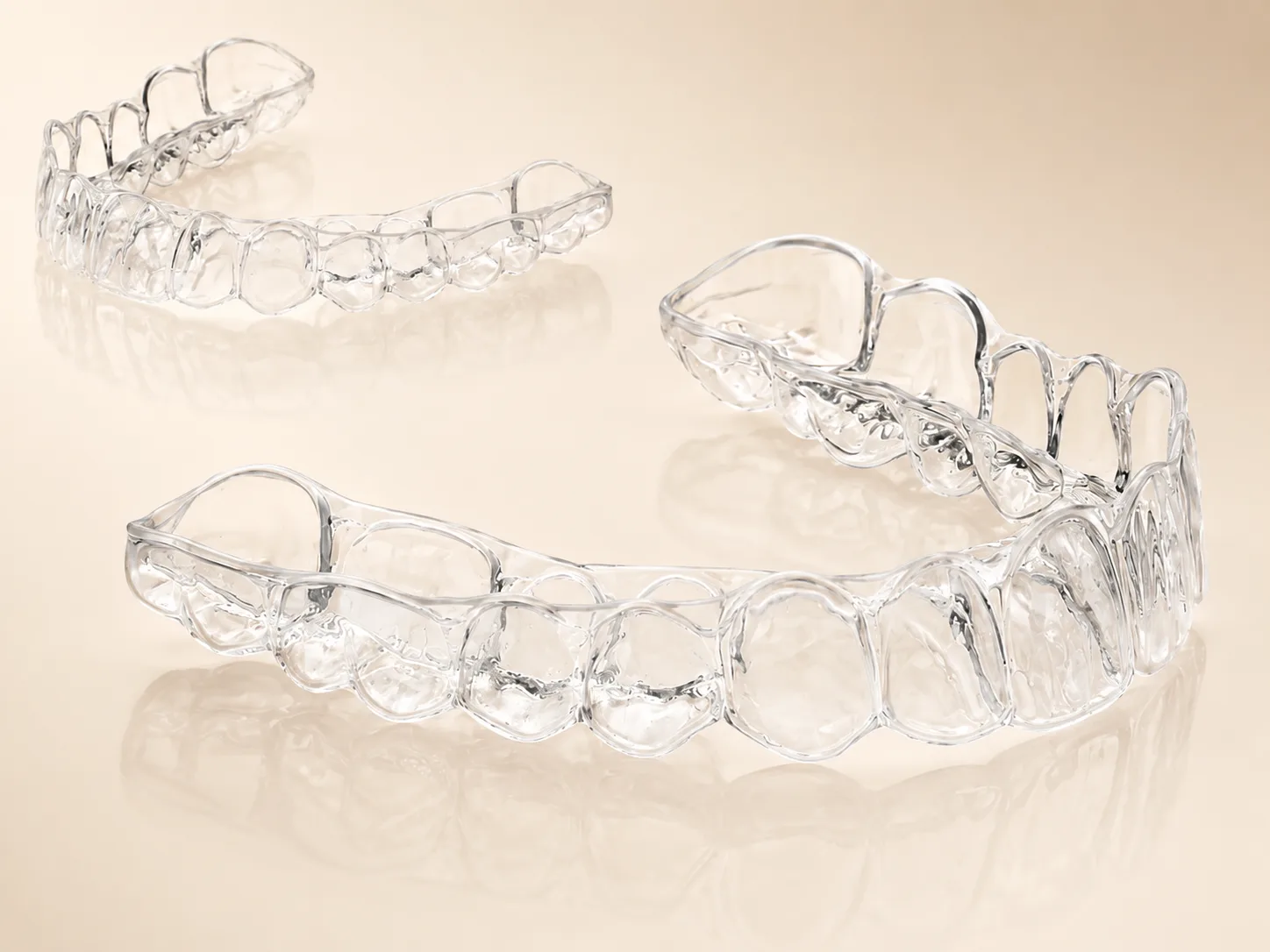
The trays are made from smooth, clear plastic and fit snugly over the teeth. They are nearly invisible when worn and can be removed for eating, brushing, and flossing. This makes daily life more comfortable and hygiene significantly easier than fixed bracket treatment.
Effectiveness depends heavily on consistent wear. Aligners that are not worn for the recommended daily hours do not move teeth as planned. We discuss compliance expectations clearly at your first appointment so there are no surprises during treatment.
Conditions that
respond well to aligners
Clear aligners are effective for many common orthodontic situations. Candidacy is confirmed by evaluation and digital scan rather than assumed from a description of your concern.
Crowding
When teeth overlap or rotate due to insufficient arch space, aligners can expand and reorganize tooth position over time. The extent of crowding that can be treated depends on the degree of misalignment and the case plan.
Spacing and gaps
Gaps between teeth, including diastemas between the front teeth, are among the more straightforward conditions for aligner treatment. Spacing is typically closed by moving adjacent teeth together across the gap.
Mild to moderate overbite
An overbite where the upper teeth close significantly over the lower teeth can affect bite function and tooth wear over time. Aligners can address many overbite cases, though severe cases may require additional or alternative approaches.
Underbite in selected cases
Some underbite cases, where the lower teeth sit in front of the upper teeth when biting, can be managed with aligners. Severity and underlying jaw structure determine whether aligners are appropriate.
Crossbite
When some upper teeth sit inside the lower teeth when biting, a crossbite is present. Mild crossbite cases often respond well to aligner treatment, particularly when the cause is tooth position rather than jaw structure.
Crowding after previous orthodontic treatment
Teeth that have shifted following prior orthodontic work are a very common application for aligners. Many adults seek treatment specifically to address changes that developed after a period without retainer use.
From first scan
to lasting result
Aligner treatment follows a clear sequence. Each step is explained before treatment begins so you understand what to expect at every stage.
Consultation and digital scan
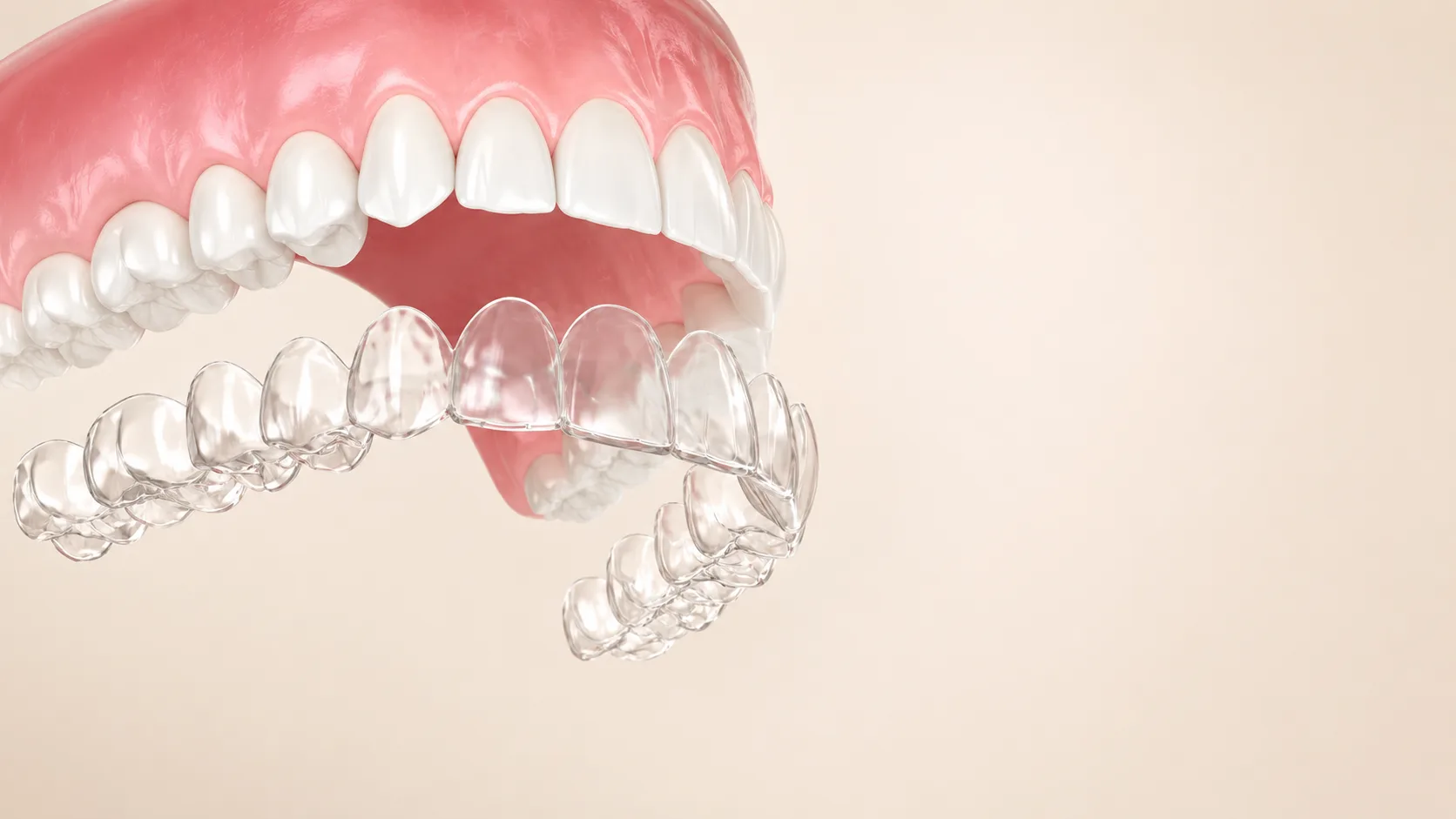
We evaluate your teeth, bite, and overall dental health to determine whether aligners are the appropriate treatment. A digital scan captures the precise position of your teeth to model tooth movement and generate your treatment plan.
Treatment plan review
Before aligners are ordered, the projected tooth movement is shown and reviewed with you. You see the expected outcome and the planned sequence of movements. Treatment does not begin until the plan is agreed upon.
Aligner delivery and attachments
Your first set of aligners is delivered along with any small tooth colored attachments that may be needed to guide specific movements. We review how to insert, remove, and care for your aligners at this appointment.
Progress through the series
Aligners are worn consistently, typically 20 to 22 hours per day, and advanced through the series on a schedule. Regular check in appointments confirm that teeth are tracking as planned and allow for any needed adjustments.
Retainers and long term stability
After the active treatment phase, retainers maintain the achieved tooth position. Without consistent retainer use, teeth tend to drift back toward their original position over time. We discuss long term retention at the start of treatment, not just at the end.
Two orthodontic paths,
different strengths
Visibility
Nearly invisible when worn
Removability
Removed for eating, brushing, and flossing
Comfort
Smooth plastic with no wire irritation
Complex movements
Very effective for many cases; some limitations
Compliance requirement
Requires consistent wear, typically 20 to 22 hours per day
Office visits
Less frequent, typically every 6 to 8 weeks
Visibility
Metal brackets and wires visible
Removability
Fixed in place throughout treatment
Comfort
Potential for bracket and wire discomfort
Complex movements
More control for certain complex movements
Compliance requirement
No compliance required for basic treatment
Office visits
More frequent adjustment appointments
Clear aligner questions,
answered honestly
Can clear aligners treat more than minor cosmetic spacing?
Often yes. Clear aligners can treat crowding, spacing, and many bite related issues including mild to moderate overbites, crossbites, and underbites. The right approach depends on case complexity, compliance, and treatment goals. A digital scan and evaluation establish what is achievable in your specific case.
Are aligners better than braces?
Neither is universally better. Aligners offer discretion, removability, and comfort advantages. Braces provide more precise control over certain complex tooth movements and do not depend on patient compliance for wear. The right choice depends on your specific situation, goals, and willingness to manage the compliance requirement.
How many hours per day do I need to wear aligners?
Most aligner systems recommend 20 to 22 hours per day for optimal tooth movement. Consistent wear is essential. Patients who wear aligners fewer hours than recommended often find that their teeth do not track as planned, extending treatment or requiring correction.
What are attachments and do I need them?
Attachments are small tooth colored composites bonded to specific teeth to help aligners grip and guide precise movements. Not all cases require them, but many do. We explain which teeth will have attachments and what to expect before treatment begins.
Will my teeth stay straight after aligners?
Teeth are held in position by the surrounding tissue, which tends to want to return teeth toward their original position over time. Consistent retainer use after treatment is the primary factor in maintaining results. We discuss the retention plan at the start of treatment.
Clear aligners in
Plantation, Florida
Located in Plantation, Florida, Dental Implants & Cosmetics serves patients from Fort Lauderdale, Davie, Weston, Sunrise, Coral Springs, and across Broward County. Aligner consultations begin with a digital scan and an honest assessment of what treatment can realistically achieve for your case.



Your smile has a story.
Let's design
what comes next.
Begin with a private consultation designed to help you understand your options clearly and confidently with no pressure and no obligation.