
Cause based evaluation and treatment for bruxism, jaw clenching, and the dental damage that follows.
Serving patients from Plantation, Fort Lauderdale, Davie, Weston, Sunrise, and across Broward County.
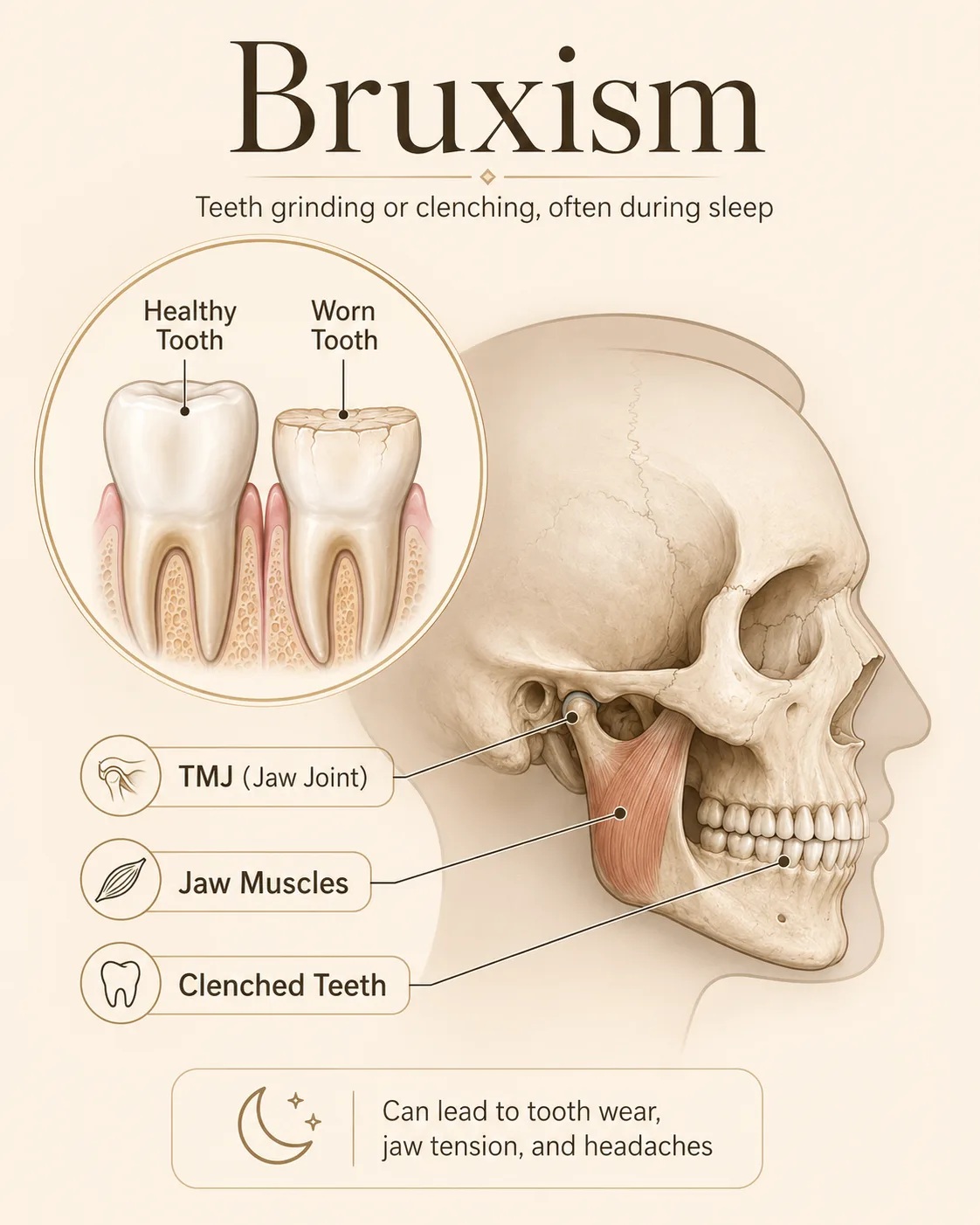
More than a habit,
less simple than it sounds
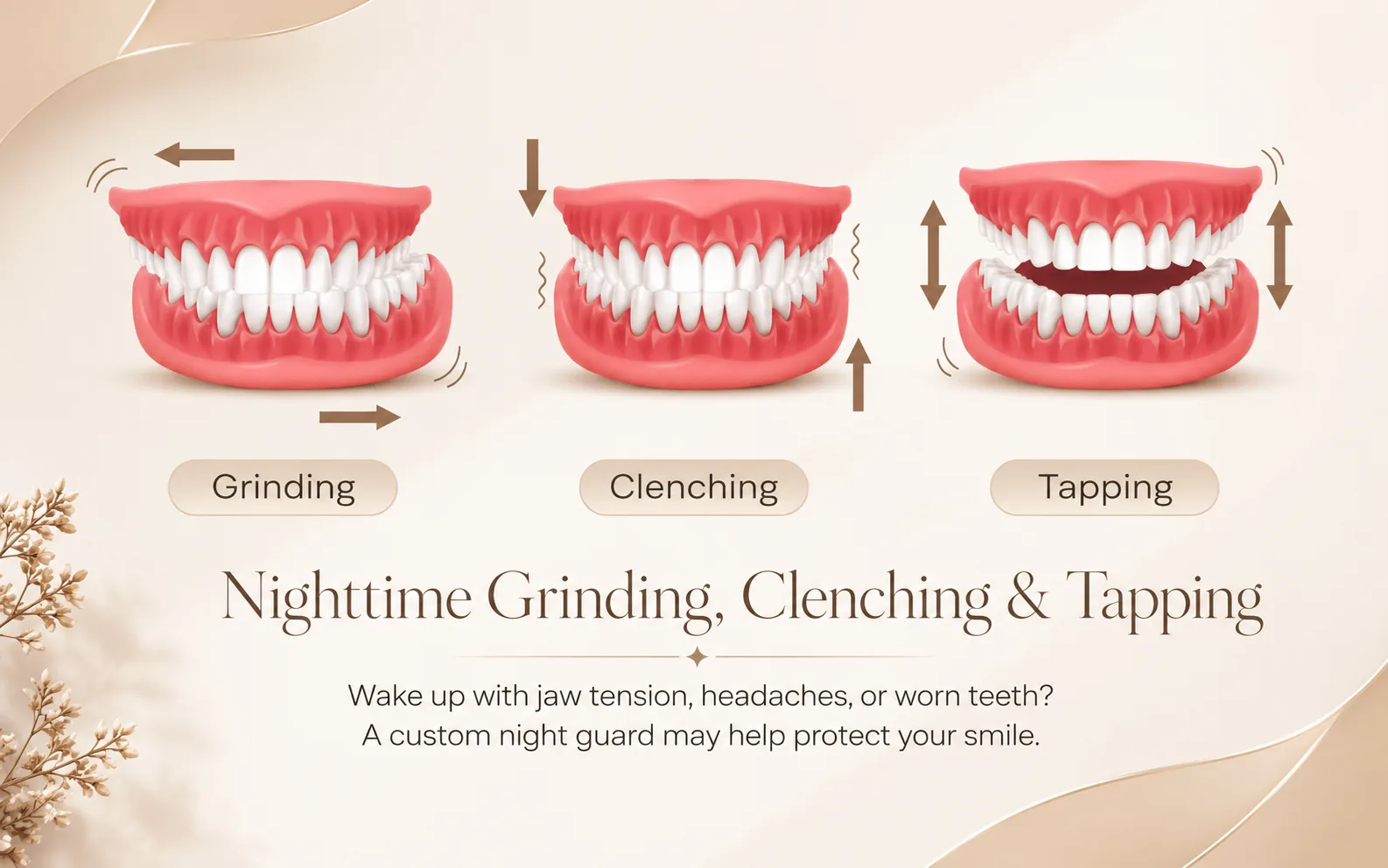
Teeth grinding, clinically called bruxism, refers to the unconscious habit of grinding or clenching the teeth during sleep or, in some cases, during the day. The forces involved often exceed those generated during normal chewing and are sustained for much longer periods.
This matters because enamel is not self replacing. Every grinding episode removes a small amount of structure that cannot grow back. Over months and years, this adds up to real damage that affects the appearance, sensitivity, and structural integrity of teeth.
Effective management starts with understanding what is driving the grinding, not just placing a guard and moving on. We evaluate the full picture at your appointment.
Signs your teeth
may be under stress at night
Many patients are unaware they grind their teeth until damage becomes visible or symptoms become difficult to ignore. These indicators often appear before the habit causes serious structural problems.
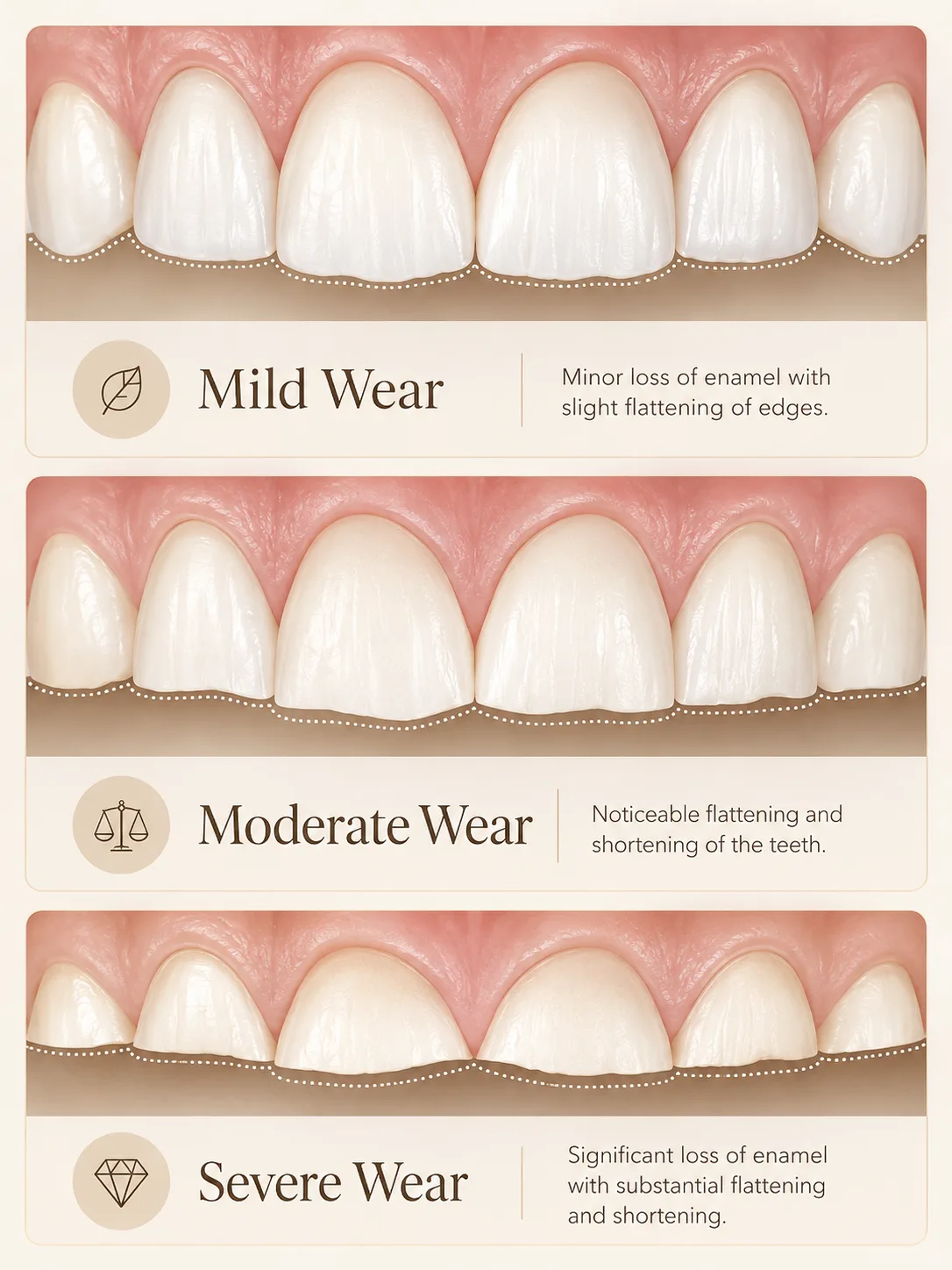
Worn or shortened teeth
Grinding erodes tooth enamel progressively. Teeth that look shorter, flatter, or shinier than they used to are showing the effects of repeated contact under pressure.
Morning jaw pain or soreness
Jaw muscles that clench and grind during sleep often feel tired, sore, or tense when you wake. This is muscular fatigue from hours of low level activation during the night.
Headaches upon waking
Tension from sustained jaw clenching can radiate to the temples, forehead, and neck. These headaches are often mistaken for unrelated tension or stress headaches.
Tooth sensitivity without decay
As enamel wears, the underlying dentin becomes exposed. Dentin responds to temperature changes and sweet or acidic foods with sensitivity, even without any cavity present.
Cracked or fractured restorations
Crowns, veneers, and fillings that fracture without explanation are often victims of repeated grinding forces that exceed what the material is designed to sustain.
Jaw joint clicking or discomfort
Sustained clenching and grinding can place excessive load on the temporomandibular joints, sometimes producing clicking, popping, or limited jaw opening over time.
What drives grinding,
case by case
Bruxism rarely has a single cause. Understanding the factors involved in your specific pattern shapes what treatment beyond a night guard may be appropriate.
Stress and psychological factors
Emotional stress is one of the most commonly identified contributing factors. Many patients grind more during high stress periods and less when stress is managed. The relationship is real but not universal.
Sleep disorders
Bruxism is more common in people with sleep apnea and other sleep related disorders. In some cases, treating the sleep disorder has a meaningful effect on grinding frequency. This connection warrants evaluation in patients with relevant symptoms.
Bite imbalance
Teeth that do not contact evenly, or that have shifted after extractions or restorations, can create an imbalance the jaw compensates for through grinding or clenching. Bite evaluation is part of the bruxism workup.
Certain medications
Some medications, particularly SSRIs used to treat anxiety and depression, are associated with increased bruxism as a side effect. If grinding began or worsened after a medication change, this is worth noting at your evaluation.
Habits and stimulants
Caffeine, alcohol, and tobacco have been associated with increased bruxism in some research. Daytime clenching habits, including jaw clenching during concentration or physical effort, can also be part of the pattern.
Teeth grinding questions,
answered clearly
Teeth grinding treatment in
Plantation, Florida
Located in Plantation, Florida, Dental Implants & Cosmetics serves patients from Fort Lauderdale, Davie, Weston, Sunrise, Coral Springs, and across Broward County. Bruxism evaluations include a full assessment of wear patterns, bite, and contributing factors before any treatment is recommended.



Your smile has a story.
Let's design
what comes next.
Begin with a private consultation designed to help you understand your options clearly and confidently with no pressure and no obligation.