
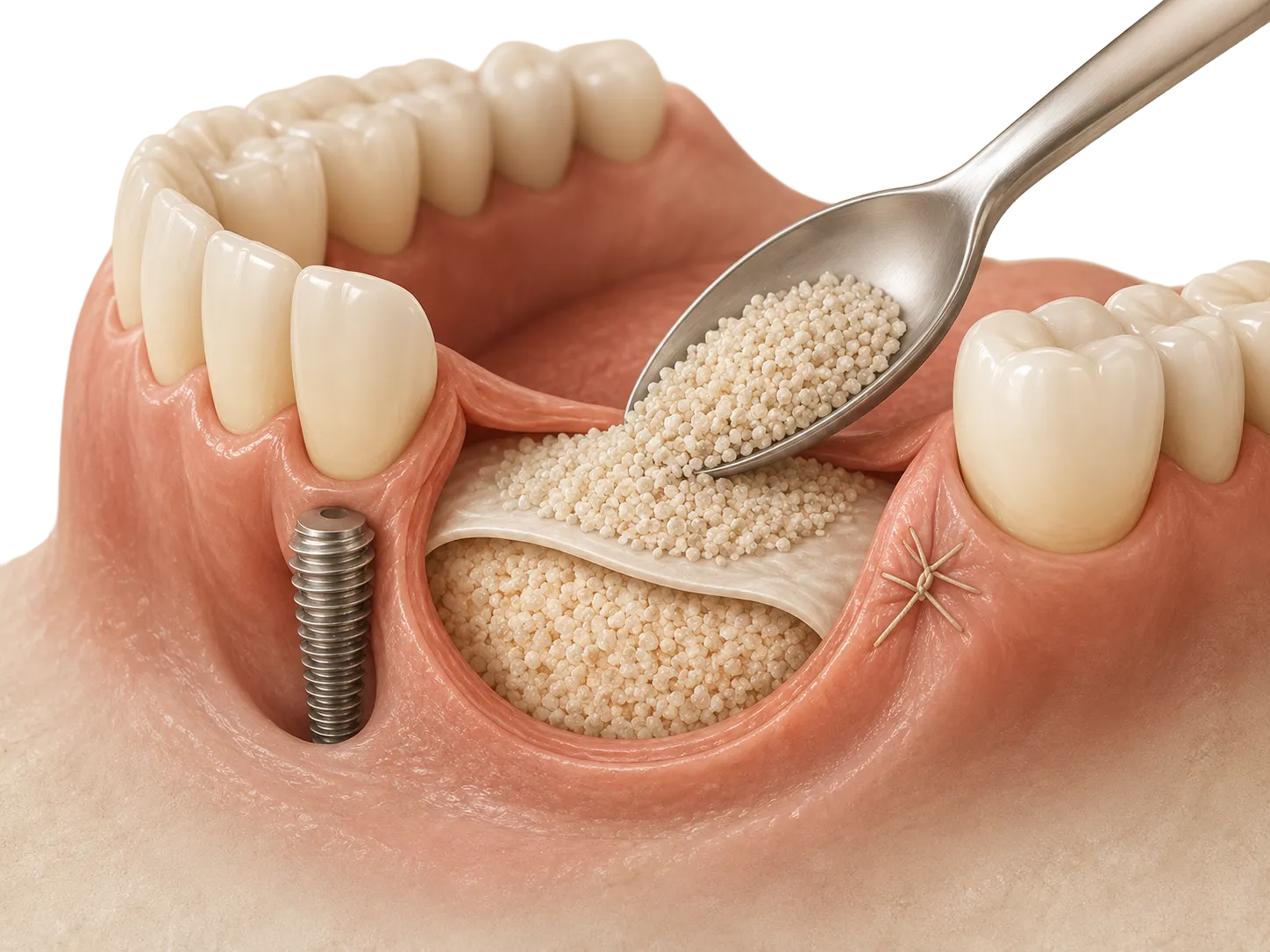
Rebuilding the foundation that makes dental implants possible.
Serving patients from Plantation, Fort Lauderdale, Davie, Weston, Sunrise, and across Broward County.
When the jaw no longer
has enough to work with
Jawbone is maintained by the presence and function of natural tooth roots. When teeth are lost, the bone that once surrounded those roots begins to resorb. This process begins within weeks of extraction and continues gradually over months and years.
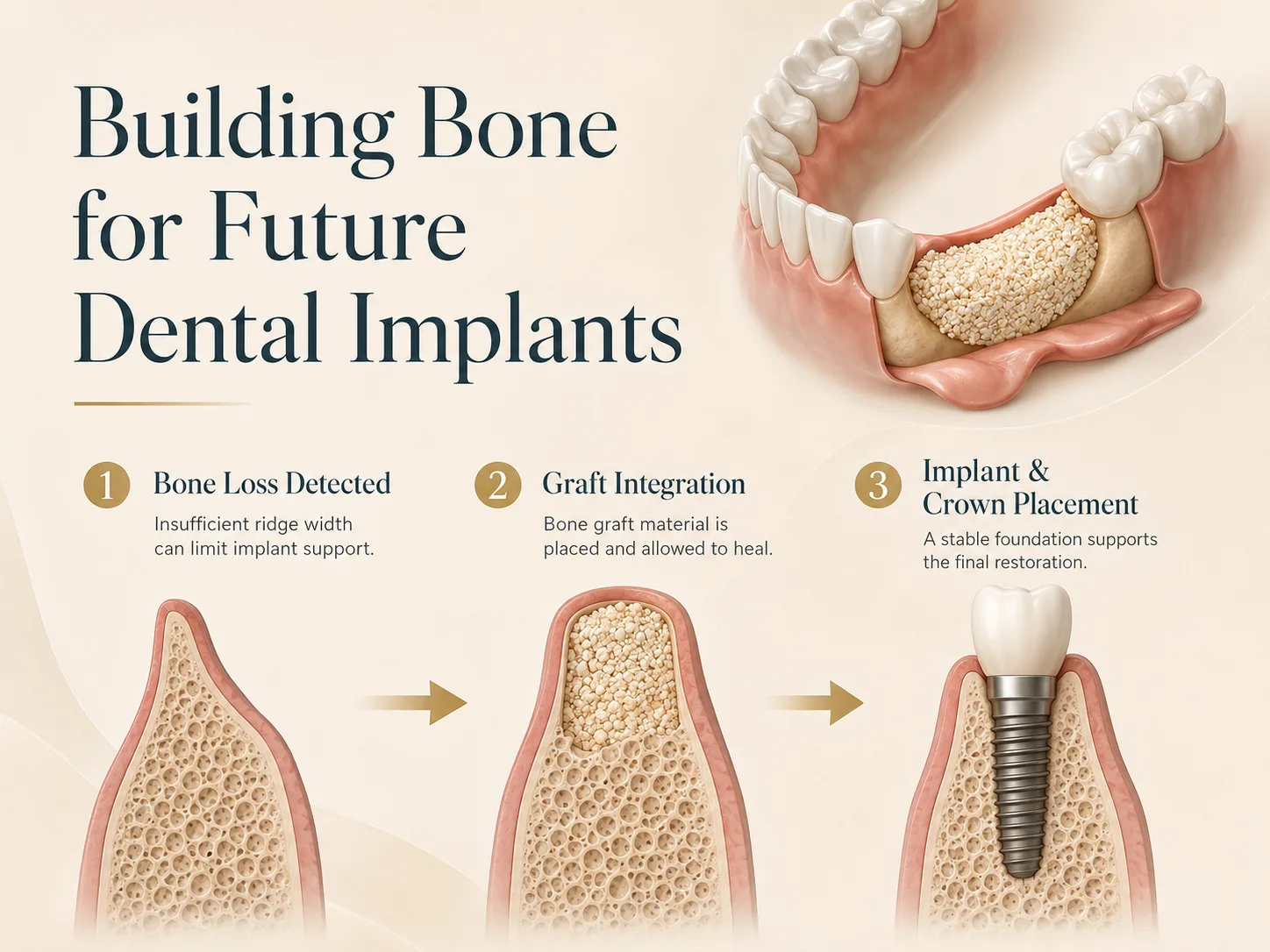
Dental implants require adequate bone volume to be placed safely and predictably. When that volume has been lost, bone grafting creates the foundation needed for implants to succeed. The procedure deposits graft material that the body incorporates into new bone over the healing period.
Not every implant patient needs bone grafting. Whether it is needed depends on imaging, clinical evaluation, and the specific implant plan. We establish this clearly at your consultation.
When bone grafting
becomes part of the plan
Bone grafting is used in several clinical situations, each with a specific purpose and scope. The appropriate type is determined by your anatomy, the amount of bone that needs to be created, and the implant plan.
Bone loss after tooth extraction
After a tooth is removed, the jawbone at that site begins to resorb because there is no longer a root to stimulate it. Without intervention, this bone loss continues and may make future implant placement difficult or impossible.
Inadequate bone volume for an implant
Implants require a minimum amount of bone height and width to be placed safely and predictably. When the existing bone falls below that threshold, grafting creates the volume needed before implant surgery can proceed.
Socket preservation after extraction
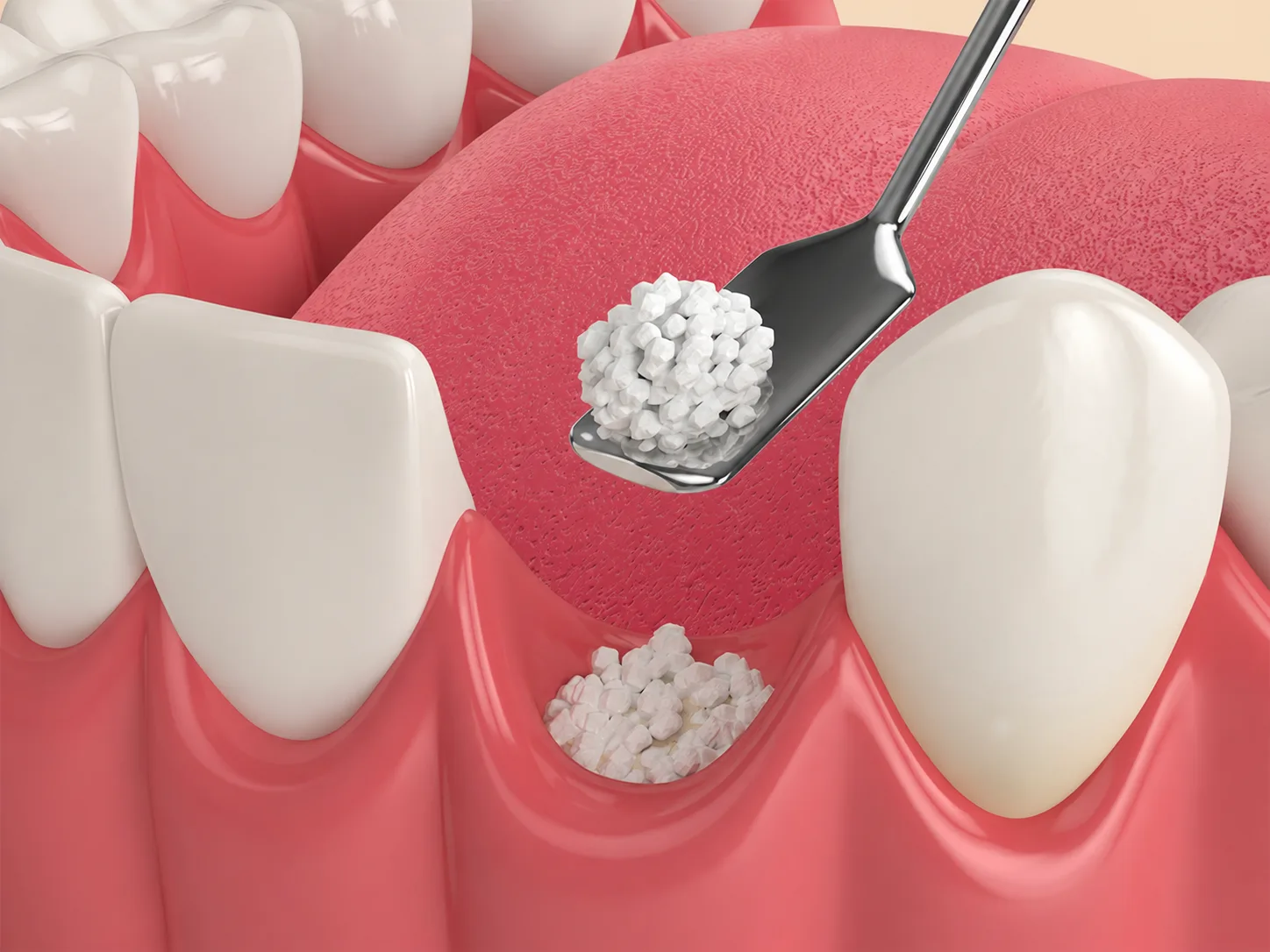
When a tooth is removed, bone graft material can be placed into the socket immediately to reduce the bone loss that would otherwise occur. This preservation approach is simpler and more effective than rebuilding bone that has already resorbed.
Ridge augmentation
When the jawbone ridge has already resorbed significantly, a larger grafting procedure may be needed to rebuild it. This is more involved than socket preservation but makes implant placement possible in patients who would otherwise not be candidates.
Sinus lift
In the upper jaw, the sinus cavity sits just above the posterior teeth. When bone height in this area is insufficient, bone graft material can be placed beneath the sinus membrane to create the vertical space needed for implants.
Full arch and snap on denture preparation
Patients planning full arch implant supported prosthetics, including snap on dentures, sometimes need bone grafting at specific sites to ensure all implants have adequate support for long term stability.
From imaging
to confirmed implant readiness
Bone grafting is a planned, staged process. Each step serves a specific purpose, and the healing phase cannot be accelerated without compromising the result.
CBCT imaging and evaluation
We use three dimensional cone beam imaging to assess bone volume, ridge anatomy, and proximity to adjacent structures. This imaging is essential for determining whether grafting is needed and what type is appropriate.
Graft placement
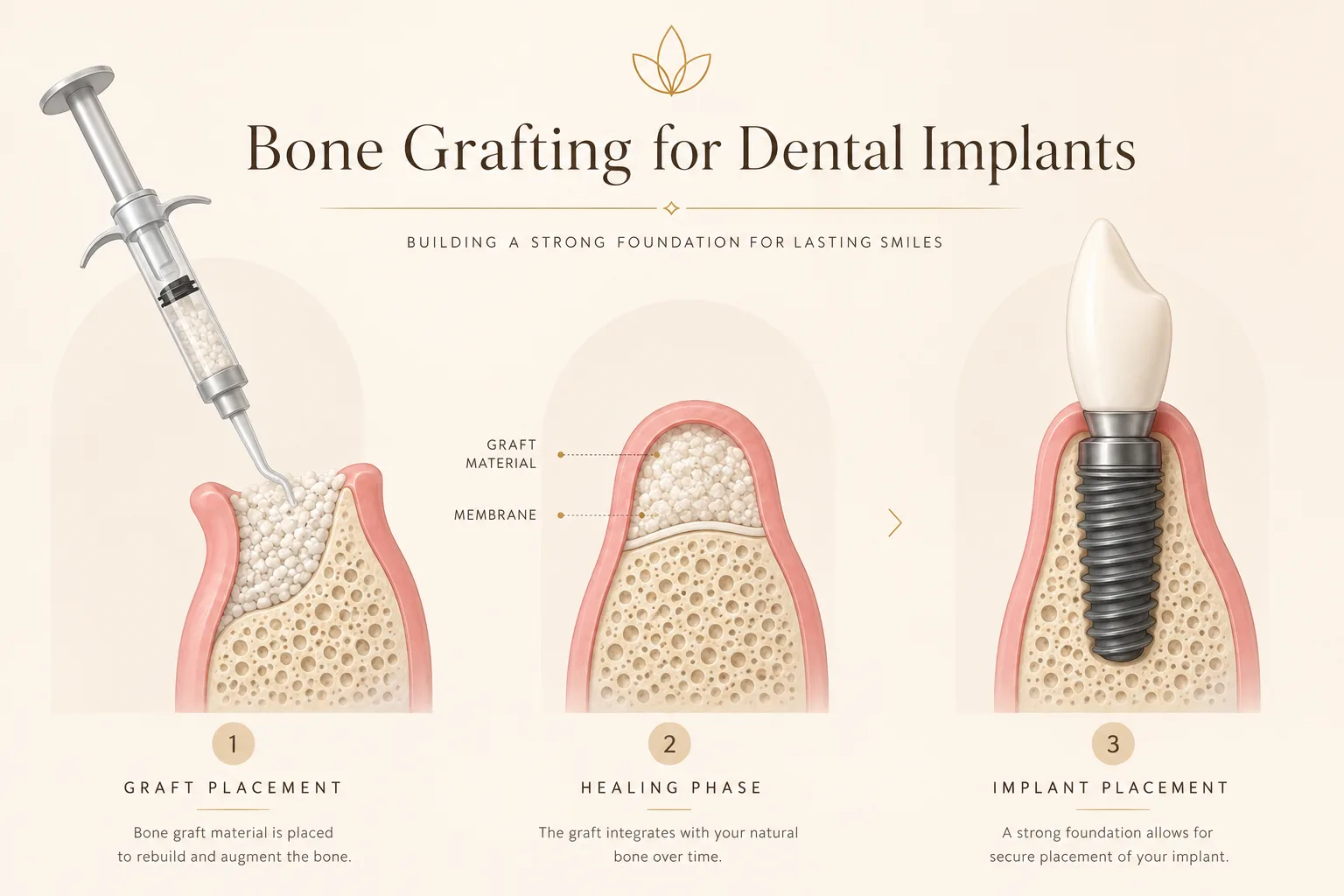
Bone graft material is placed at the treatment site under local anesthesia. Sedation is available. The material may come from a processed bone bank source, synthetic material, or in some cases the patient's own bone depending on the case.
Membrane and closure
In many grafting procedures, a resorbable membrane is placed over the graft to protect it while the body incorporates the material. The site is then sutured closed.
Healing period
The graft integrates with the existing bone over a period of several months. The exact timeline depends on the size of the graft, the patient's healing capacity, and the planned next step. This phase cannot be shortened.
Confirmation and implant placement
After healing, a follow up scan confirms that adequate bone volume has developed. If confirmed, implant surgery proceeds on the established timeline. Rushing this step risks implant failure.
We use three dimensional cone beam imaging to assess bone volume, ridge anatomy, and proximity to adjacent structures. This imaging is essential for determining whether grafting is needed and what type is appropriate.
Bone grafting questions,
answered clearly
Bone grafting in
Plantation, Florida
Located in Plantation, Florida, Dental Implants & Cosmetics serves patients from Fort Lauderdale, Davie, Weston, Sunrise, Coral Springs, and across Broward County. Implant consultations include a full assessment of bone volume and grafting needs before any plan is presented.



Your smile has a story.
Let's design
what comes next.
Begin with a private consultation designed to help you understand your options clearly and confidently with no pressure and no obligation.