
A brighter smile without an artificial look.
Professional teeth whitening at Dental Implants & Cosmetics is designed to refresh your smile safely, naturally, and with guidance from a dental team that understands shade, enamel, and what a good result actually looks like.
Serving patients from Plantation, Fort Lauderdale, Davie, Weston, Sunrise, and all of Broward County.
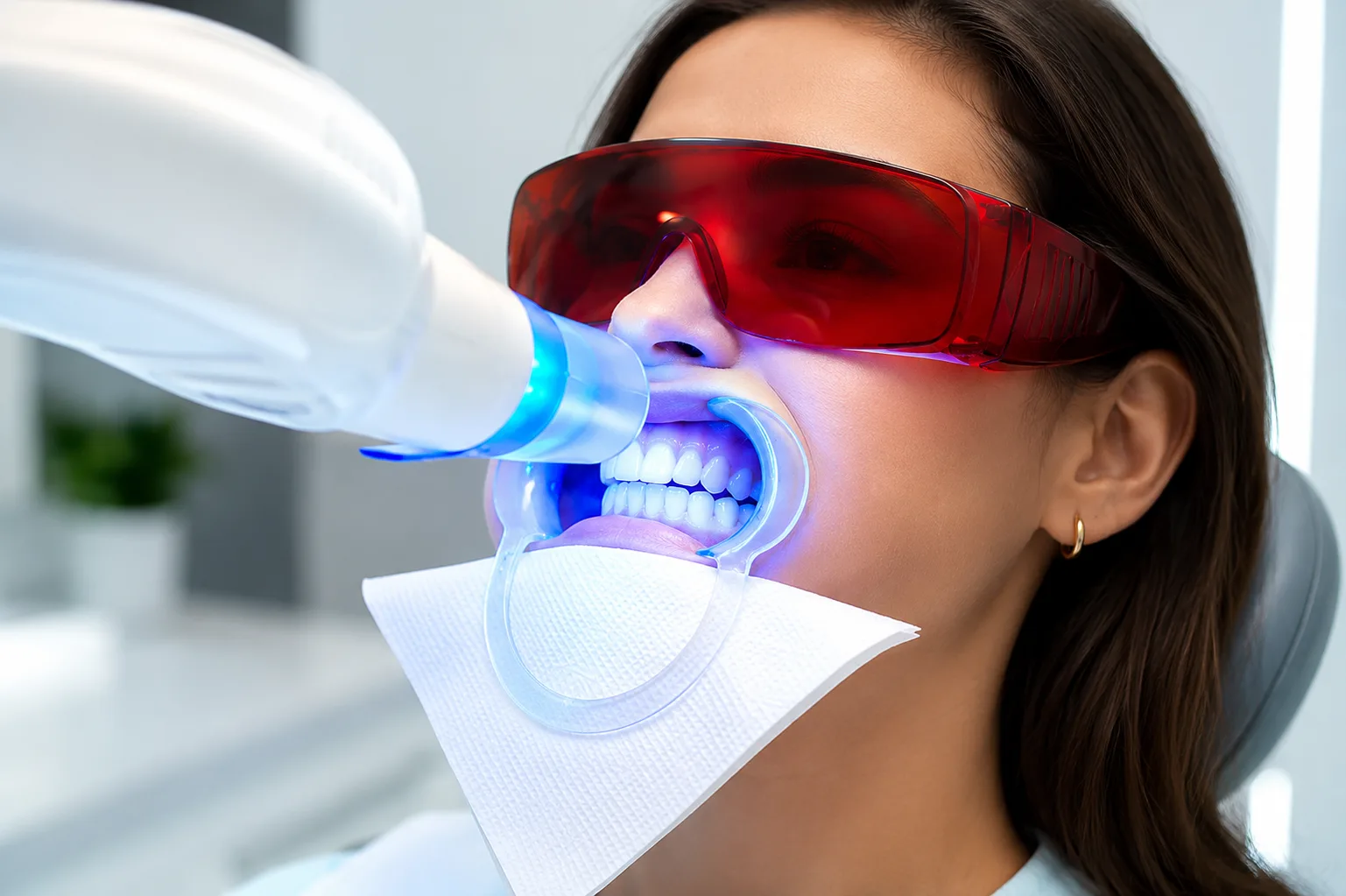
Calibrated for you,
not for the packaging
Over the counter whitening products work for some patients. But they are designed to a general formula, applied without clinical evaluation, and calibrated for a broad market rather than your specific tooth chemistry, enamel condition, and aesthetic goals.
Professional whitening at Dental Implants & Cosmetics is a controlled process. We identify why your teeth are stained, assess the thickness and health of your enamel, and then select the appropriate whitening method and concentration to achieve a predictable result while minimizing sensitivity.
Whether you choose a single in office session for immediate results or custom trays for gradual whitening at home, the treatment is supervised. We are monitoring the progress and ensuring the outcome looks natural and healthy, not artificial.

Why teeth lose
their natural brightness
Understanding the source of discoloration determines whether whitening is the right treatment or if another cosmetic approach will be more effective for your goals.
Coffee, tea, and wine
The chromogens in these beverages bind to enamel proteins and penetrate the outer surface over time, producing yellow to brown discoloration that deepens gradually. These are among the most responsive stain types to professional whitening.
Tobacco and nicotine
Tar and nicotine create particularly stubborn surface stains that penetrate deeply into enamel. Tobacco discoloration often appears yellow to dark brown and requires more aggressive whitening protocols for meaningful results.
Natural aging
As enamel thins with age, the naturally darker dentin beneath becomes more visible. Professional whitening can brighten the enamel layer and significantly improve this type of yellowing in most patients.
Foods with heavy pigment
Berries, tomato-based sauces, curries, and dark condiments all contribute to surface staining over time. Regular staining from food pigments is highly responsive to professional whitening.
Internal staining
Tetracycline antibiotics, fluorosis, and dental trauma can cause staining within the tooth structure itself. Whitening has limited effect on intrinsic stains. For these patients, veneers typically produce a more predictable and satisfying outcome.
Existing dental restorations
Crowns, veneers, bonding, and composite fillings do not respond to whitening agents. If visible restorations sit in the smile zone, they will not change shade, and coordination with any planned replacement is important before whitening.

Who achieves the
most significant improvement?
Surface and extrinsic staining
Patients whose discoloration comes primarily from coffee, tea, wine, and food pigments see the most predictable and significant whitening results with the fewest sessions.
Age-related yellowing
Gradual yellowing from lifestyle habits and natural enamel changes over time responds well to professional whitening in the majority of cases.
Natural teeth without visible restorations
Patients whose visible front teeth are all natural tooth structure achieve the most even whitening result, since restorations do not change shade with bleaching agents.
Healthy gums and adequate enamel
Good periodontal health and sufficient enamel thickness are both prerequisites for safe and comfortable whitening. We confirm this during your evaluation.
Moderate and realistic shade goals
Patients seeking a refreshed, natural looking improvement rather than the whitest possible result tend to be most satisfied with whitening outcomes and longest retain them.
Real patient whitening
results in Plantation
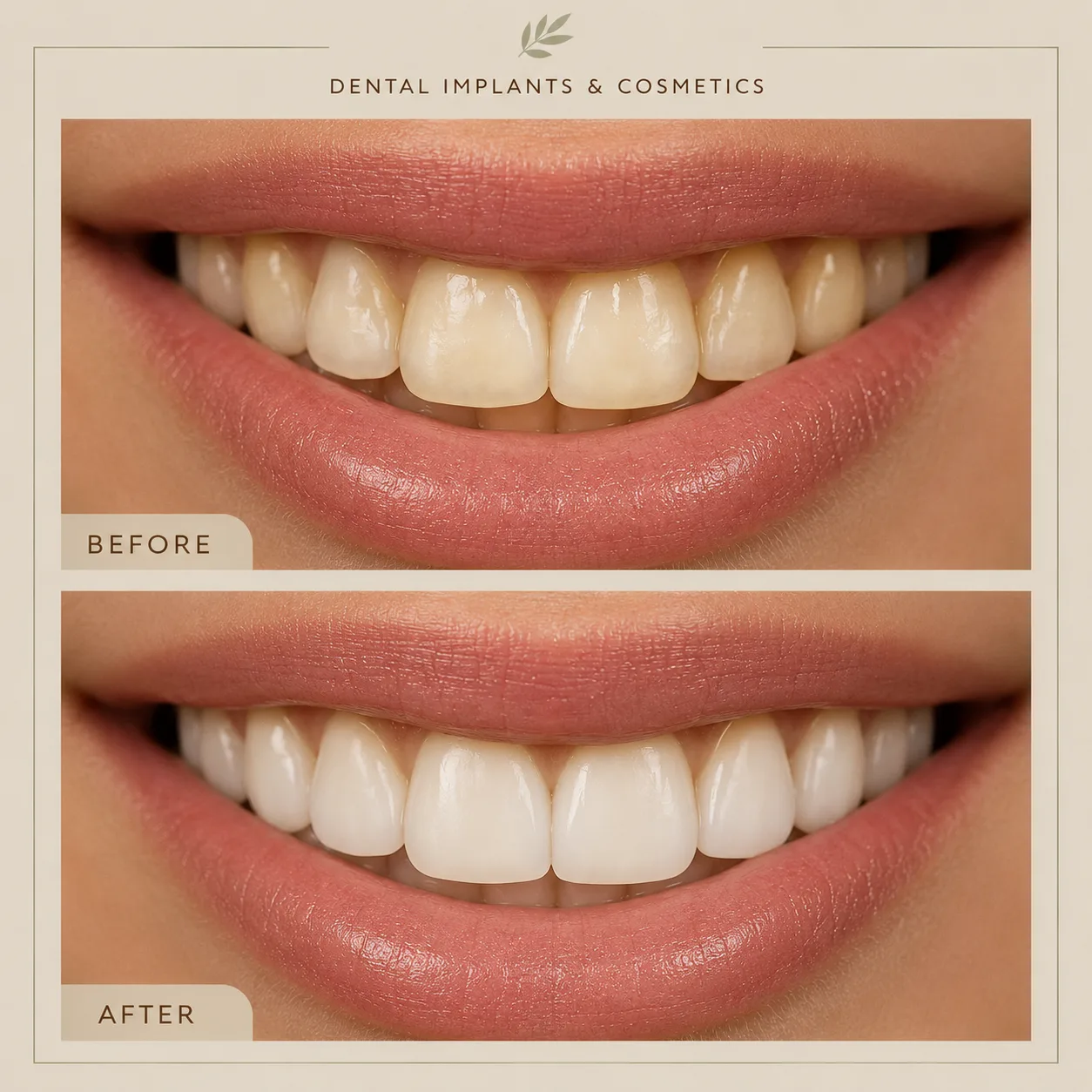
In Office Whitening Result
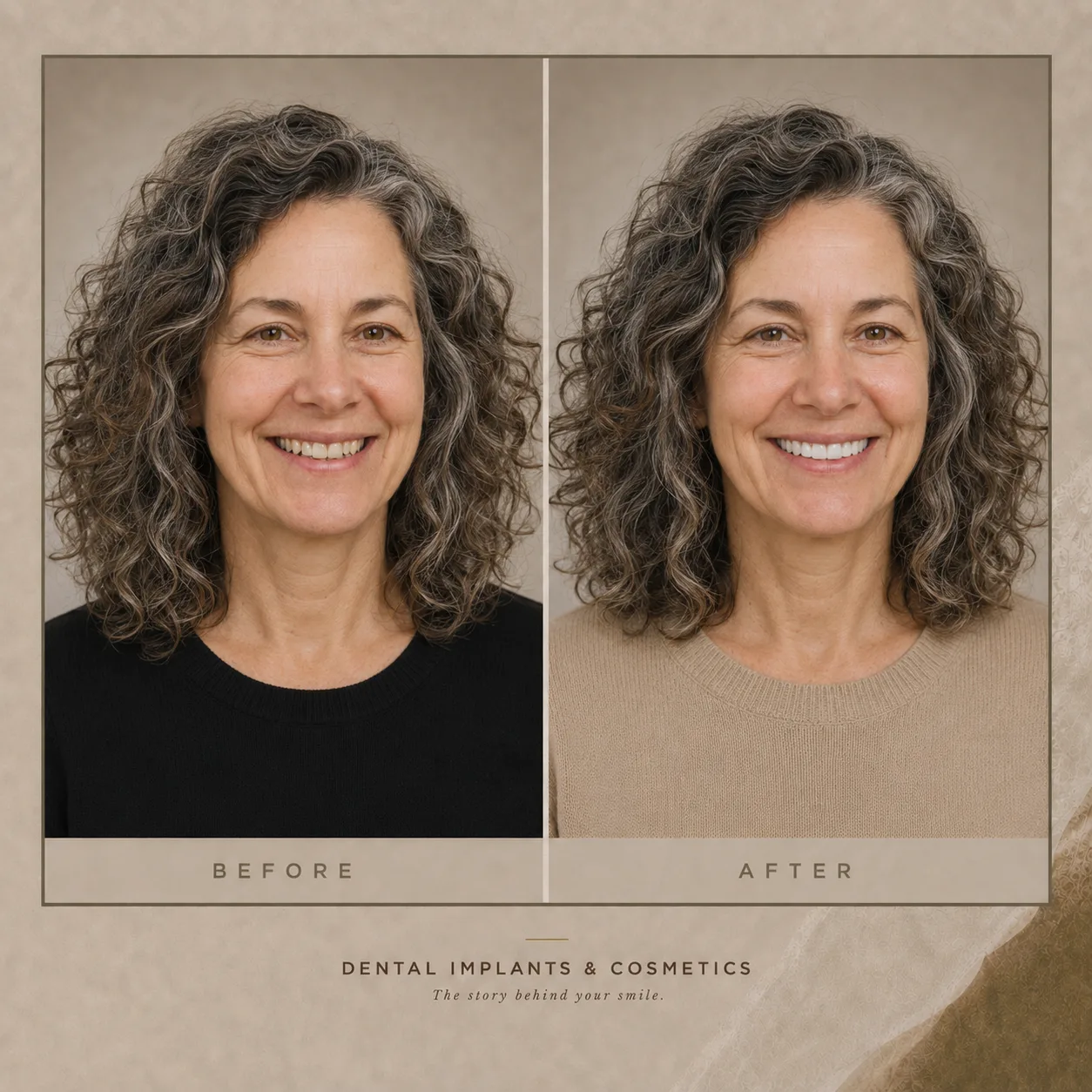
Full Smile Transformation
When whitening
is not enough
We would rather tell you that whitening will not solve your concern than sell you a treatment that will not produce the result you are after. In these situations, veneers, bonding, or a broader cosmetic plan typically produce better outcomes.
Internal or intrinsic staining
Tetracycline discoloration, fluorosis, and trauma-related darkening originate inside the tooth structure. Whitening works on the enamel surface and has limited or no effect on these deeper stains. Veneers often produce better outcomes for these patients.
Visible restorations that will not match
Bleaching agents do not change the color of crowns, veneers, bonding, or tooth colored fillings. If whitening only the natural teeth creates a mismatch with existing work, a coordinated approach involving restoration replacement is needed.
Shape or size concerns alongside discoloration
Whitening corrects color only. If chips, uneven edges, gaps, or proportion concerns are also present, bonding or veneers can address color and shape simultaneously in a single coordinated plan.
Severely dark or resistant baseline
Some teeth have inherently resistant enamel or very deep staining that limits achievable results. We assess this during your evaluation and will tell you honestly what whitening can and cannot produce for your specific case.
A goal of transformation rather than refinement
Whitening improves your existing smile. It does not redesign it. Patients seeking meaningful changes in shape, size, or a dramatic color shift achieve better outcomes with veneers or a comprehensive smile makeover.
Whitening compared
to similar treatments
Teeth Whitening vs Porcelain Veneers
Treatment type
Bleaching agent
Tooth alteration
None
What it addresses
Color only
Timeline
Single session or 1 to 2 weeks at home
Reversibility
Fully reversible
Best for
Extrinsic staining, moderate goals
Treatment type
Custom porcelain shells bonded to teeth
Tooth alteration
Small preparation usually required
What it addresses
Color, shape, size, and texture
Timeline
Multiple appointments over several weeks
Reversibility
Not reversible
Best for
Multiple concerns, lasting redesign
Teeth Whitening vs Cosmetic Bonding
Treatment type
Bleaching agent
Tooth alteration
None
What it addresses
Color only
Application
Whole visible smile treated together
Timeline
Hours to days
Best for
Extrinsic staining across multiple teeth
Treatment type
Composite resin shaped and bonded to tooth
Tooth alteration
Minimal contouring sometimes needed
What it addresses
Color and minor shape refinement
Application
Can be applied to a single tooth
Timeline
Single appointment
Best for
Chip repair, small gaps, isolated correction
What to expect,
stated plainly
Tooth sensitivity during or after whitening is common. It is caused by the whitening agent temporarily opening enamel pores, which can make teeth more reactive to temperature for a period after treatment. This typically resolves within 24 to 48 hours.
For patients with existing sensitivity, we offer lower concentration protocols, shorter treatment sessions, and desensitizing agents applied before or after whitening. Most patients with moderate sensitivity can be treated comfortably with some protocol adjustment.
Professional whitening does not damage enamel when performed at appropriate concentrations with adequate clinical supervision. We assess your enamel condition before recommending any whitening protocol.
Sensitivity is a normal, temporary part of whitening for many patients. It is not a sign of damage, and it does not mean the treatment was too strong. It means the enamel is doing what it normally does in response to the whitening agent.
Gum sensitivity is a separate concern, typically caused by gel contact with the soft tissue. Custom trays fabricated to your teeth minimize this substantially compared to over-the-counter strip-style products.
If you have known sensitivity concerns, let us know before your appointment so we can plan accordingly.
How to keep your
whitening results longer
Whitening results are not permanent, but they can be maintained well with the right habits. These five steps represent the most effective approach to protecting your result over time.
Schedule periodic touch-up treatment
Whitening results fade gradually with lifestyle habits. A touch-up session every 6 to 12 months, depending on how quickly your teeth restain, keeps the result looking its best without over-whitening.
Protect results in the first 48 hours
The first two days after whitening are when enamel is most porous and susceptible to re-staining. Avoiding coffee, red wine, berries, and tobacco during this window makes a meaningful difference to longevity.
Keep your custom trays for future maintenance
Custom trays made to your teeth allow for consistent, comfortable maintenance whitening at home. Storing them with whitening gel refills means touch-up treatment is always straightforward.
Attend routine dental cleanings
Professional cleanings remove surface staining and calculus that accumulates between visits, extending the life of your whitening result while supporting overall dental health.
Use a compatible daily toothpaste
A gentle whitening toothpaste helps slow re-staining as part of your daily routine without the abrasiveness of aggressive formulations. Ask at your cleaning appointment for a recommendation.
Whitening results fade gradually with lifestyle habits. A touch-up session every 6 to 12 months, depending on how quickly your teeth restain, keeps the result looking its best without over-whitening.
Teeth whitening cost
in Plantation, FL
Professional teeth whitening cost in Plantation, Florida varies based on whether you choose in office treatment, take home trays, or a combination approach. In office whitening typically involves a single appointment fee. Take home whitening includes the cost of custom tray fabrication and the initial gel supply.
Exact pricing is confirmed during your consultation after your evaluation is complete. We do not recommend a protocol before knowing which approach is appropriate for your case.
Clinical evaluation
included with treatment
Your whitening consultation includes a shade assessment, evaluation of staining type, and a review of your enamel condition and any existing restorations. This is how we confirm whitening is the right approach for you before any treatment begins.
If whitening is not the most appropriate solution for your situation, we will tell you and explain what alternatives would better serve your goals.
Whitening questions,
answered honestly
Teeth whitening in
Plantation, Florida
Located in Plantation, Florida, Dental Implants & Cosmetics serves patients from Fort Lauderdale, Davie, Weston, Sunrise, Coral Springs, and across Broward County. Your whitening consultation includes an honest evaluation of whether whitening is the right treatment for your specific situation.



Your smile has a story.
Let's design
what comes next.
Begin with a private consultation designed to help you understand your options clearly and confidently with no pressure and no obligation.