
Exposing the right amount of tooth structure so restorations fit accurately and smiles look proportionate.
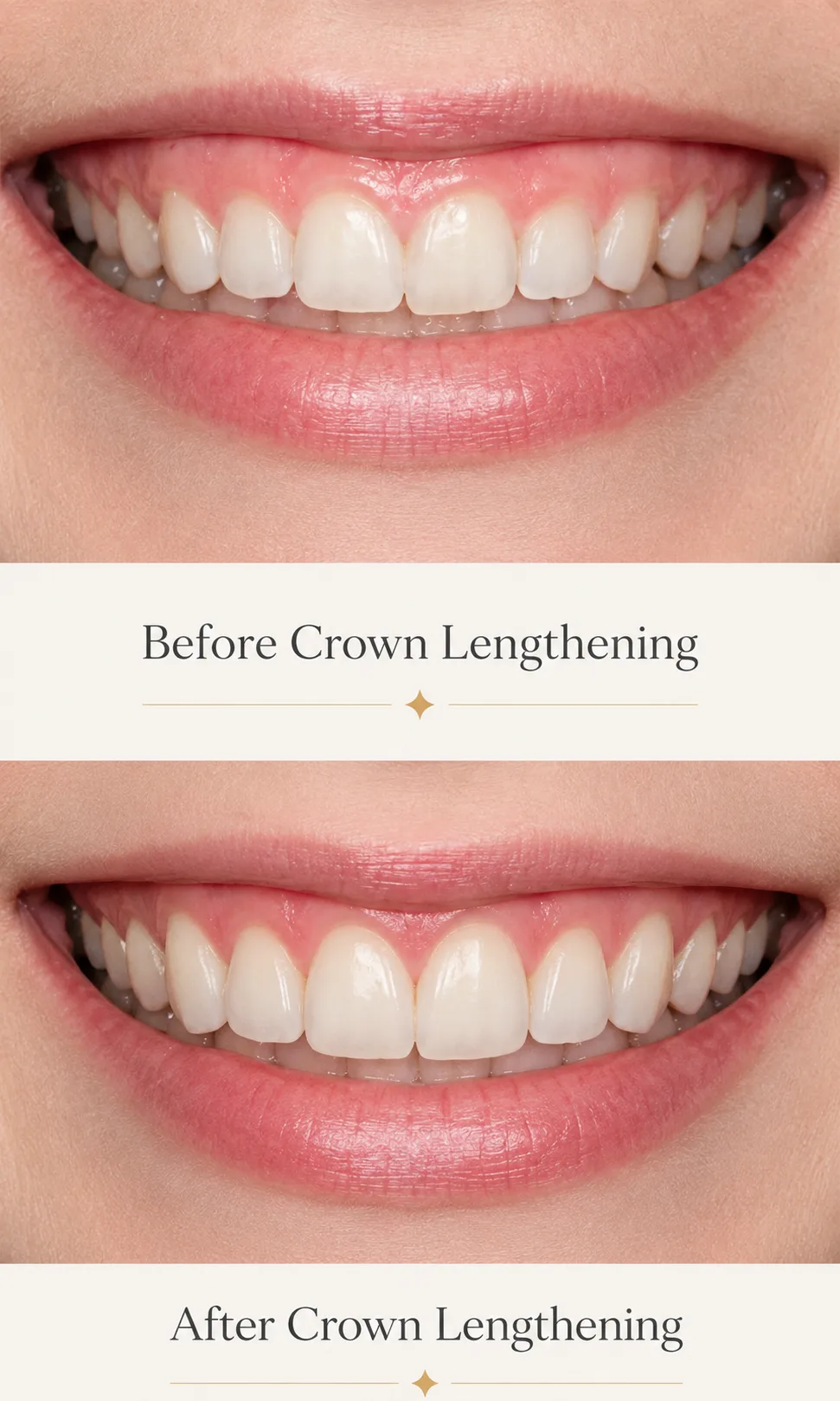
At Dental Implants & Cosmetics in Plantation, crown lengthening is used both for restorative access and for correcting gummy smiles where the cause is structural, not simply soft tissue.
Serving patients from Plantation, Fort Lauderdale, Davie, Weston, Sunrise, and across Broward County.
Two real reasons
patients need this procedure
The first is restorative. A crown or filling cannot be placed predictably if the tooth structure sits too far below the gumline. The restoration cannot be sealed properly, it is difficult to clean, and it tends to fail earlier than it should. Crown lengthening solves this by exposing the tooth structure that the restoration needs.
The second is cosmetic. Some patients see a smile that is all gums and little tooth. When this is caused by how the teeth erupted or where the bone sits rather than simply extra soft tissue, gum contouring alone is not enough. Crown lengthening addresses the structural cause.
Both situations are diagnosed through clinical examination and imaging before any procedure is recommended.
Clinical situations
that call for this procedure
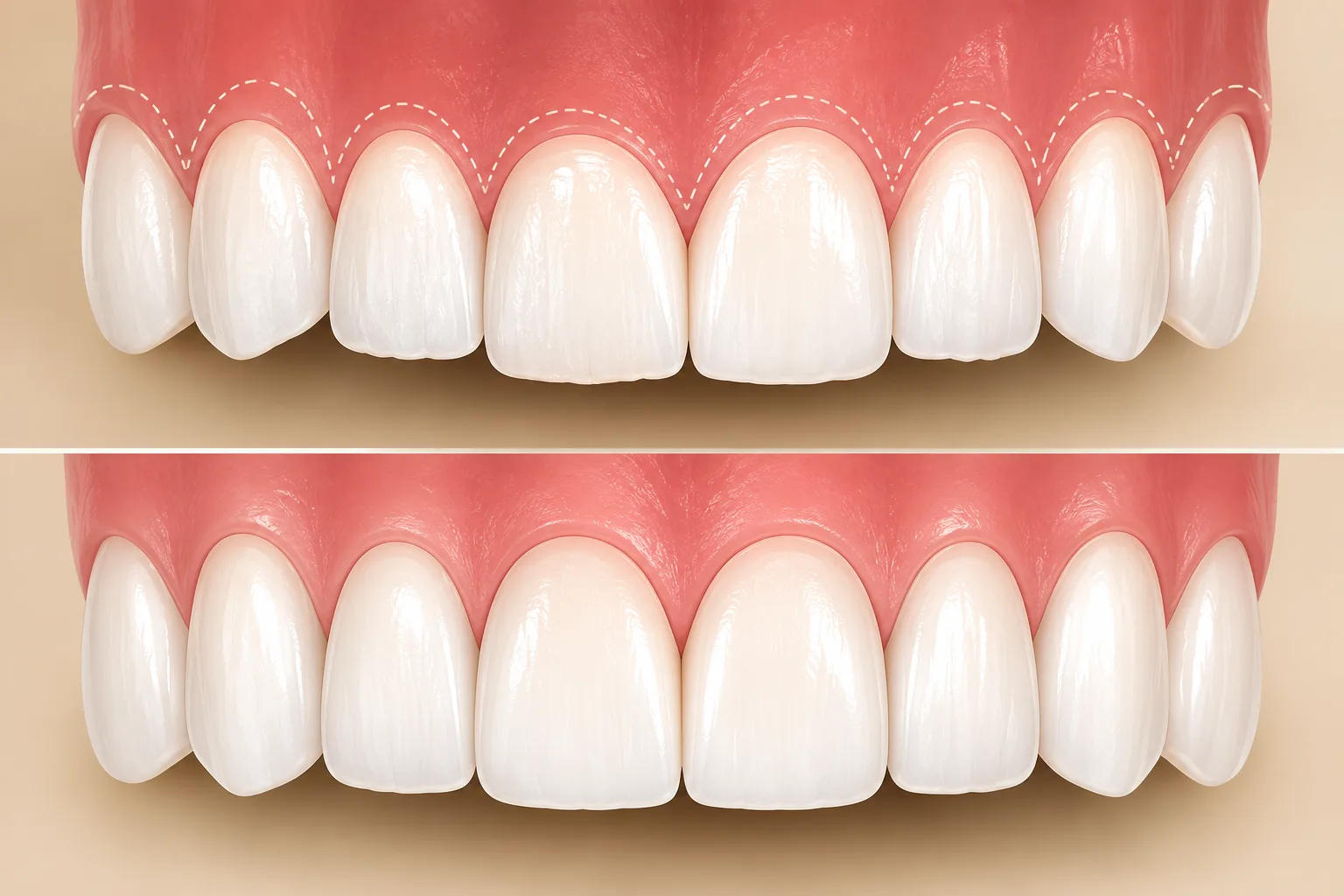
Crown lengthening is used when the gum and bone position prevents accurate restoration or creates a smile that looks disproportionately gummy. The specific indication shapes the scope of the procedure.
Tooth structure below the gumline
When a tooth is fractured, decayed, or simply positioned too deep for a crown to fit properly, crown lengthening exposes the additional structure needed for a predictable, well sealed restoration.
Teeth that appear too short
In some patients, the gum sits higher than ideal, making teeth look short or the smile appear overly gummy. Crown lengthening can expose more natural tooth surface for a more balanced proportion.
Delayed passive eruption
Some teeth never fully emerge through the gum as they should during development. This leaves excess tissue over the tooth and may require a combination of soft tissue and bone reshaping to correct.
Subgingival fracture or decay
A fracture or cavity that extends below the gum margin creates a zone that is difficult to access and restore without first exposing it. Crown lengthening creates the access needed for restorative work to proceed.
Restorative margin placement
For a crown to fit accurately and remain cleanable over time, its margin must be placed at a specific depth relative to the bone. Crown lengthening ensures that relationship is achievable before fabrication begins.
Gummy smile with structural cause
When excess gum display is rooted in tooth position or bone level rather than just soft tissue volume, a more involved procedure that includes bone reshaping may be needed to produce a lasting result.
From evaluation
to final restoration
Crown lengthening is not simply removing gum tissue. The full process is coordinated with your restorative plan so that the exposure achieved at surgery translates into a predictable, lasting restoration.
Imaging and periodontal evaluation
We begin with a comprehensive exam including dental X rays or CBCT imaging to assess the bone level, root length, and position of adjacent teeth. This determines whether soft tissue alone is involved or whether bone reshaping is also necessary.
Surgical procedure
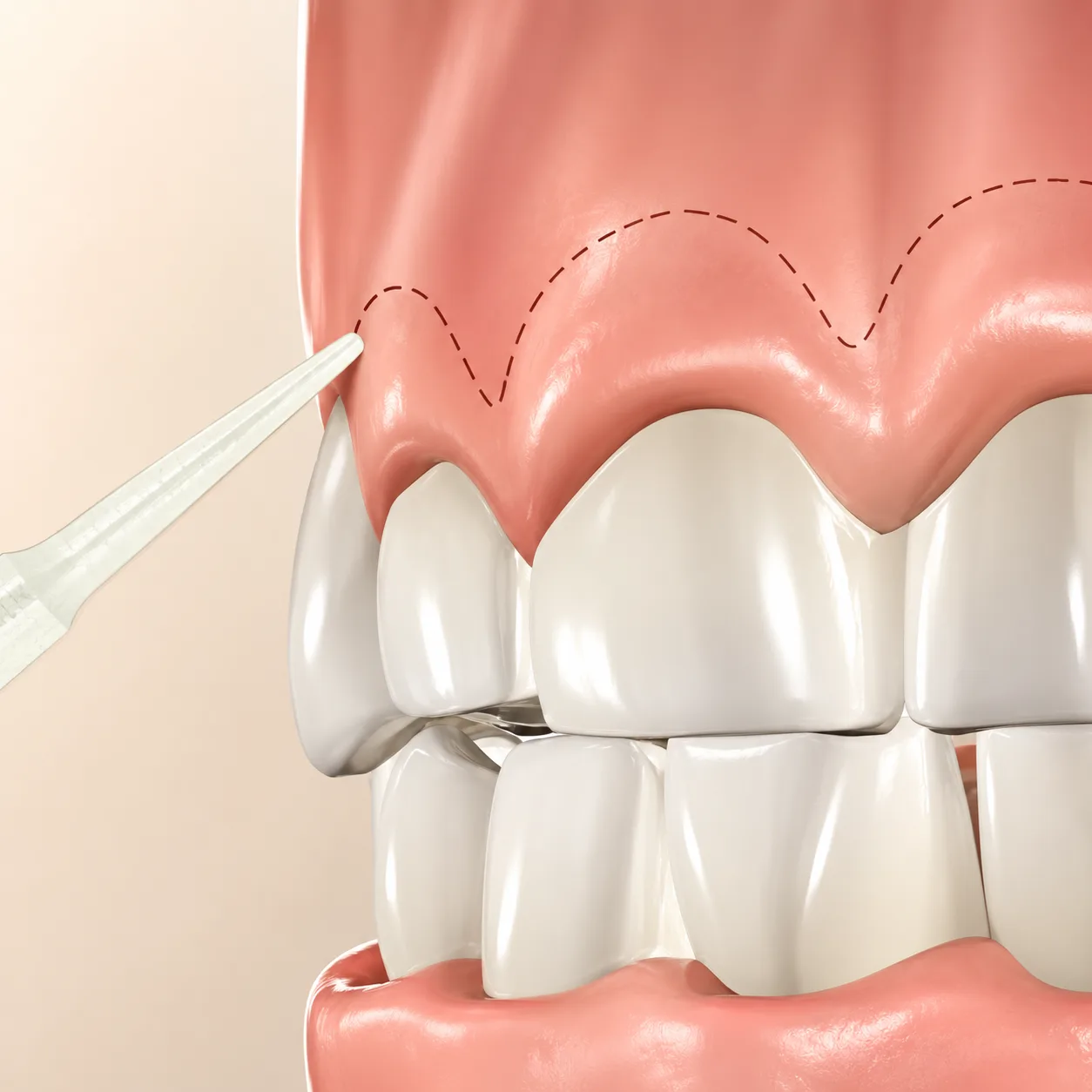
The procedure is performed under local anesthesia. The gum tissue is gently moved to expose the tooth and underlying bone. If bone needs to be repositioned to achieve the correct margin, that is done at the same appointment.
Sutures and protective dressing
The tissue is repositioned and sutured into the new location. A periodontal dressing may be placed to protect the area during early healing. Most patients resume routine activity within a few days.
Healing and tissue maturation
The tissue needs time to mature and stabilize before final restorative work can begin. This period varies depending on the extent of the procedure and the overall treatment plan, and is factored into the timeline from the start.
Final restoration placement
Once healing is complete, the final crown, bridge, or other restoration is fabricated and placed. The improved access and margin position achieved through crown lengthening makes this step more predictable and the result more durable.
We begin with a comprehensive exam including dental X rays or CBCT imaging to assess the bone level, root length, and position of adjacent teeth. This determines whether soft tissue alone is involved or whether bone reshaping is also necessary.
Two different procedures,
often confused for one
Primary purpose
Restorative access or structural correction
Tissue involved
Soft tissue and often bone
Procedure complexity
Surgical with sutures
Healing time
Longer, depends on bone involvement
When it is used
Before a crown or to correct structural issues
Primary purpose
Aesthetic gum line refinement
Tissue involved
Soft tissue only in most cases
Procedure complexity
Less invasive, often laser
Healing time
Typically shorter
When it is used
To reshape an uneven or excess gum line
Crown lengthening questions,
answered honestly
Crown lengthening in
Plantation, Florida
Located in Plantation, Florida, Dental Implants & Cosmetics serves patients from Fort Lauderdale, Davie, Weston, Sunrise, Coral Springs, and across Broward County. Your restorative or cosmetic evaluation determines the scope of the procedure.



Your smile has a story.
Let's design
what comes next.
Begin with a private consultation designed to help you understand your options clearly and confidently with no pressure and no obligation.