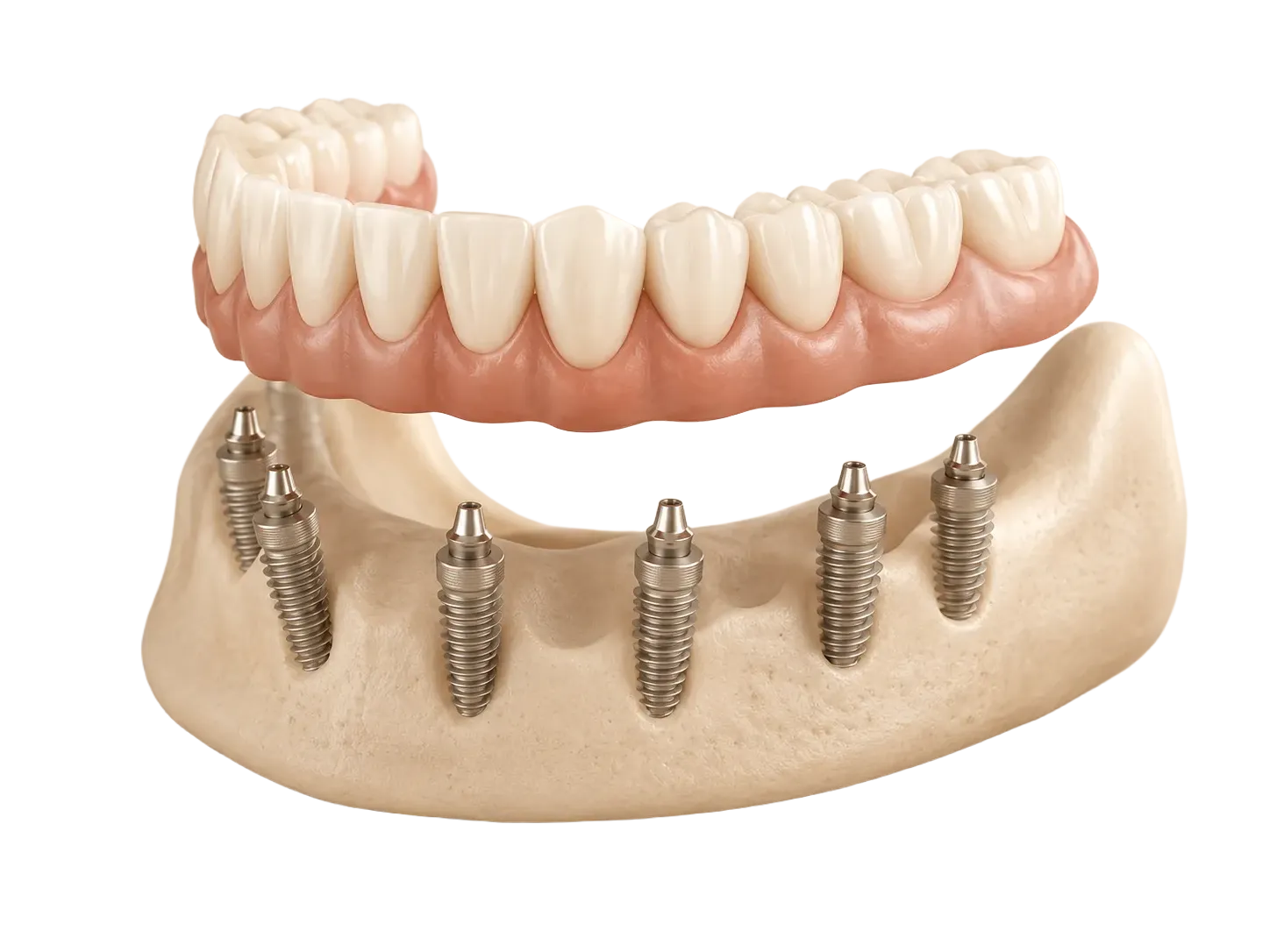
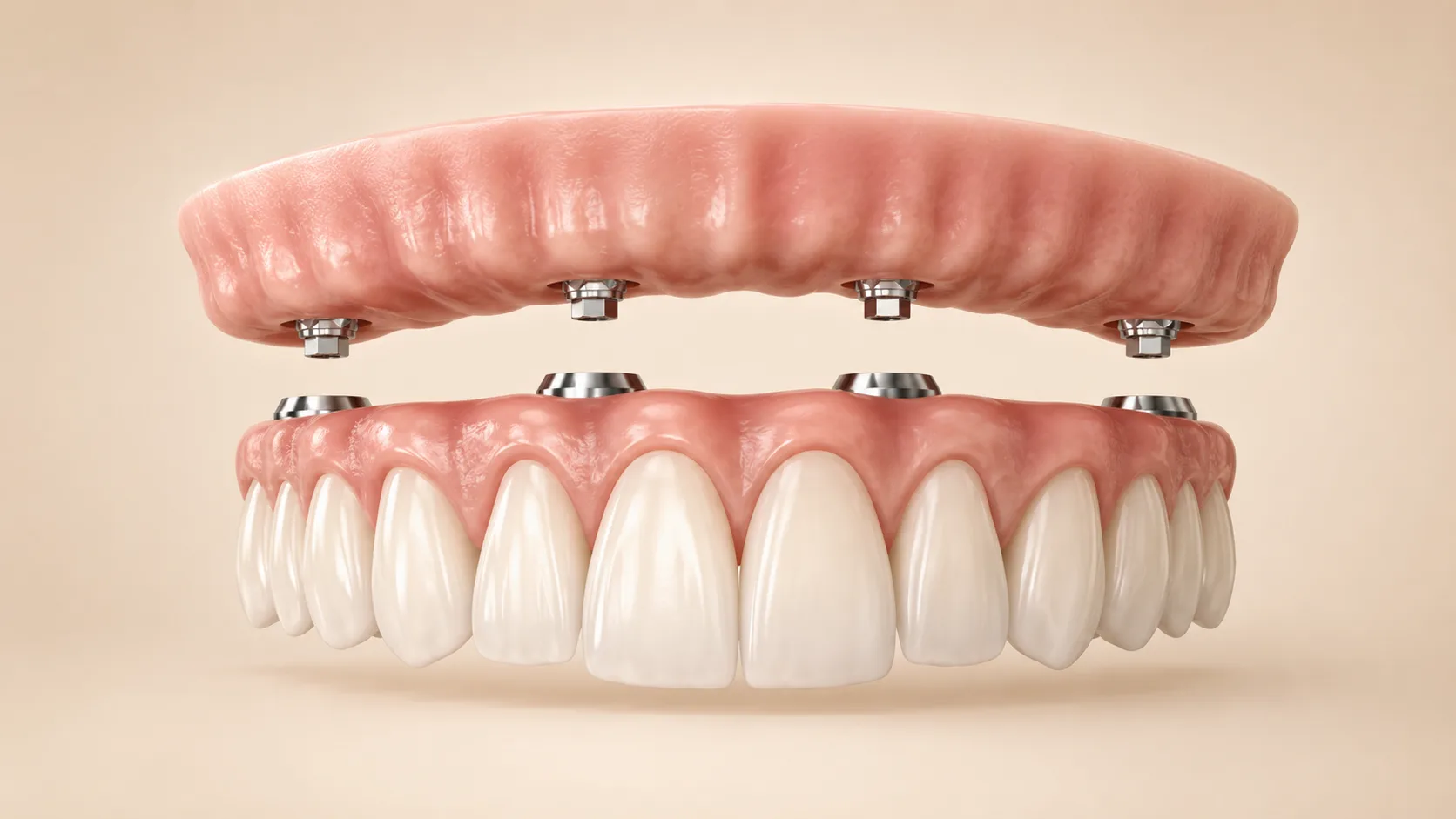
A complete upper or lower arch of fixed teeth, anchored to implants and designed to restore full function, natural appearance, and the confidence that comes with teeth that stay in place.
For patients with failing teeth, multiple missing teeth, or dentures that no longer serve them well.
A complete arch,
fixed in place
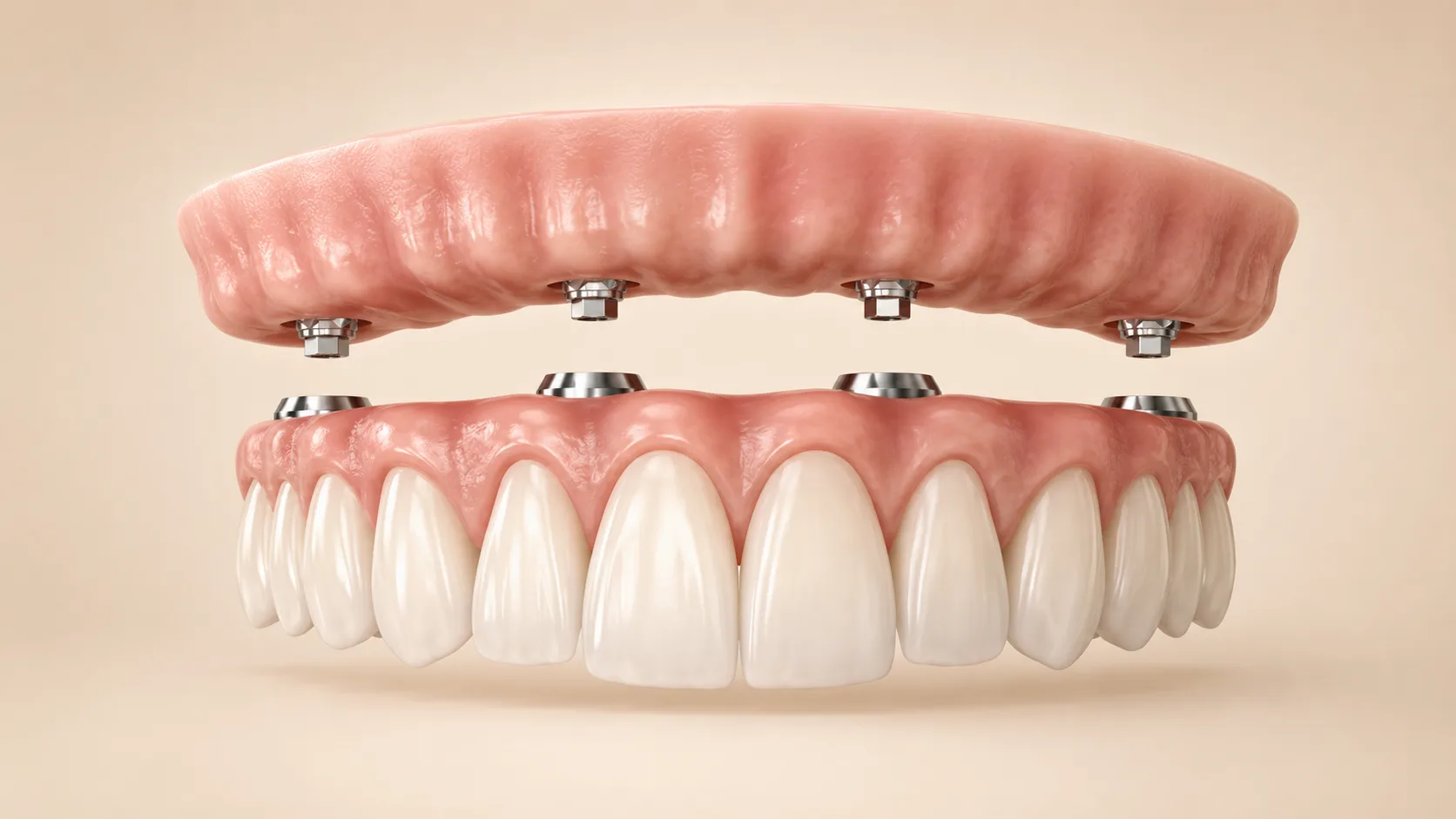
Full arch dental implants replace an entire upper or lower arch of teeth with a fixed prosthesis supported by multiple implants placed throughout the jaw. The result is a complete set of teeth that cannot be removed, anchored to the bone, designed to function like natural teeth, and built to look natural.
The number of implants used depends on bone volume, jaw anatomy, bite forces, and the design of the final prosthesis. Most full arch cases involve four to eight or more implants per arch. Planning begins with 3D imaging and a detailed clinical evaluation before any treatment is proposed. Learn more about our implant approach.
Full arch implants are not the same as dentures. They are fixed, they do not shift, and they stimulate the bone so that the jaw continues to have structure and support over time.
Patients who have been
managing, not living
Failing teeth
Loose dentures
Bone loss
Fixed result
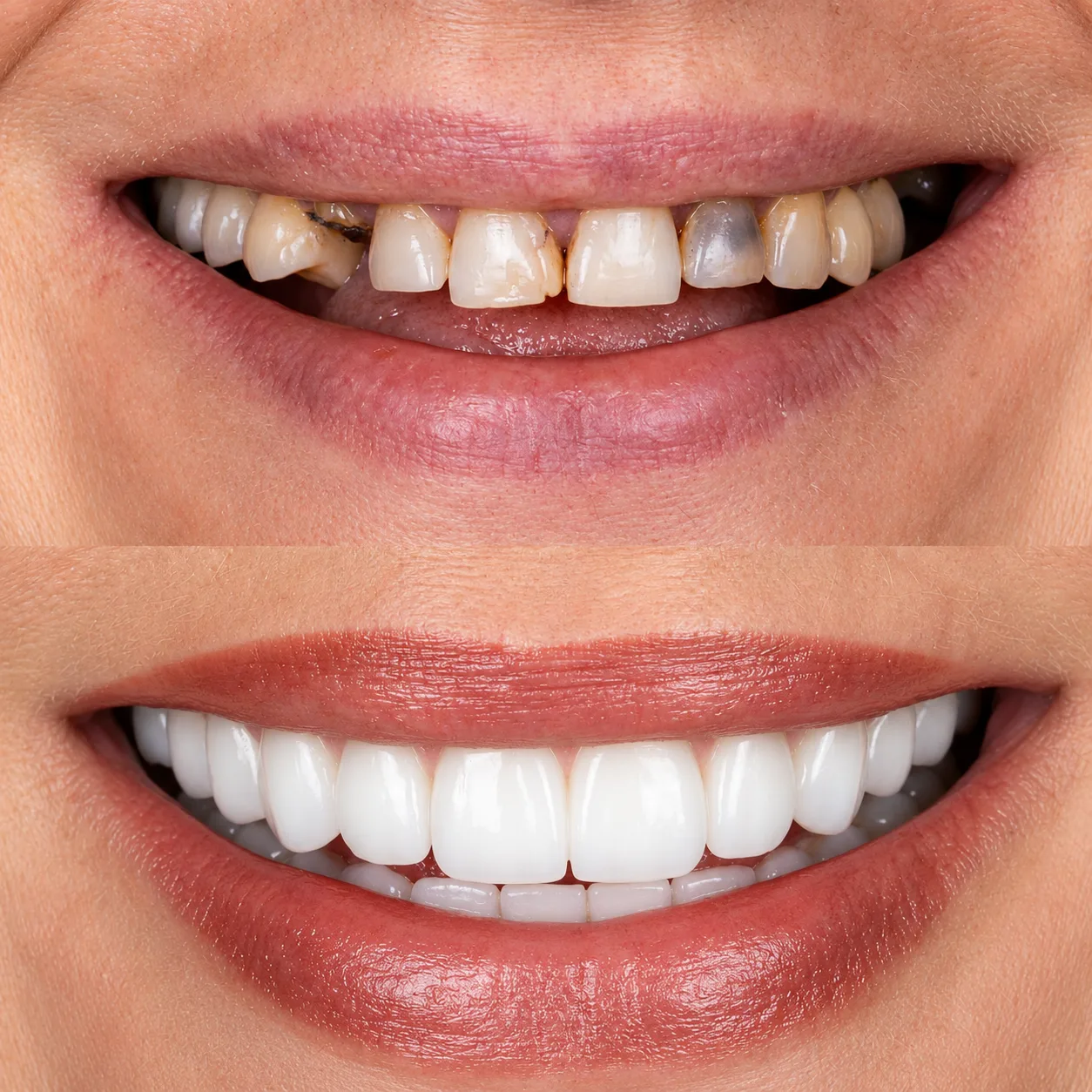
This is not just
a dental decision
Patients facing full arch implant treatment are often carrying years of difficult dental history. Avoiding social meals. Keeping their lips closed in photographs. Declining invitations. Worrying about their teeth in front of others.
We understand that the decision to pursue this treatment is not taken lightly. It involves time, cost, and the willingness to go through a process that takes months. That is why our consultation is designed to be unhurried, honest, and built around your full picture, not just your bone density.
If you have been postponing this conversation because you are not sure what is possible, or because the process has felt overwhelming, this is a good place to start. The consultation is not a commitment.
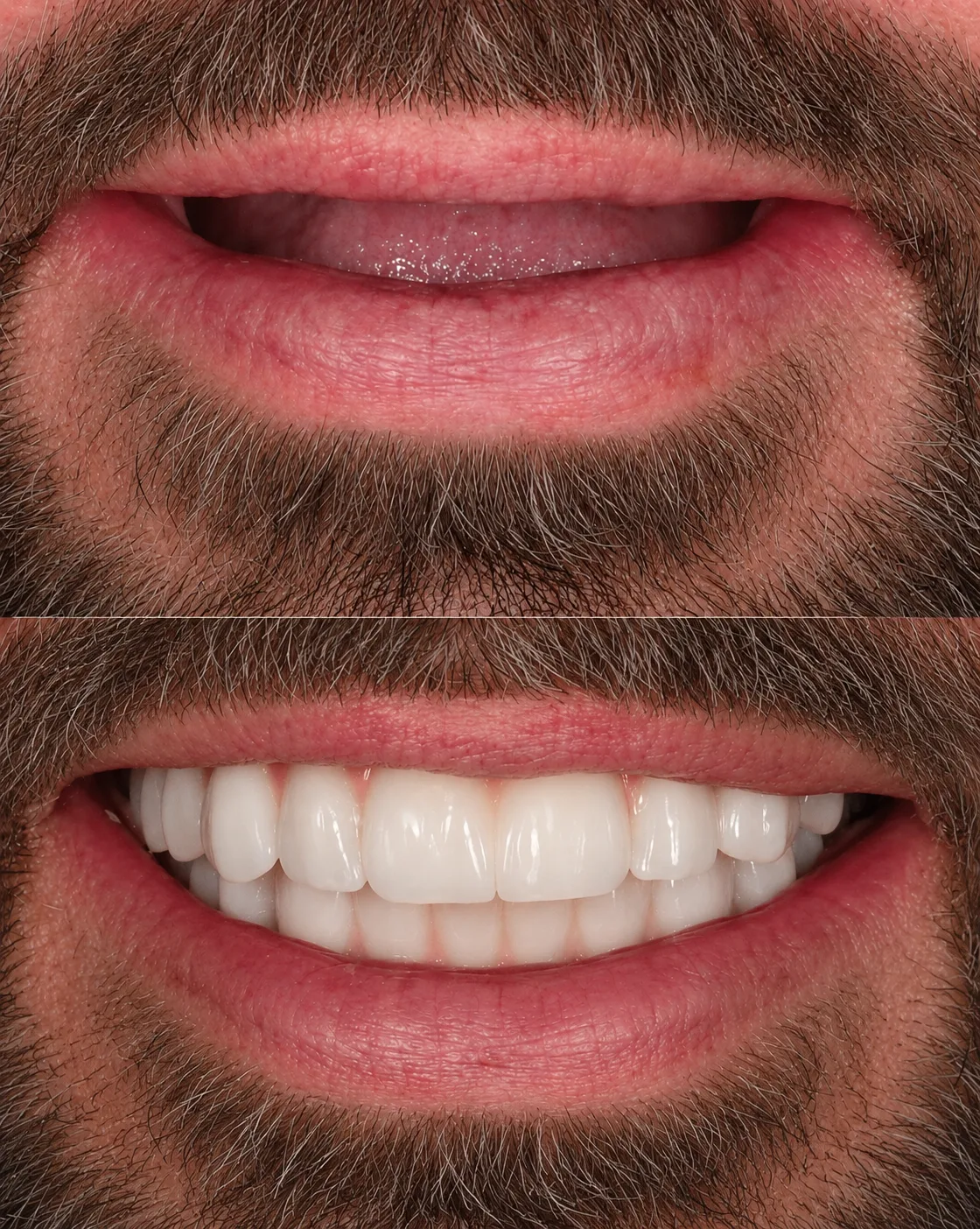
What changes when
teeth are fixed
The differences between full arch implants and removable dentures go beyond convenience. They affect bone health, confidence, bite strength, and how the face looks and changes over time. See our full comparison page for a deeper look.
Both fixed.
Different configurations.
All-on-X is a specific full arch protocol that places four to six implants with angled positioning to maximize support across the arch without bone grafting in many cases. It is designed for efficiency and broad applicability.
A full arch implant case may involve more implants in different configurations, particularly when bone volume is good across the jaw and a more distributed support approach is appropriate. The protocol is adapted to the patient's anatomy rather than applied universally.
Which approach is right depends on your specific bone volume, jaw anatomy, bite, and restorative goals. We evaluate both options and explain the reasoning for our recommendation before any plan is proposed.
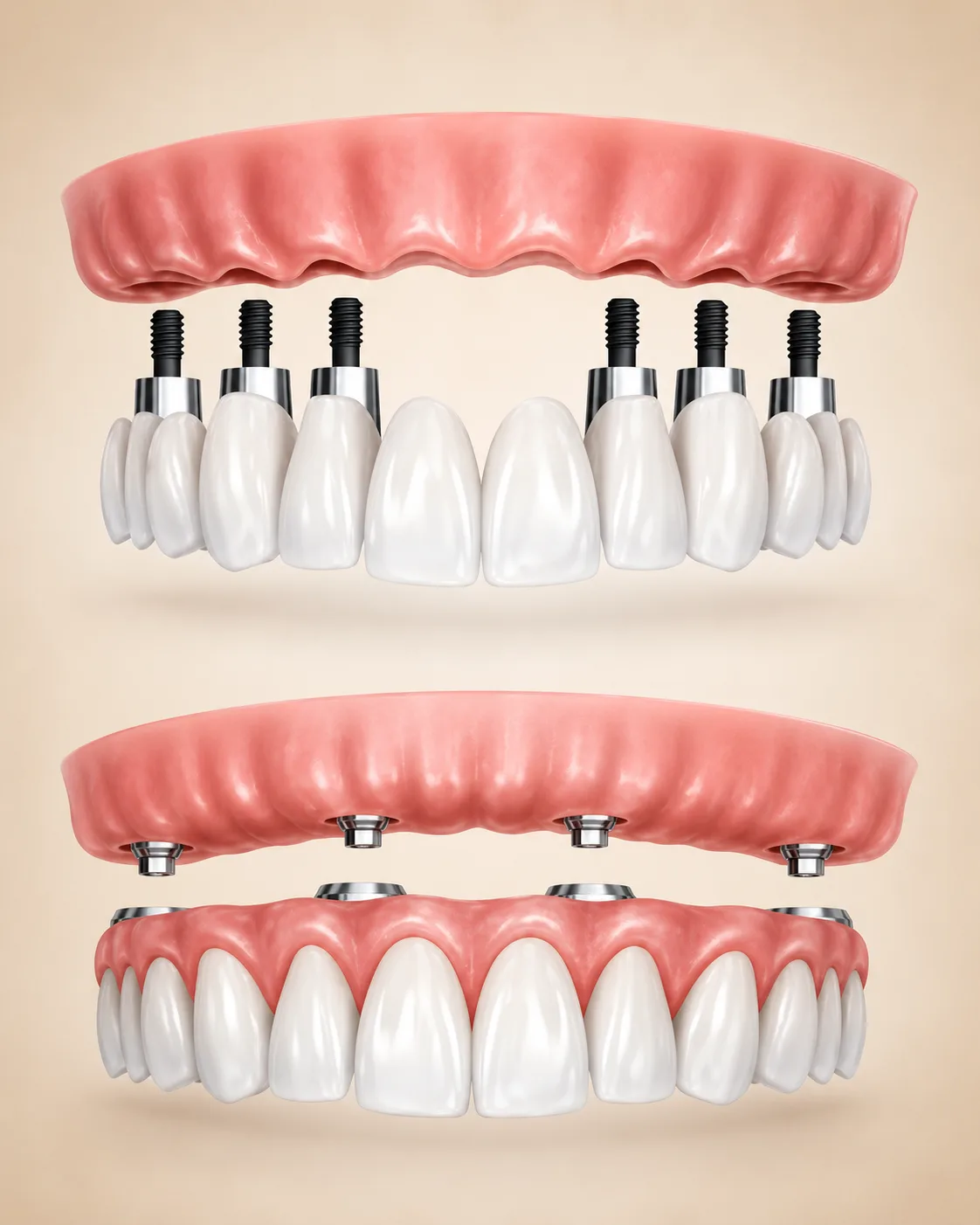
Proportion matters
beyond the teeth
When teeth and bone are lost over time, the lower third of the face often sinks inward. Lips become thinner. The chin appears more prominent. Lines deepen. These changes are not just cosmetic, they reflect structural loss underneath.
A full arch restoration, when designed with appropriate vertical dimension and tooth proportions, can restore facial support. The length, width, and position of the prosthetic teeth affect how the lips rest, how the profile looks, and how the face reads overall.
At Dental Implants & Cosmetics, Dr. Noemi Tisminesky approaches full arch cases with attention to facial proportion, not just tooth placement. Smile design is part of the treatment plan from the beginning.
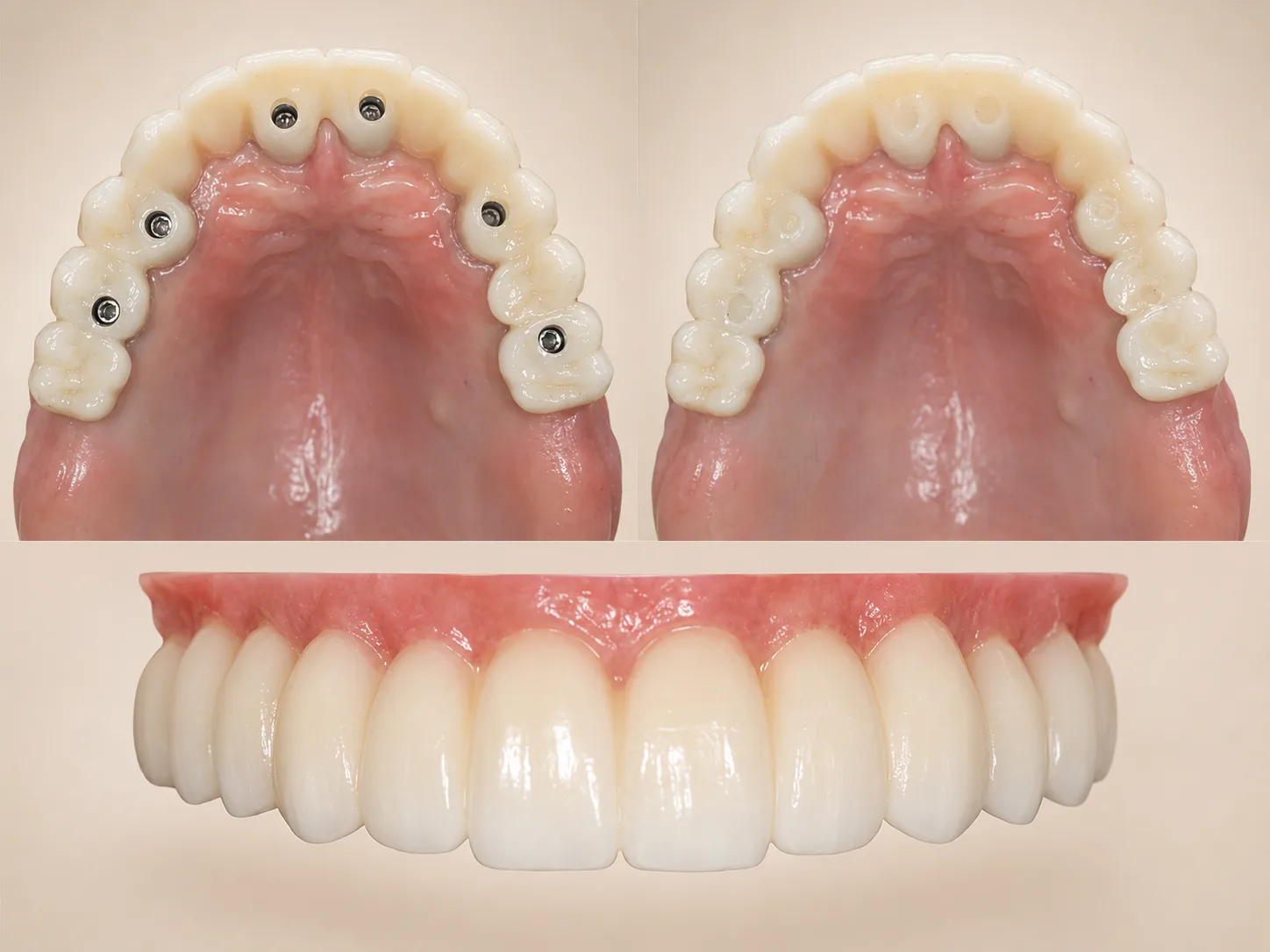
Planned in full
before anything begins
Comprehensive consultation and 3D imaging
We begin with cone beam CT imaging and a thorough clinical evaluation. Bone volume, gum health, bite, jaw anatomy, facial proportions, and existing restorations are all reviewed before any treatment plan is proposed.
Treatment planning and design
Implant position, angulation, and count are planned digitally before any procedure begins. Prosthetic design, smile proportions, and the sequence of treatment are reviewed with you in full. Nothing moves forward until the plan is clear to both of us.
Preparation and extractions if needed
If remaining teeth need to be removed before implant placement, this is coordinated within the overall plan. Bone grafting may be recommended at one or more sites to ensure sufficient volume for implant integration.
Implant placement
The implants are surgically placed at the planned positions throughout the arch. A provisional restoration may be provided during the healing period so you are not without teeth while the implants integrate.
Integration and refinement
Over several months, the implants integrate with the surrounding bone. The provisional restoration is monitored and adjusted as needed. This phase cannot be rushed, integration is what makes the final result stable.
Final prosthesis delivery
Once integration is confirmed, your definitive arch is fabricated and placed. Crown shape, color, proportion, and bite are refined to a final result designed to function well and look natural.
We begin with cone beam CT imaging and a thorough clinical evaluation. Bone volume, gum health, bite, jaw anatomy, facial proportions, and existing restorations are all reviewed before any treatment plan is proposed.
A full picture,
before any commitment
3D cone beam CT imaging to assess bone volume at potential implant sites throughout the arch.
Clinical evaluation of gum health, remaining teeth, bite, and facial proportions.
A candid review of which full arch option is appropriate for your anatomy and goals.
A treatment timeline with each phase explained, what happens when, and what to expect.
Cost review and financing options presented before any decision is made.
Full arch implant questions,
answered honestly
What is the difference between full arch implants and All-on-X?
All-on-X is a specific full arch protocol that uses four to six strategically angled implants to support a complete fixed arch without bone grafting in many cases. Full arch implants is a broader category that may involve different implant counts and configurations depending on the patient's anatomy and bone volume. Both aim for a fixed, permanent result. We review which approach is appropriate for your specific situation at your consultation.
Am I a candidate for full arch dental implants in Plantation, FL?
Candidacy depends on bone volume at the implant sites, overall health, gum condition, and bite. Patients with bone loss may still qualify with grafting at one or more sites. A consultation with 3D imaging is the only way to determine what is possible for your specific situation. We are committed to honest guidance about whether and how treatment can proceed.
How long does full arch implant treatment take?
The full process typically spans six months to over a year, depending on whether extractions or grafting are needed and how quickly integration progresses. A provisional restoration is generally provided during the healing phase. Your timeline is mapped out before treatment begins.
Can I have teeth during the healing period?
Yes. A provisional restoration is typically placed so you are not without teeth while the implants integrate. The final arch is delivered once integration is confirmed and the prosthetic design has been refined.
What does a full arch implant cost in Plantation, Florida?
A full arch plan is quoted after a 3D evaluation, because it depends on your bone, whether teeth need to be removed, and the teeth we design for you. For one missing tooth, our Single Tooth Implant Package is $3,996. It includes implant consultation, 3D CT scan, implant, bone graft, membrane, second stage surgery, custom abutment, and the implant crown. Temporary crowns and extractions are not included. The package is listed on the dental implants page. Financing options are reviewed before any commitment is made.
How do full arch implants affect facial appearance?
When teeth and bone are lost, the lower third of the face can collapse inward, making the lips appear thinner and the chin more prominent. Full arch implants, combined with a prosthesis designed for appropriate vertical dimension, can help restore facial support and a more natural profile. This is one of the reasons smile design and facial proportion planning are part of our consultation process.
How do I care for full arch implants long term?
The fixed prosthesis is brushed and flossed like natural teeth, with particular attention to cleaning beneath the arch. Professional cleanings and periodic implant checkups are part of long term care. We review the maintenance protocol in full when the final arch is delivered.
I have been managing with loose dentures for years. Is it too late?
Not necessarily. Many patients who come to us have been living with loose or uncomfortable dentures for some time. The main clinical question is whether sufficient bone remains at the potential implant sites. 3D imaging tells us the full picture. Some patients need grafting first; others can proceed more directly. We do not assume it is too late without an evaluation.
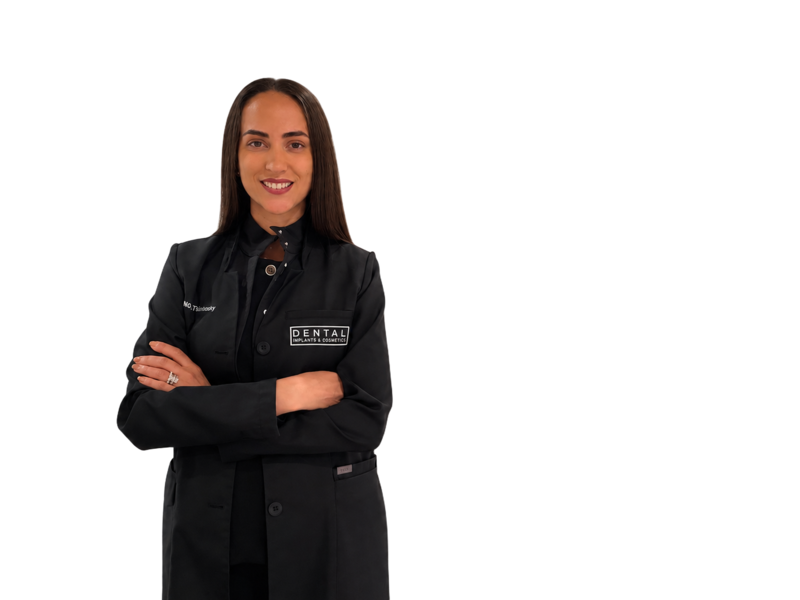


Your smile has a story.
Let's design
what comes next.
Begin with a private consultation designed to help you understand your options clearly and confidently with no pressure and no obligation.