
Removing infection, relieving pain, and preserving your natural tooth.
Serving patients from Plantation, Fort Lauderdale, Davie, Weston, Sunrise, and across Broward County. If you are in pain, call us at 954-933-6825 to discuss next steps.
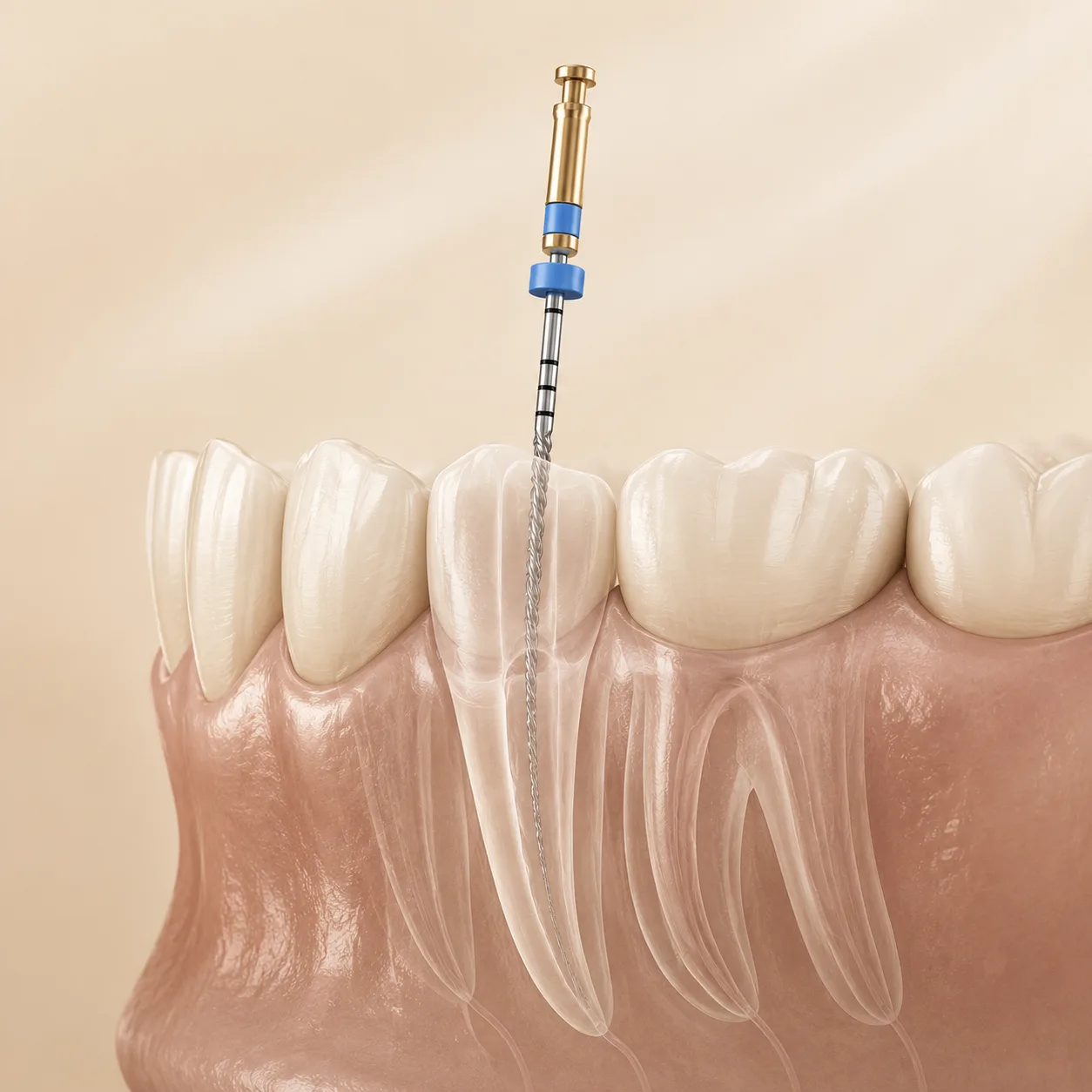
The goal is to
save the tooth
Root canal treatment removes the infected or inflamed pulp from inside the tooth, cleans and shapes the internal canal system, and seals it to prevent reinfection. When completed correctly, the treated tooth can remain in function for many years.
The procedure has a reputation for being painful that is decades out of date. With modern anesthesia and technique, most patients are surprised by how manageable it is. The discomfort they experienced from the infection is typically worse than the treatment itself.
Keeping your natural tooth avoids the need for a replacement, preserves the surrounding bone that the root supports, and is generally preferable to extraction followed by an implant or bridge when the tooth is still restorable.
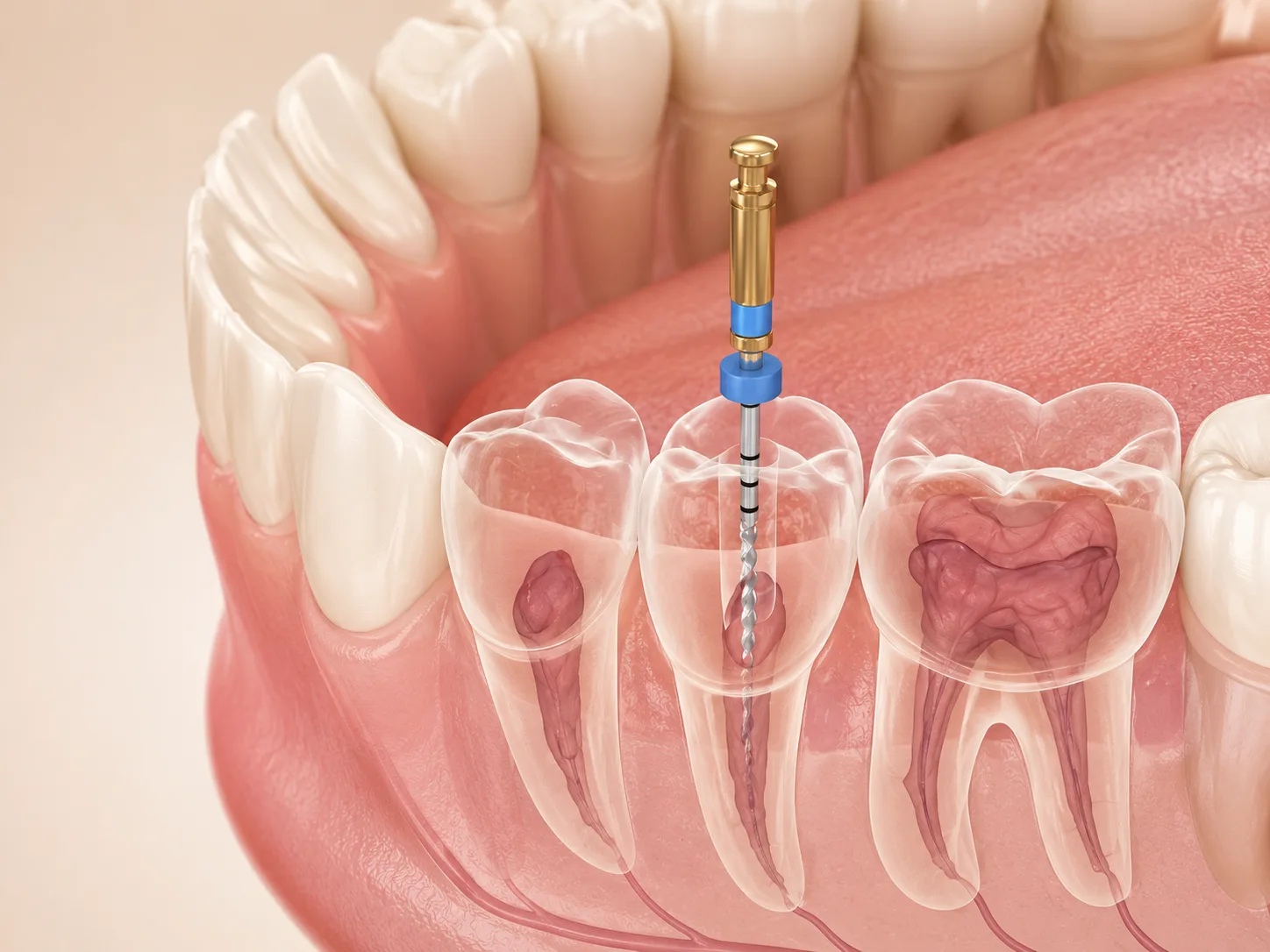
Symptoms that warrant
prompt evaluation
Not all of these symptoms definitively indicate a root canal is needed, but each warrants evaluation. An untreated infection can progress, making treatment more complex and the outcome less predictable.
Severe or persistent toothache
Pain that is sharp, throbbing, or pressure based and does not resolve on its own is one of the most common indicators that the pulp inside the tooth is infected or inflamed.
Prolonged sensitivity to heat or cold
Sensitivity that lingers for more than a few seconds after the temperature stimulus is removed suggests that the nerve inside the tooth is affected. Normal sensitivity from a healthy tooth resolves quickly.
Swelling around the tooth or jaw
Swelling in the gum, face, or jaw near a tooth can indicate that infection has spread from the pulp into surrounding tissue. This requires prompt evaluation.
Darkening or discoloration of a tooth
A tooth that has become visibly darker than surrounding teeth may have experienced internal pulp degeneration. This is sometimes a sign of pulp death that requires treatment even in the absence of pain.
Pimple or abscess on the gum
A small raised area on the gum that looks like a pimple near a tooth may be a fistula, a pathway through which infected material from the root is draining. This is a sign of infection at the root tip.
Pain when biting or pressing
Sensitivity to bite pressure or discomfort when pressing on the tooth can indicate infection at the root tip, a cracked root, or an abscess forming around the tooth.
From diagnosis
to final restoration
Root canal treatment follows a clear sequence. Understanding each stage helps reduce the anxiety that often comes from uncertainty about the procedure.
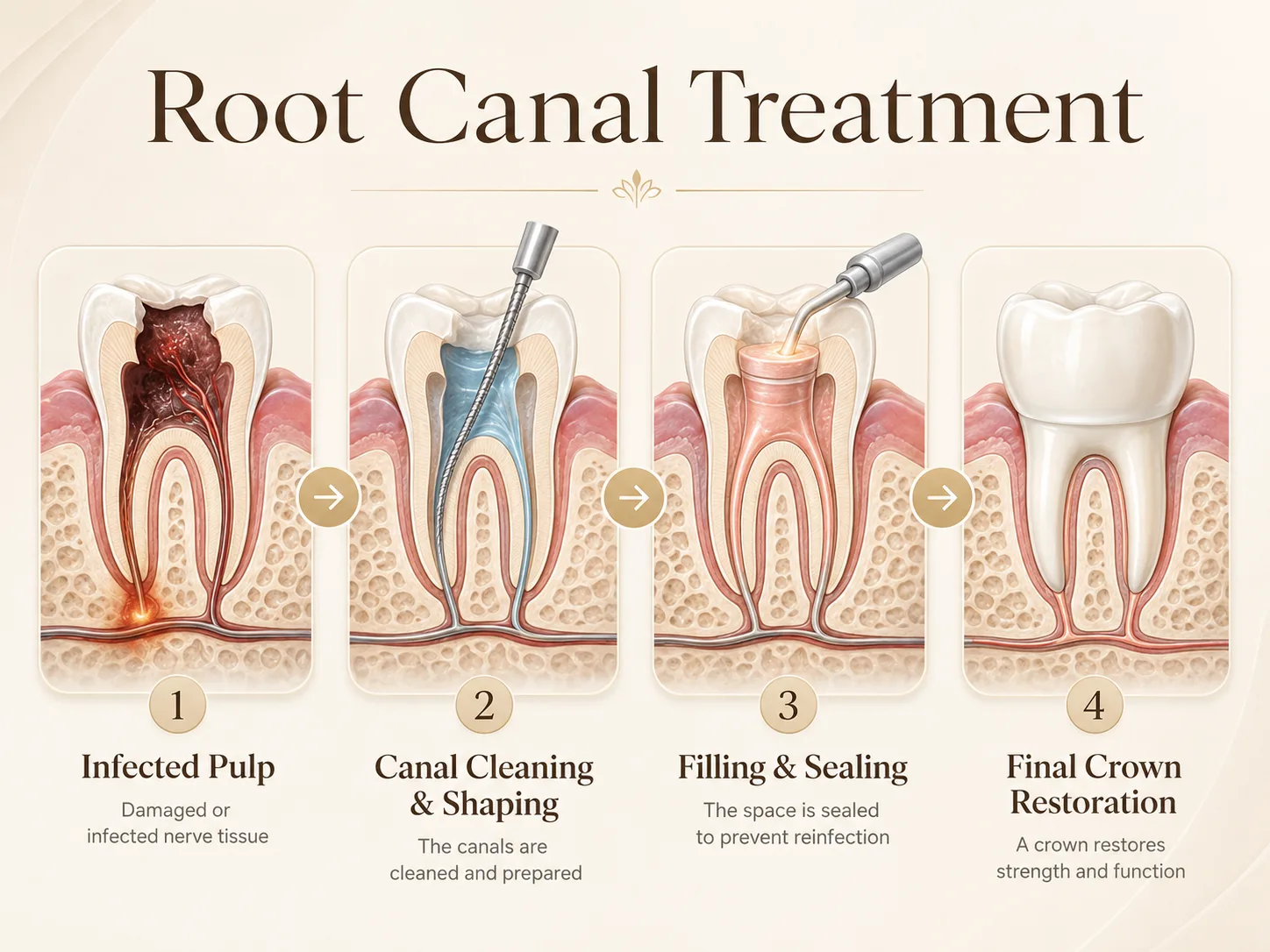
Examination and diagnosis
We evaluate the tooth with X rays and clinical testing to confirm whether the pulp is infected, inflamed, or no longer vital. This determines whether root canal treatment is the appropriate next step or whether another approach is indicated.
Anesthesia and isolation
Local anesthesia is administered before anything begins. Most patients report that the procedure itself is far less uncomfortable than the pain that brought them in. A rubber dam is placed to keep the area clean and dry during treatment.
Pulp removal and canal shaping
An opening is made in the crown of the tooth. The infected or inflamed pulp is removed, and the internal canals are cleaned, shaped, and disinfected using precise instruments.
Filling and sealing
The cleaned canals are filled with a biocompatible material and sealed to prevent reinfection. The access opening in the crown is temporarily or permanently sealed depending on the treatment plan.
Final restoration
Most root canal treated posterior teeth require a crown to protect against fracture, which the procedure can leave the tooth more susceptible to. The crown is typically placed within a few weeks of the root canal and is fabricated as described on the Porcelain Crowns page.
Keeping the tooth or replacing it
- Natural tooth preserved
- Bone continues to be supported
- Adjacent teeth unaffected
- No replacement needed
- Single crown cost only
- Tooth is removed
- Bone loss begins afterward
- Neighboring teeth may shift
- Bridge or implant often required
- Higher long term cost
Root canal questions,
answered honestly
Root canal treatment in
Plantation, Florida
Located in Plantation, Florida, Dental Implants & Cosmetics serves patients from Fort Lauderdale, Davie, Weston, Sunrise, Coral Springs, and across Broward County. If you are experiencing tooth pain, call 954-933-6825 or request an appointment online.



Your smile has a story.
Let's design
what comes next.
Begin with a private consultation designed to help you understand your options clearly and confidently with no pressure and no obligation.