
Gum Care for a
Stronger Healthier Smile
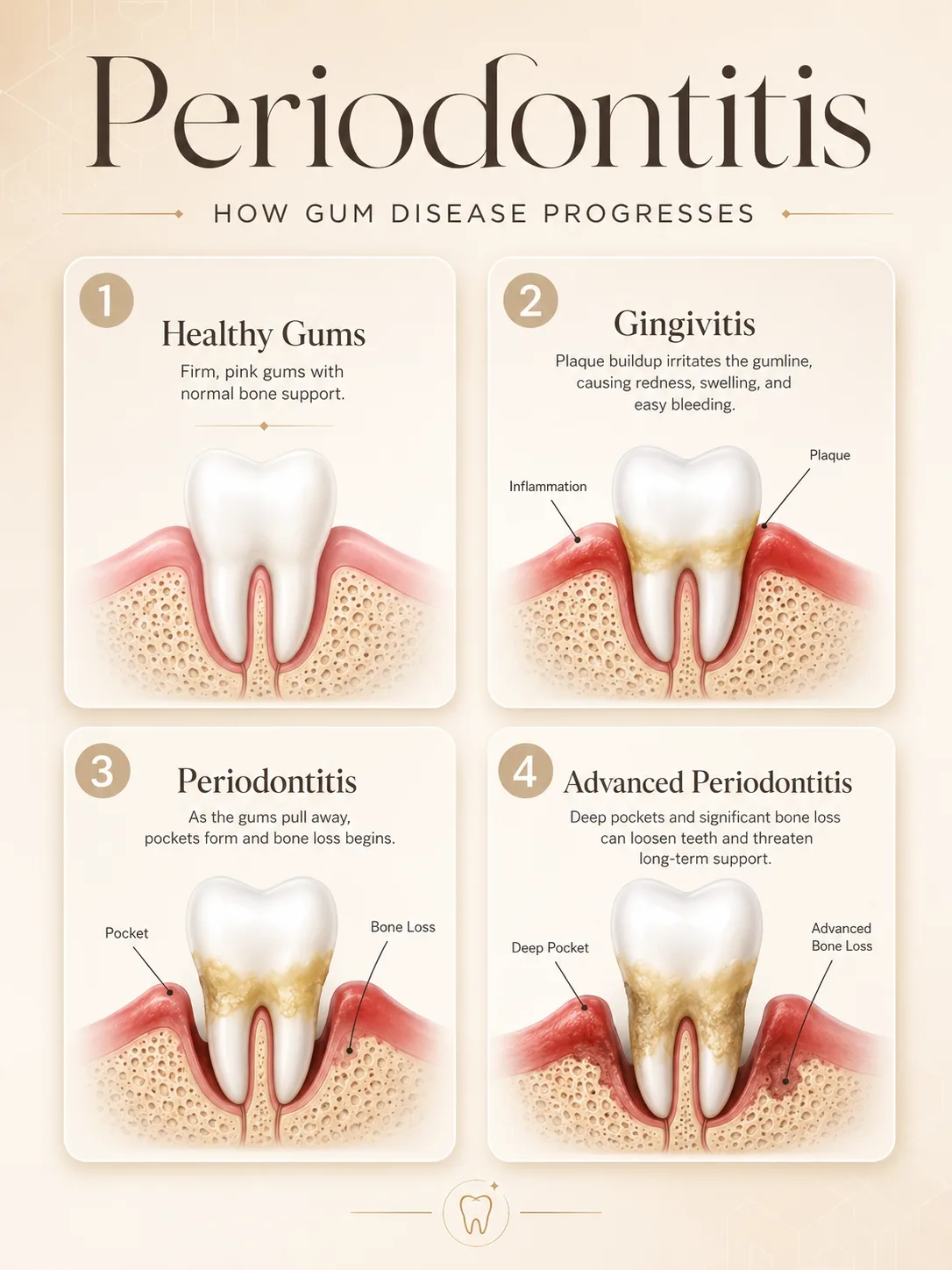
Gum disease affects over 42% of adults over 30. It is the leading cause of tooth loss and connects to serious systemic health risks. The earlier it is caught, the simpler it is to manage.
Why gum health matters
for your whole body
The gums and bone that support your teeth are not separate from the rest of your body. Research consistently links periodontal disease to cardiovascular disease, diabetes complications, and adverse pregnancy outcomes. Managing gum health is an act of whole-body care.
Gingivitis is the early stage: inflammation in the gum tissue without structural damage to bone. It is fully reversible with treatment. Periodontitis is the advanced stage: a chronic infection that destroys the bone and ligament holding your teeth in place. It cannot be reversed, but it can be controlled.
Warning signs not to ignore
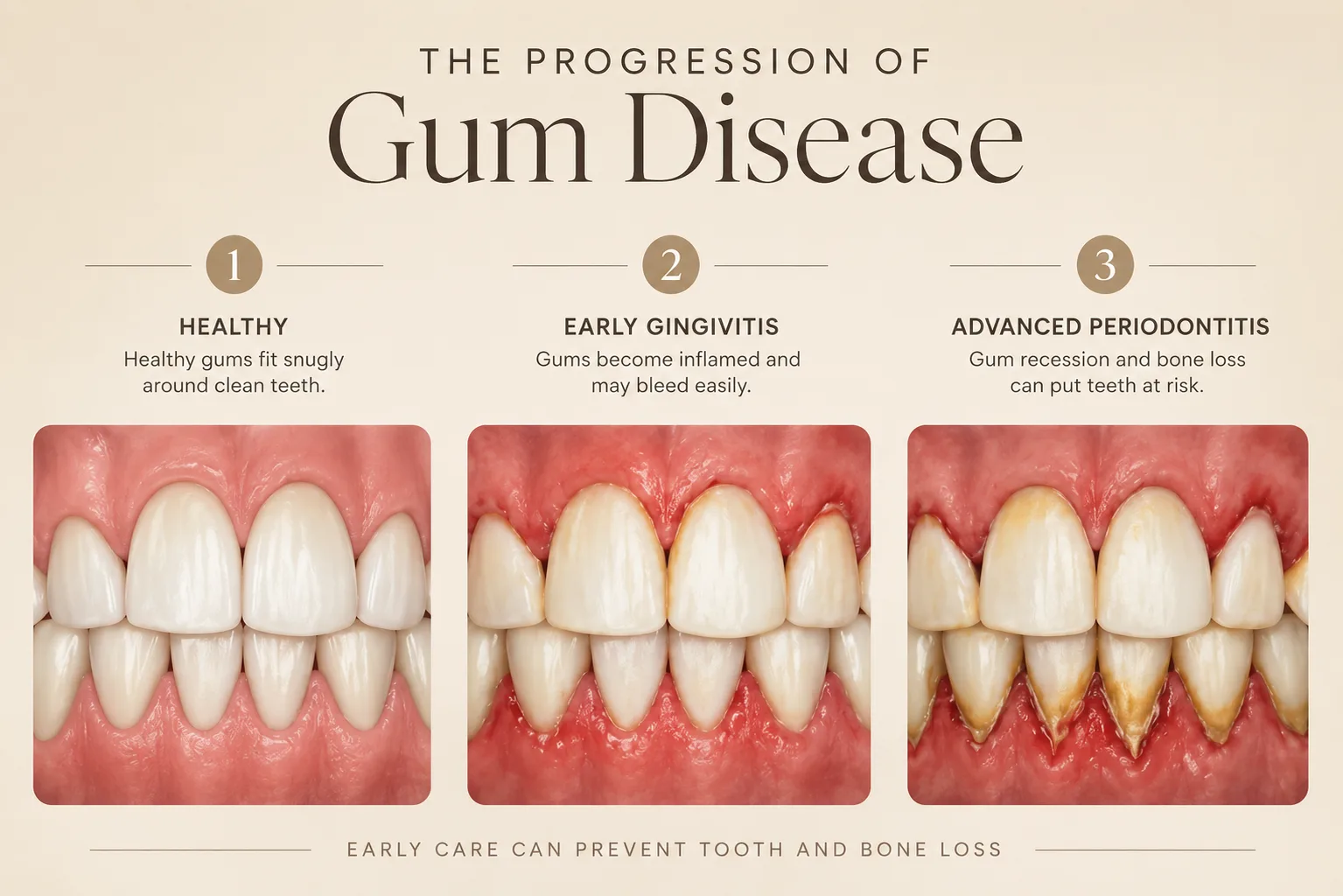
Bleeding when you brush or floss
The most common early sign of gum inflammation. Healthy gums do not bleed from normal brushing. Consistent bleeding is the tissue's response to bacterial irritation and should not be ignored.
Swollen, tender, or red gum tissue
Inflamed gum tissue changes color and consistency. It feels different when you touch it and looks different from the pale pink of healthy attached gingiva.
Persistent bad breath
Chronic bad breath that does not respond to brushing is often related to bacterial activity in deeper gum pockets or subgingival buildup that home care cannot reach.
Gum recession
Teeth that appear longer than they used to, or visible root surfaces, indicate gum recession. This can result from gum disease, aggressive brushing, or both.
Loose teeth or shifting bite
In advanced periodontitis, bone loss allows teeth to shift or become mobile. This is a late sign. Earlier warning signs are far easier and less costly to address.
Your treatment options
matched to your needs
Every case is different. We evaluate the current state of your gum health, the extent of any bone involvement, and your systemic risk factors before recommending a treatment path.
Professional cleaning for early inflammation
For patients with gingivitis, a thorough professional cleaning that removes all calculus and biofilm is the primary intervention. Combined with improved home care, most cases of gingivitis are fully reversible at this stage.
Scaling and root planing
For patients with moderate to advanced periodontitis, scaling and root planing cleans below the gumline to the root surface, disrupting the bacterial environment that perpetuates bone loss. Treatment is typically performed by quadrant with local anesthetic.
Periodontal maintenance
Once active disease has been treated, maintenance visits every three to four months reduce bacterial recolonization and monitor for disease progression. Patients who complete active treatment but skip maintenance are at significantly higher risk of recurrence. The role and frequency of professional dental cleanings are reviewed as part of your maintenance plan.
Adjunctive local therapies
In some cases, locally applied antimicrobials placed in pockets after scaling and root planing can support healing. We discuss these options when they are clinically indicated and evidence-supported.
Periodontist referral when indicated
Advanced cases involving significant bone loss, furcation involvement, or surgical needs are referred to a periodontist. We maintain relationships with specialists and coordinate care so nothing falls through the gaps.
What causes gum disease
to progress
Gum disease is a bacterial infection, but its severity is shaped by factors beyond oral hygiene alone. Understanding your specific risks helps us build care around your actual situation.
Tobacco use
Smoking and smokeless tobacco are among the strongest risk factors for periodontal disease. Nicotine impairs blood flow to the gums, masks inflammation, and significantly reduces the effectiveness of treatment.
Diabetes and systemic disease
Poorly controlled diabetes is strongly associated with more severe gum disease and slower healing after treatment. The relationship is bidirectional: gum disease also makes blood sugar harder to control.
Medications causing dry mouth
Hundreds of common medications reduce saliva flow. Saliva is protective. Reduced salivary buffering allows more rapid plaque accumulation and bacterial activity at the gumline.
Genetic susceptibility
Some patients have a genetic predisposition to more aggressive inflammatory responses to bacterial challenge. These patients may develop significant disease with relatively low plaque levels.
Inadequate home care
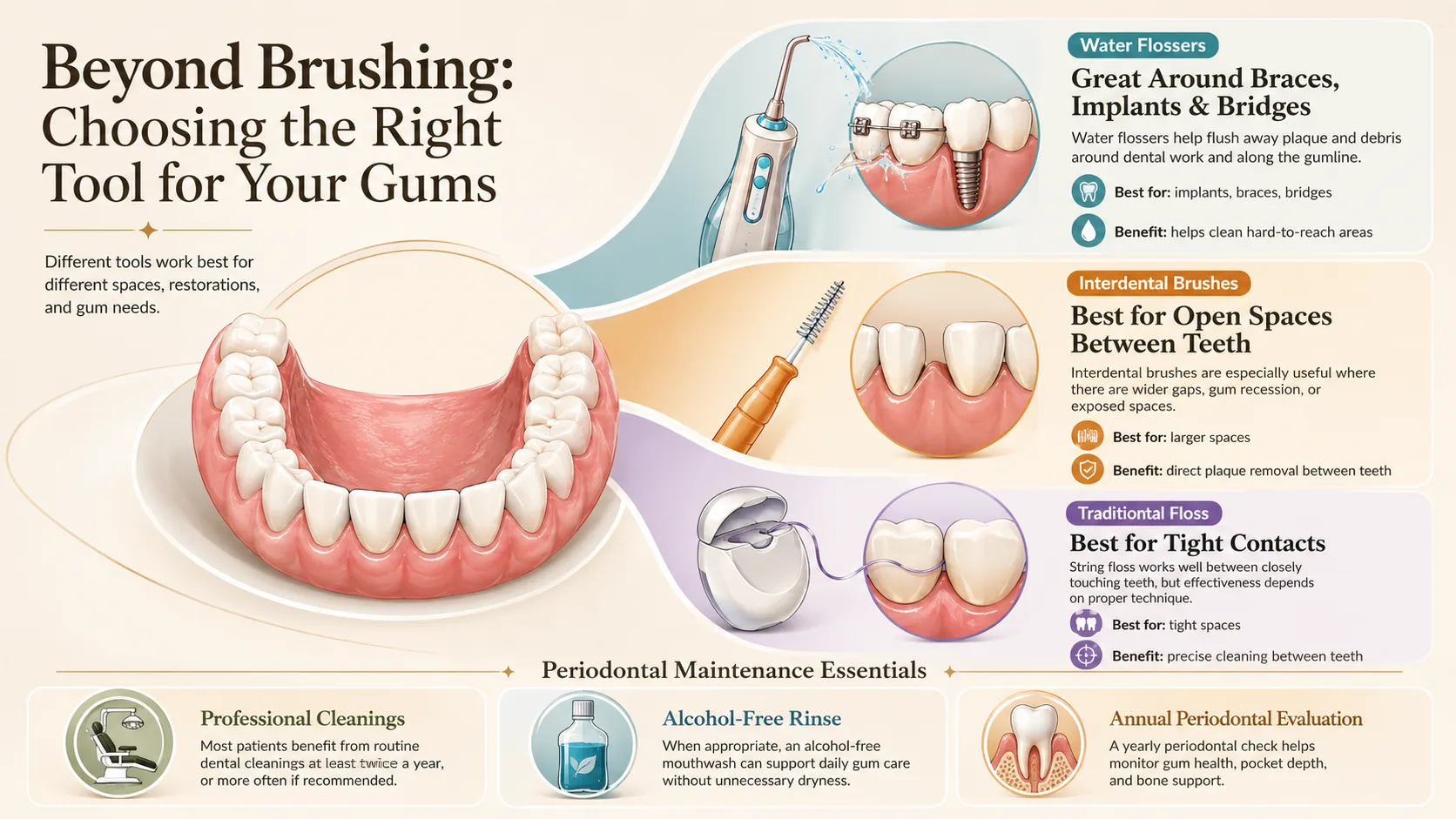
Daily plaque disruption at the gumline is the most modifiable risk factor. Brushing technique, frequency, and flossing or interproximal cleaning all influence disease activity between professional visits.
Questions about gum care



Your smile has a story.
Let's design
what comes next.
Begin with a private consultation designed to help you understand your options clearly and confidently with no pressure and no obligation.