
Why Dental Implants Are Important Early On: Save Your Smile, Bone, and Budget in 2026
If you are searching for dental implants in Plantation, FL, you may be wondering whether now is the right time to move forward.
Maybe the tooth has been missing for a while, and you have learned to chew on the other side. Maybe the cost feels like a hurdle you are not ready to clear. Or maybe the idea of oral surgery makes you pause.
Those concerns are understandable. But what many people do not realize until later is that waiting can create a different kind of cost.
This is not about pressure. It is biology.
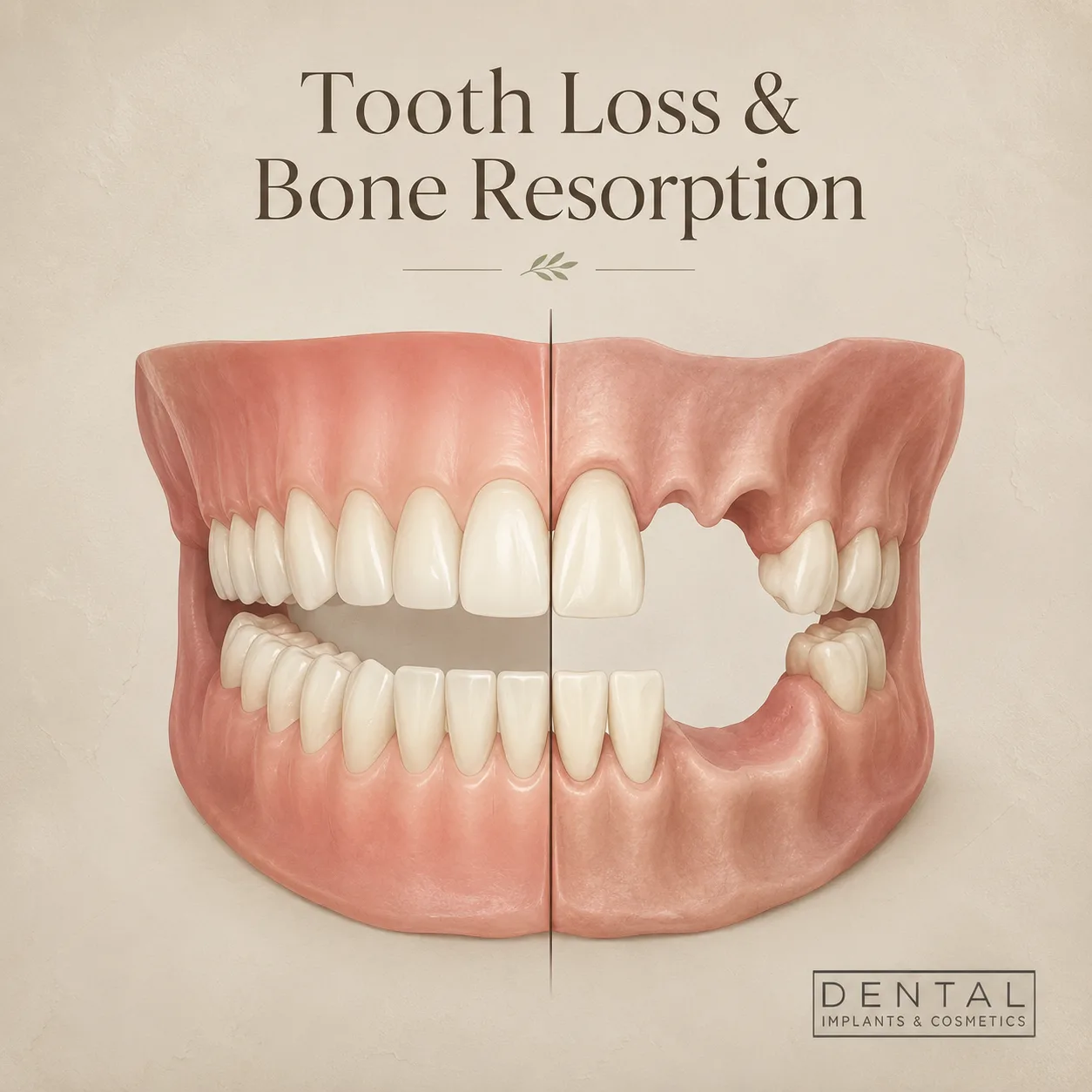
After a tooth is lost, the jaw begins to change. Bone can shrink. Neighboring teeth can shift. The bite can become less stable. Over time, what may have started as a straightforward implant case can become more complex, more expensive, and more difficult to restore.
The window after tooth loss is real. Understanding what happens during that time can change the way you make the decision.
This article explains the science, the financial considerations, and the treatment options available here in Broward County, so you can make a clear decision that protects your health, your appearance, and your long-term investment.
The Hidden Cost of Waiting: What Happens to Your Jawbone
When a tooth is lost, changes begin beneath the gum line long before you can see or feel them.
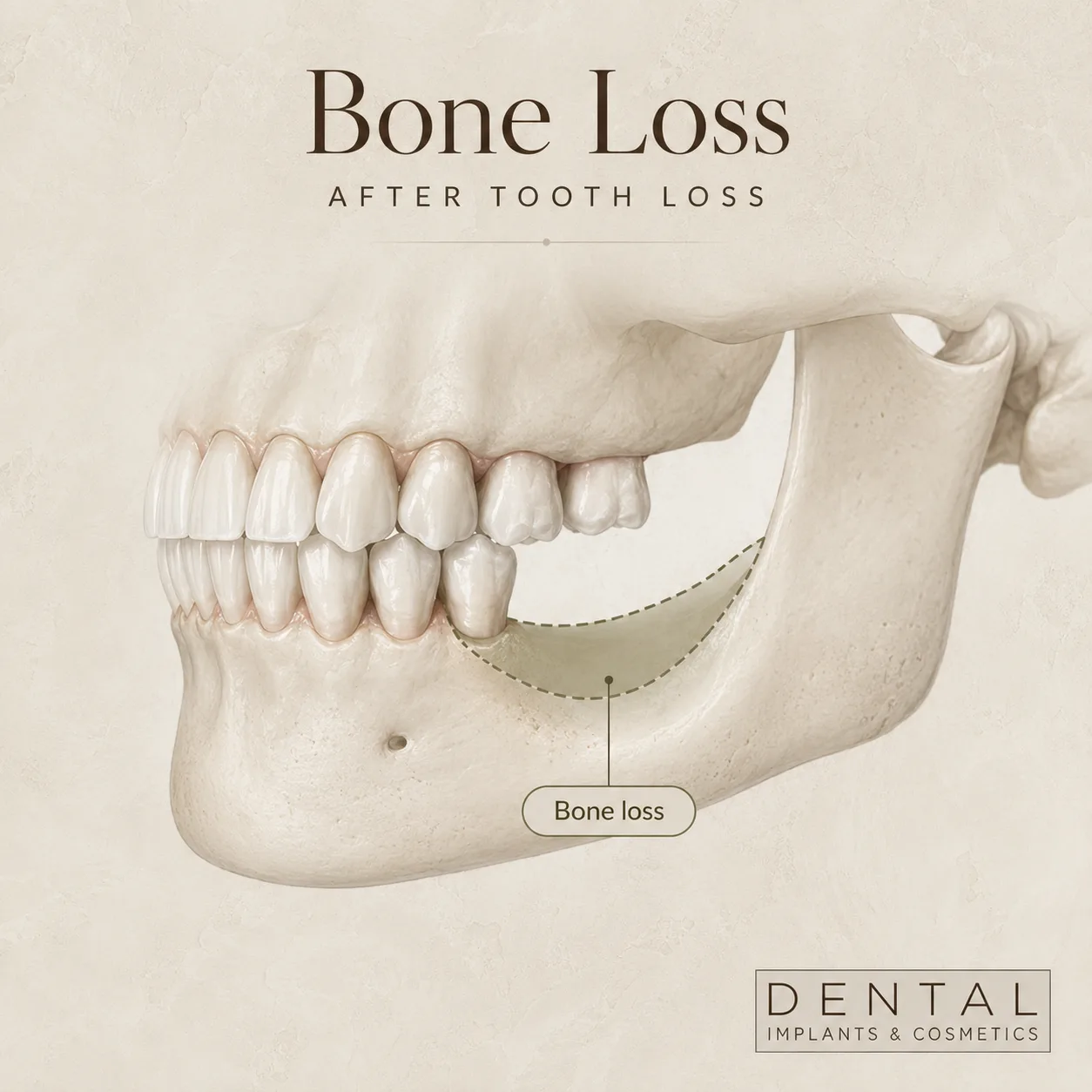
The jawbone that once supported the tooth root begins to shrink. This process is called bone resorption, and it can start soon after tooth loss. Your jawbone relies on stimulation from natural tooth roots to maintain its strength, density, and shape. When that stimulation is gone, the body no longer treats that area of bone as essential. Over time, the bone gradually breaks down and loses volume.
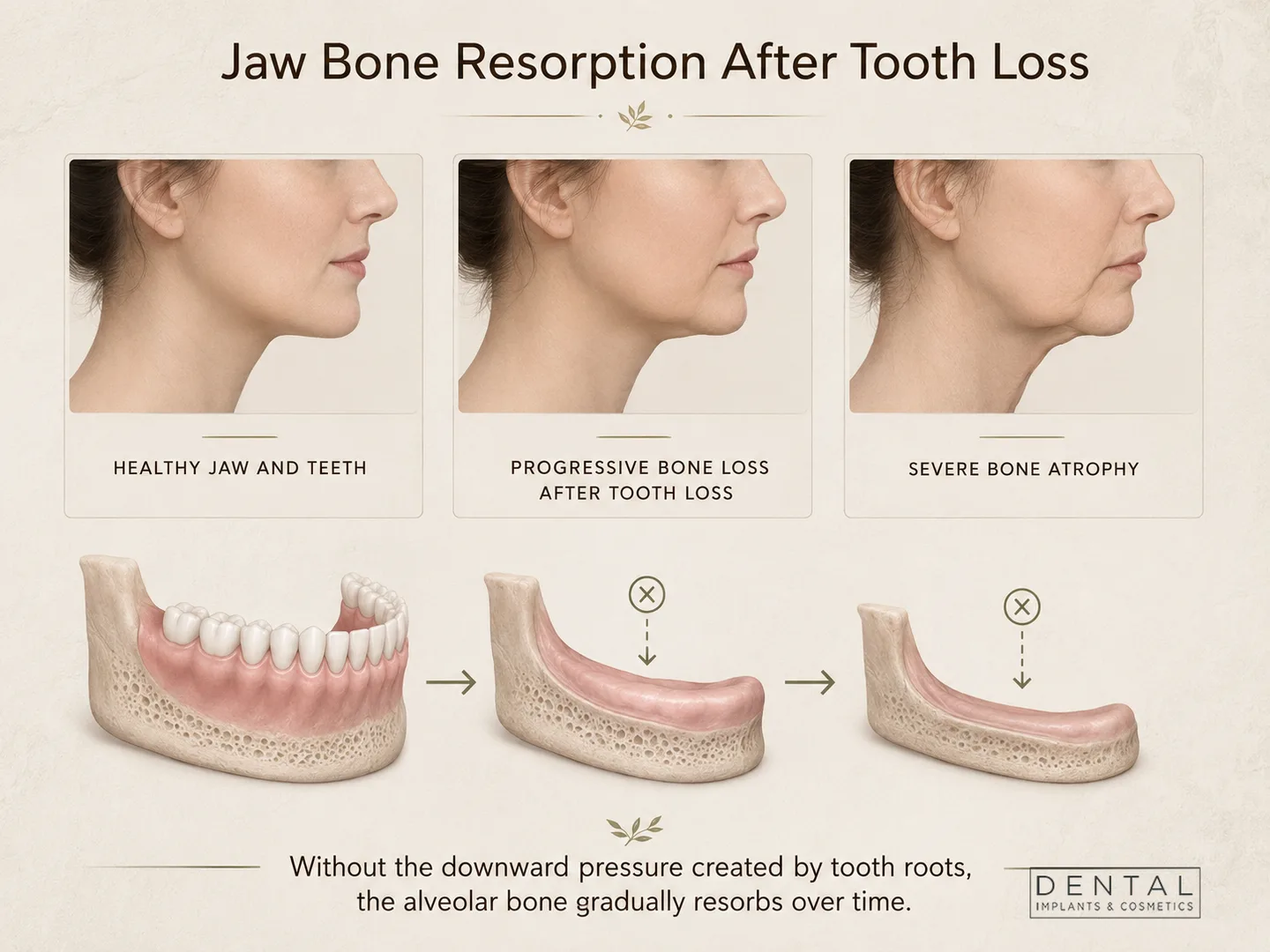
Think of your jawbone like a muscle. When it is no longer being used, it begins to weaken.
After a tooth is lost, the daily pressure from chewing is no longer transferred through the tooth root into the surrounding bone. Without that stimulation, the bone in that area gradually loses strength and volume. Research has shown that meaningful bone loss can occur within the first 12 to 18 months after tooth loss. In the first year alone, the bone in that area may lose up to 25 percent of its width.
The longer the space remains empty, the more bone can be lost. And as the bone changes, future treatment can become more complex.
For patients in Broward County, preserving bone is not only about replacing a missing tooth. It is also about maintaining facial support. Your jawbone helps shape the lower face. When it begins to shrink, the cheeks may appear more hollow, the lips may lose support, and the lower face can begin to look older or less balanced.
Skincare can improve the surface of the skin. It cannot rebuild the foundation beneath it.
Choosing a dental implant earlier can help preserve that foundation. It supports the face, protects the bite, and keeps more treatment options available.
Bone Grafting vs. Immediate Implants: The Financial Reality
The timeline of bone loss is not only a health concern. It can also become a financial one.
The difference between replacing a tooth sooner and waiting too long may add significant cost to your treatment plan. Understanding this distinction is one of the most important parts of researching your options.
How Bone Loss Changes Your Treatment Plan
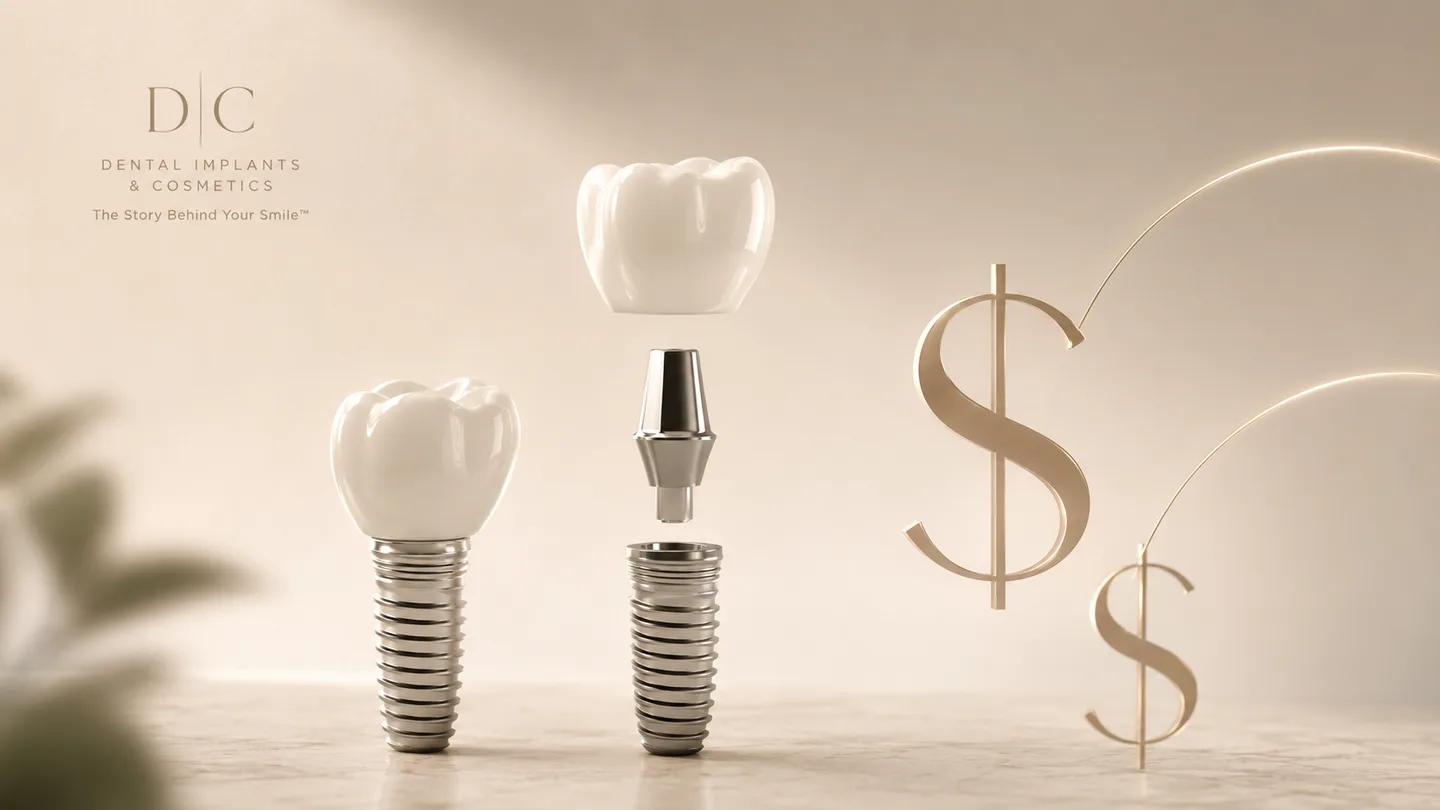
When the jawbone is healthy and dense, placing a single dental implant is often a more straightforward procedure. The implant post can usually be placed directly into the bone, where it heals and integrates over time. Once healing is complete, a custom crown is attached to restore the visible tooth.
In these cases, treatment is generally more predictable, more efficient, and less likely to require additional surgical steps.
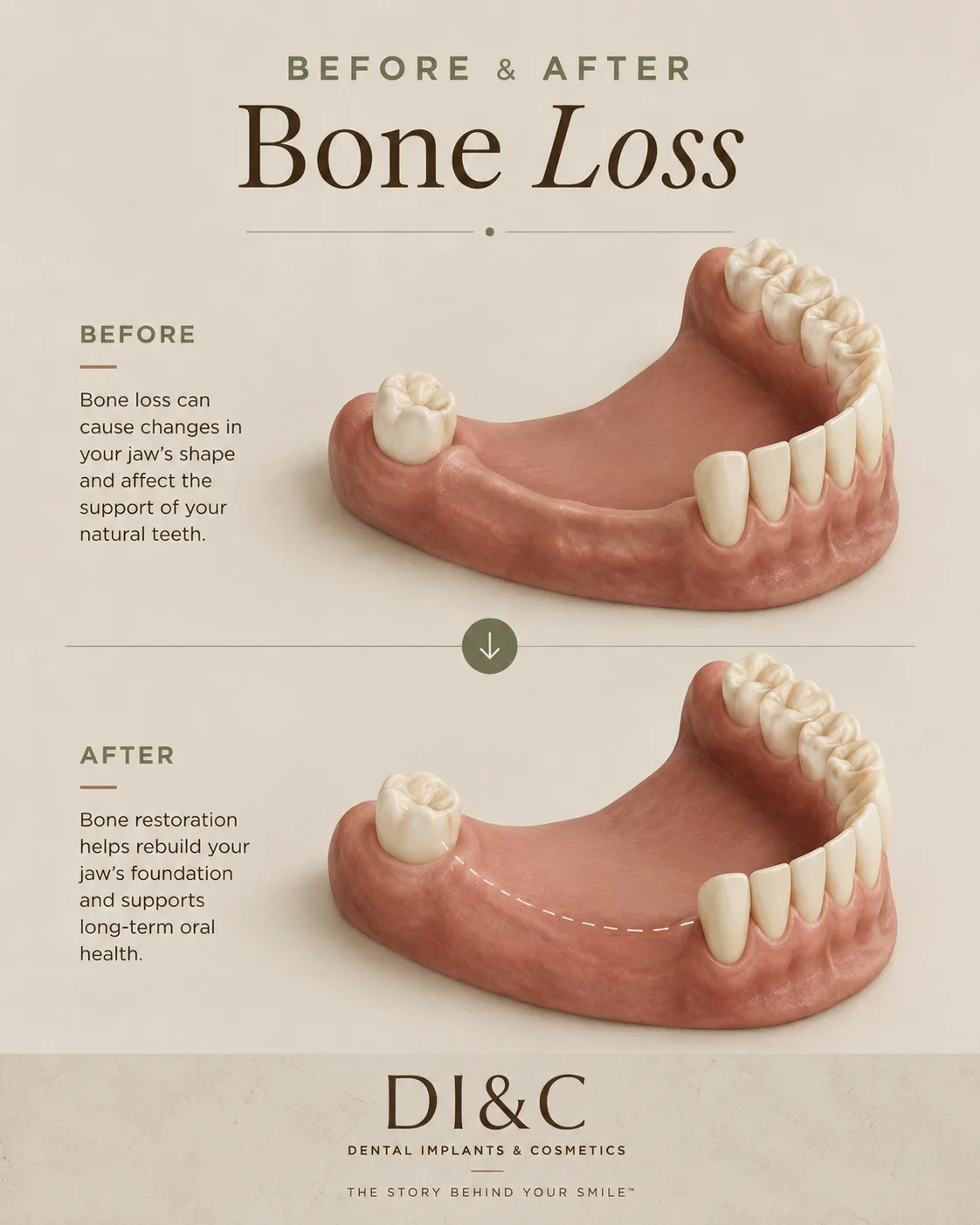
When you wait and bone loss progresses, the treatment picture can change.
A dental implant needs a stable foundation. If the bone has lost too much volume, that foundation may need to be rebuilt before an implant can be placed. This is where bone grafting becomes part of the conversation.
A bone graft helps restore volume and density in the jaw, creating enough structure to support an implant. Depending on the location and severity of the bone loss, some patients may also need a sinus lift. This procedure gently raises the sinus floor to create room for additional bone in the upper jaw.
These are common, well-established procedures. But they do add time, cost, and healing. Waiting can turn a more straightforward single-implant case into a more complex treatment plan with additional surgical steps and months of added recovery.
The Price of Delay: Comparing Costs
The numbers matter.
In Florida, a single dental implant, including the implant post, abutment, and crown, often ranges from $3,500 to $5,500 per tooth when the bone is healthy and treatment can move forward without additional procedures.
If bone grafting is needed, that may add $300 to $1,200 per site. If a sinus lift is required, that may add another $1,500 to $2,500. In some cases, a treatment plan that could have been more direct may climb to $7,000 or more once additional procedures are needed.
The point is not to create fear. It is to show the reality clearly: as bone loss progresses, treatment often becomes more involved.
The same principle applies to full-arch restorations. An immediate All-on-4 procedure, which replaces an entire arch of teeth using four implants, often starts around $22,889 in Florida. This approach may be possible without grafting because the implants are placed at strategic angles to use the strongest available bone.
If treatment is delayed and bone loss becomes more advanced, grafting or a more complex implant plan may be needed. That can push the total cost above $30,000.
At Dental Implants & Cosmetics, the focus is on comprehensive planning from the beginning. By evaluating your bone health early with advanced imaging, the team can better anticipate what is needed, avoid unnecessary surprises, and keep your treatment as efficient and stable as possible.
Full-Arch Solutions: Why All-on-X Is a Time-Sensitive Decision
For patients missing most or all of their teeth, full-arch implant treatment can be life-changing.
These treatments are often called All-on-4, All-on-6, or more broadly, All-on-X. They replace a full arch of teeth with a fixed implant-supported restoration, offering a more stable alternative to removable dentures.
The decision is personal. But it is also time-sensitive in ways many patients do not expect.
The Difference Between All-on-4 and All-on-6
The “X” in All-on-X refers to the number of implants used to support a full arch of teeth.
All-on-4 uses four carefully positioned implants per arch. Two are usually placed toward the front of the jaw, where the bone is naturally denser. Two are placed at an angle toward the back, allowing the implants to make use of available bone and sometimes avoid the need for grafting.
All-on-6 uses six implants for additional support and may be recommended when more stability is desired or when the patient’s bone quality allows.
This is where timing matters.
When you act before significant bone loss develops, you may have more treatment options. You may be a candidate for a more streamlined All-on-4 approach, with fewer surgical steps, less healing time, and a lower overall cost.
If bone loss becomes more advanced, treatment may require grafting, additional implants, or a different surgical strategy. One system is not automatically better than the other. The right approach depends on what your bone can support.
And that support can change over time.
A Life-Changing Procedure in 2 to 4 Hours
A full-arch implant procedure can often be completed in a single day, under IV sedation, in about 2 to 4 hours per arch.
Many patients arrive with failing or missing teeth and leave with a fixed, natural-looking temporary smile. This is the “teeth in a day” experience that has changed what is possible for people who thought dentures were their only option.
Recovery is usually manageable. Patients may need one to two weeks of soft foods, with some swelling and tenderness during the early healing period. Many return to normal daily routines within a few days, depending on the complexity of treatment and their individual healing response.
The result is about more than teeth.
It is being able to enjoy dinner without thinking about what you can chew. It is speaking without worrying about movement. It is smiling in photos, laughing in public, and feeling like yourself again.
Dr. Noemi Tisminesky brings a planning-driven, detail-oriented approach to full-arch treatment. Her focus is on natural aesthetics, long-term function, and creating a smile that feels like it belongs to you.
Beyond Aesthetics: The Health Risks of Missing Teeth
The conversation around dental implants often begins with appearance. That is understandable. Your smile is one of the first things people notice.
But replacing missing teeth is not only cosmetic.
When a tooth is missing, the surrounding teeth may begin to shift. They can drift into the open space, tilt, rotate, or change the way your bite comes together. Over time, this can lead to uneven wear, jaw discomfort, and added stress on the remaining teeth.
The opposing tooth may also begin to move because it no longer has a tooth to bite against. What begins as one missing tooth can gradually affect the balance of the entire mouth.
There is also a nutritional impact. Chewing is the first step of digestion. When chewing becomes difficult, uncomfortable, or limited, people often begin choosing softer foods. Over time, this can make it harder to enjoy fresh vegetables, lean proteins, nuts, and other foods that support overall health.
Then there is the emotional side.
Missing teeth can make people more guarded. They may smile less, avoid photos, speak less confidently, or feel uncomfortable in social and professional settings. This is not vanity. It is quality of life.
Restoring your smile is an investment in health, confidence, and the ability to live without constantly adjusting around missing teeth.
Regular comprehensive dental care, including exams and cleanings, can also help identify shifting patterns early and prevent more damage over time.
Your Candidacy: Can You Still Get Implants with Bone Loss?
One of the most common questions patients ask is whether they can still get dental implants if they already have bone loss.
In many cases, the answer is yes.
Modern implant dentistry has made it possible to treat many patients who may have been told in the past that they did not have enough bone. The key is a careful evaluation and the right technology.
The Role of Modern Technology: 3D Imaging
Cone beam CT scanning has changed how implant candidacy is evaluated.
This technology creates a three-dimensional image of the jaw, allowing Dr. Tisminesky to assess bone height, width, density, and anatomy with precision. The scan shows where bone is strongest, where implants may be placed most securely, and whether grafting may be needed.
Some patients who assume they are not candidates are surprised to learn that implants may still be possible. In many cases, the difference comes down to the quality of the imaging, the planning process, and the clinician’s ability to interpret the anatomy.
With guided surgery techniques, implants can often be placed with a high level of accuracy, even in more complex cases.
When Grafting Is Necessary — and When It Is Not
Bone grafting is sometimes necessary. When it is, it can be a predictable part of the implant process.
Minor grafting may be completed at the same time as implant placement. More significant bone loss may require a separate grafting procedure, followed by several months of healing before the implant can be placed.
The important point is this: bone loss does not automatically disqualify you from dental implants. It means your treatment plan needs to be designed around your anatomy.
In some cases, All-on-4 techniques are specifically designed to work around areas of bone loss by placing angled implants into stronger bone. In more advanced cases, other options may be considered.
The only way to know what is possible is through a professional evaluation.
At Dental Implants & Cosmetics, each plan is built around the patient’s bone structure, health history, goals, and long-term stability. There is no one-size-fits-all answer. That is exactly how implant treatment should be planned.
Financing Your Smile: Making the Investment Manageable in 2026
Cost is one of the main reasons patients delay treatment. It deserves a clear and honest conversation.
Dental implants are a significant investment. For many patients, they are also the last major investment they need to make in that area of the mouth.
Understanding Insurance and Payment Options
Dental insurance may provide some benefit for implant treatment, but coverage varies by plan.
Many plans provide an annual benefit of around $1,000 to $1,500, and that benefit may apply more toward the crown portion than the surgical placement itself. Insurance can help, but it usually does not cover the full cost of treatment.
The remaining balance may be managed through third-party financing options such as Cherry or CareCredit, which allow patients to spread treatment costs into monthly payments. Some practices, including Dental Implants & Cosmetics, may also offer payment options or membership plans for patients without insurance.
A transparent financial conversation should be part of every consultation. Before treatment begins, you should understand the cost, the timeline, and the options available to you.
The Long-Term Value: 15 to 25+ Years
When comparing dental implants with other tooth replacement options, the long-term value is important.
A well-maintained dental implant can last 25 years or more. Over time, that can make implants a strong investment compared with bridges or dentures that may need to be replaced more frequently.
Traditional bridges and dentures often require replacement every 5 to 10 years. They may also come with ongoing costs for adjustments, repairs, adhesives, special cleaners, or future dental work.
Implants are different because they do more than replace the visible tooth. They help preserve bone, support the bite, and protect the surrounding teeth from unnecessary strain.
This is not simply a dental purchase. It is a long-term investment in function, appearance, and confidence.
Your Next Step: A Consultation That Gives You Clarity
The best time to consider a dental implant is soon after the tooth is lost. The second-best time is now.
Every month that passes gives the jawbone more time to change. Acting earlier can help preserve your options, protect your facial support, and reduce the chance of needing more complex treatment later.
A consultation at Dental Implants & Cosmetics is a conversation, not a commitment.
It includes a 3D scan to evaluate your bone health, a discussion of your goals and concerns, a clear explanation of your treatment options, and a detailed cost estimate. No pressure. No surprises. Just the information you need to make a confident decision.
Whether you are in Plantation, Davie, Weston, Fort Lauderdale, or anywhere in Broward County, your implant journey begins with understanding what is possible.
You deserve to eat, speak, smile, and live without working around missing teeth.
FAQ
How much does a full set of teeth implants cost in Florida?
A full-arch All-on-4 procedure in Florida typically starts around $22,889 and may range up to $31,258 per arch. Costs vary based on bone health, materials, surgical complexity, and whether additional procedures are needed.
Can I still get dental implants with bone loss?
In many cases, yes. Modern techniques, including All-on-4 and guided implant planning, may make implants possible even when bone volume has decreased. A 3D scan is needed to determine whether you need bone grafting or whether immediate placement may be possible.
How much is a bone graft for dental implants?
Bone grafting in Florida may range from $300 to $1,200 per site. The cost depends on the amount of bone needed, the location of the graft, and the type of graft material used.
How much is a full set of All-on-4 dental implants?
A full set of All-on-4 dental implants for one arch in Florida may range from approximately $22,889 to $31,258. This typically includes the surgical placement of four implants and a fixed implant-supported restoration, though final cost depends on the patient’s anatomy and treatment plan.
Your smile has a story.
Let's design
what comes next.
Begin with a private consultation designed to help you understand your options clearly and confidently with no pressure and no obligation.