
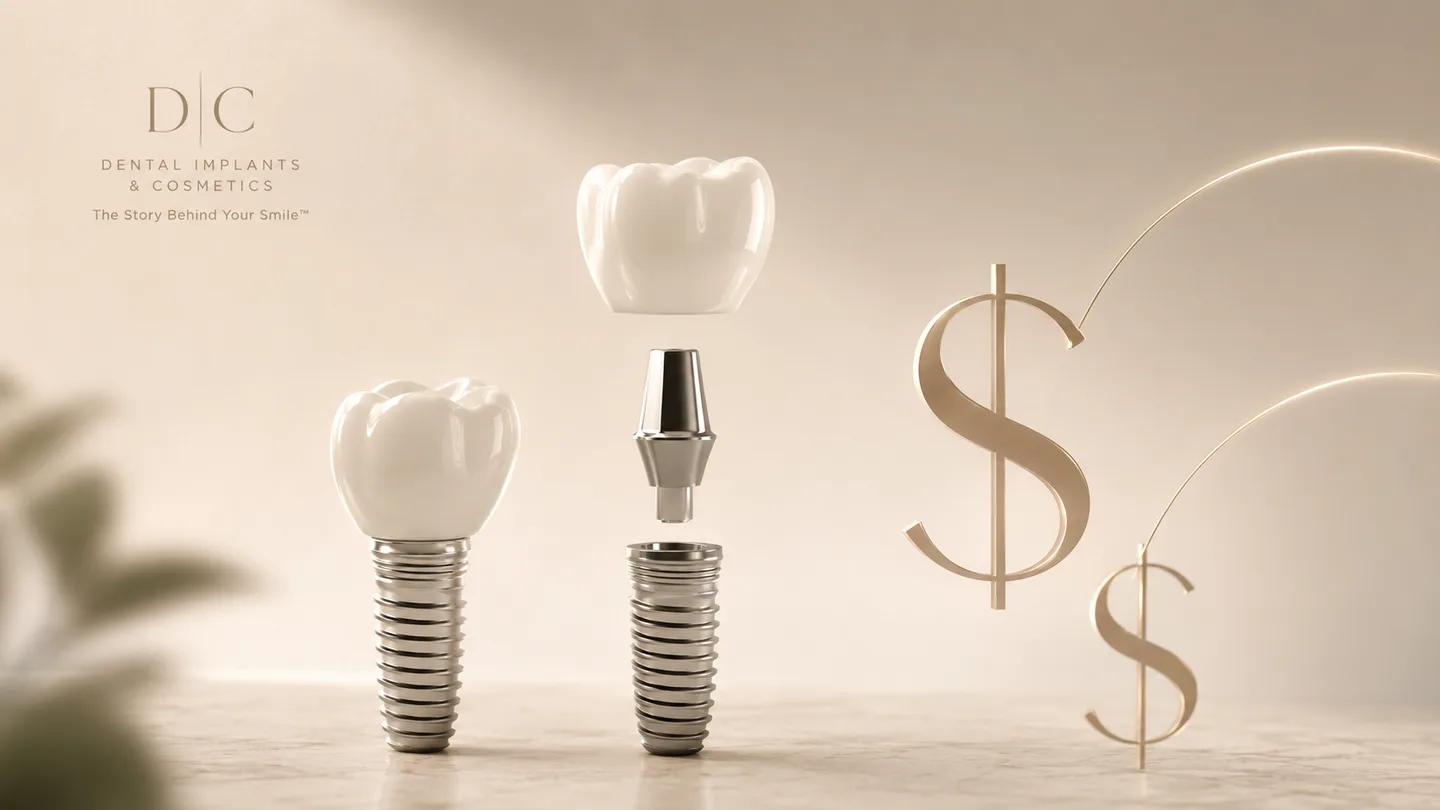
Dental Implant Cost in Plantation, FL: What Actually Affects the Price?
That confusion is not necessarily a sign of hidden fees or unclear intentions. It reflects how individualized implant treatment can be. Your bone structure, oral health, treatment goals, and the type of restoration you need are all specific to you, and the cost changes accordingly.
As a Plantation dentist serving patients throughout Broward County, Dr. Noemi Tisminesky and the team at Dental Implants & Cosmetics believe pricing should be explained clearly, without pressure. This article breaks down what influences the cost of dental implants, what may be included at each stage, and how to evaluate the long-term value of restoring your smile.
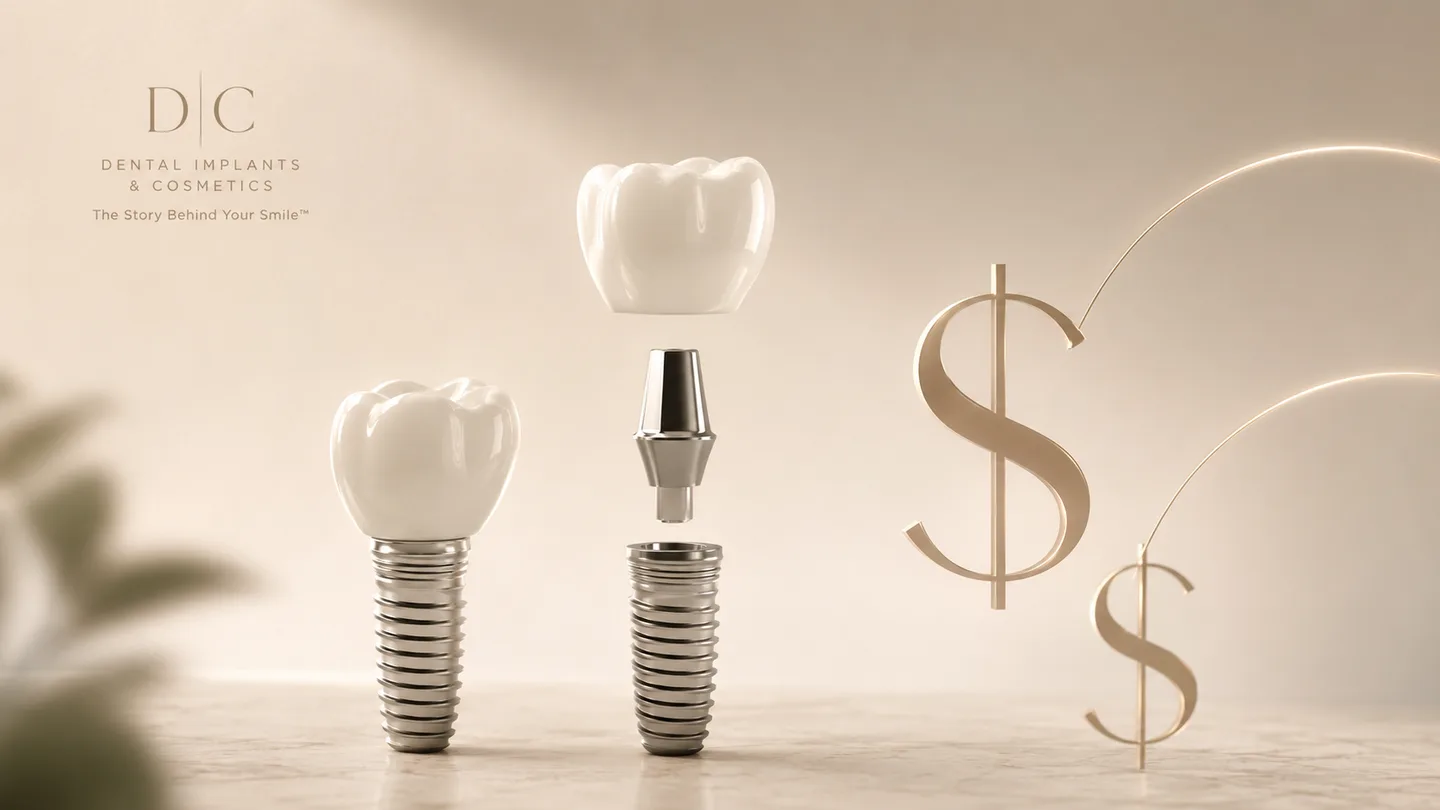
Why Dental Implant Costs Vary So Much—and What You Are Really Paying For
The price of a dental implant is not simply the cost of a titanium post. Treatment may include the initial consultation, advanced 3D imaging, surgical placement of the implant, the abutment that connects the implant to the restoration, and the custom crown that completes the tooth above the gumline.
When comparing quotes, you may not be comparing the same treatment. Some estimates include every stage, while others cover only the implant placement and leave the remaining components to be priced separately.
In This Article
- Why Dental Implant Costs Vary So Much—and What You Are Really Paying For
- Why Dental Implant Costs Vary So Much—and What You Are Really Paying For
- Breaking Down the Cost: Single Implant vs. Full-Arch Treatment
- What a Single Dental Implant Really Costs
- Full-Arch and All-on-X Treatment: A Different Level of Investment
- The Additional Costs That Can Catch Patients Off Guard
- Insurance, Financing, and Planning the Investment
- Is a Dental Implant Worth the Investment?
- Your Next Step: Understanding What Your Smile Requires
That confusion is not necessarily a sign of hidden fees or unclear intentions. It reflects how individualized implant treatment can be. Your bone structure, oral health, treatment goals, and the type of restoration you need are all specific to you, and the cost changes accordingly.
As a Plantation dentist serving patients throughout Broward County, Dr. Noemi Tisminesky and the team at Dental Implants & Cosmetics believe pricing should be explained clearly, without pressure. This article breaks down what influences the cost of dental implants, what may be included at each stage, and how to evaluate the long-term value of restoring your smile.
Why Dental Implant Costs Vary So Much—and What You Are Really Paying For
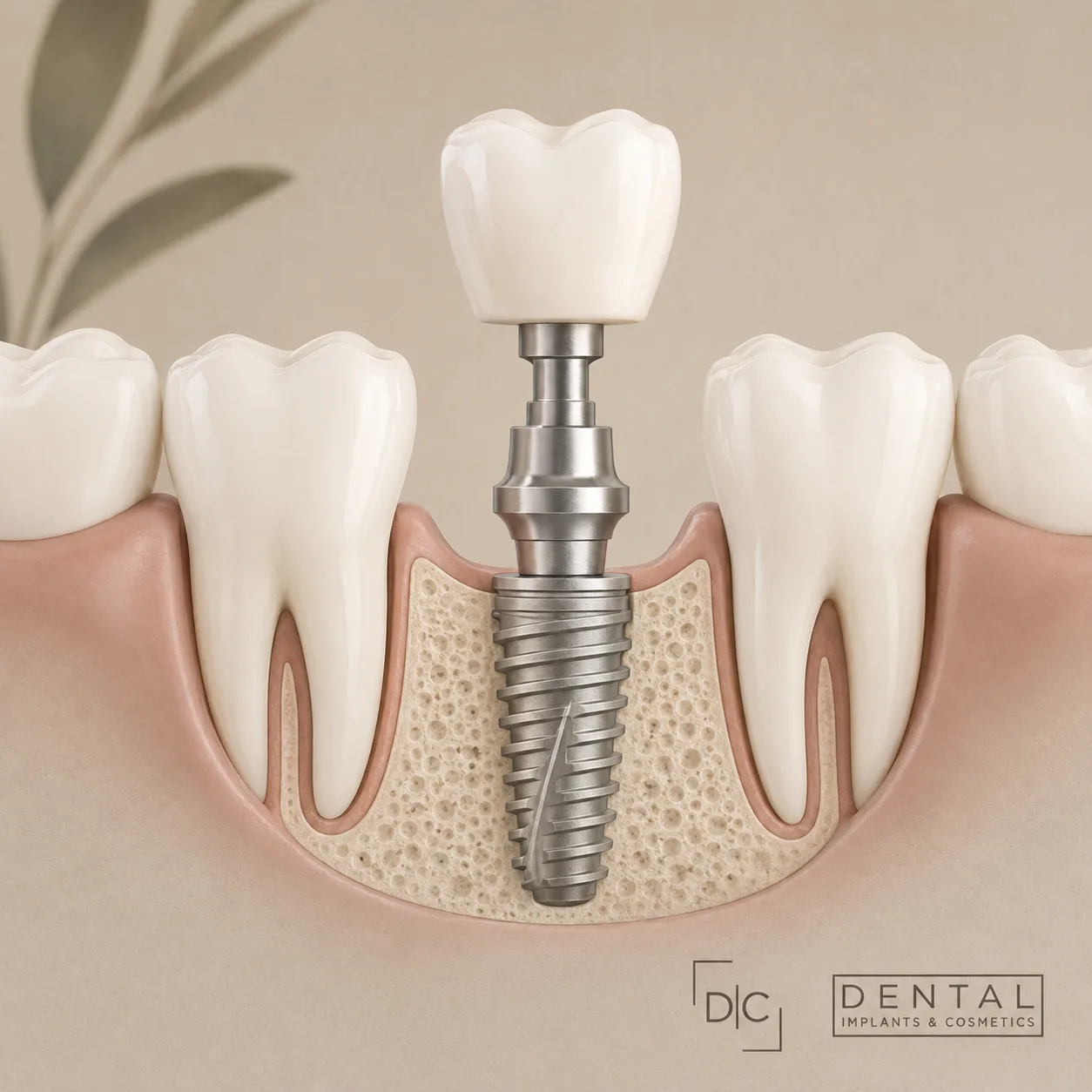
The price of a dental implant is not simply the cost of a titanium post. Treatment may include the initial consultation, advanced 3D imaging, surgical placement of the implant, the abutment that connects the implant to the restoration, and the custom crown that completes the tooth above the gumline.
When comparing quotes, you may not be comparing the same treatment. Some estimates include every stage, while others cover only the implant placement and leave the remaining components to be priced separately.
Your anatomy is one of the biggest factors shaping the final cost. When the jawbone is healthy and dense, implant placement may be relatively straightforward. When bone has been lost following an extraction—which is common—a bone graft may be needed to rebuild the foundation before the implant can be placed. The position of the sinus cavity, the condition of the gums, and the number of teeth being replaced can also add or remove steps from the treatment plan. Each additional procedure affects the total investment.
Materials also influence the price. Titanium implants are the most widely used and are supported by decades of clinical research. Zirconia implants provide a metal-free alternative that some patients prefer. Abutments may be standard or custom-designed to follow the shape of the surrounding gums, while the crown is typically made from porcelain and carefully matched to the color, proportion, and contour of the natural teeth.
The technology and clinical planning behind the treatment matter as well. A provider using digital implant planning, in-house 3D cone beam imaging, and guided surgery is investing in a more precise approach that can influence comfort, efficiency, and long-term outcomes. Pricing can also vary across Broward County, where operating costs differ between areas such as Plantation, Weston, and Fort Lauderdale.
Breaking Down the Cost: Single Implant vs. Full-Arch Treatment
What a Single Dental Implant Really Costs
In the Fort Lauderdale and Weston area, the cost of a single dental implant commonly ranges from $2,100 to $6,000. The range is broad because no two treatment plans are exactly alike. At the lower end, the case may involve straightforward implant placement with strong bone support and no additional procedures. At the higher end, the treatment may include an extraction, bone graft, sinus lift, or other preparatory work.
It helps to understand the individual components. The implant post is the titanium or zirconia fixture placed in the jawbone to replace the tooth root. The abutment is the connector between the implant and the final crown. A custom abutment designed around the patient’s gum contours may add approximately $200 to $400.
The crown is the visible part of the restoration. It is typically made from porcelain and may cost between $1,000 and $2,000, depending on the material, laboratory, and level of customization. Surgical placement and follow-up visits are often included in the quoted fee, but patients should always confirm exactly what the estimate covers.
If the jawbone has thinned or lost volume since the tooth was removed, bone grafting may be needed to create a stable foundation for the implant. Depending on the size and complexity of the graft, this can add approximately $300 to $1,000 per site. A sinus lift, which raises the sinus floor to create sufficient space for an implant in the upper back jaw, may add another $1,500 to $2,500.
These procedures are not cosmetic upgrades. When recommended, they address the biological conditions required for predictable implant placement. Avoiding necessary grafting simply to lower the initial cost can compromise stability and increase the risk of complications later.
Full-Arch and All-on-X Treatment: A Different Level of Investment
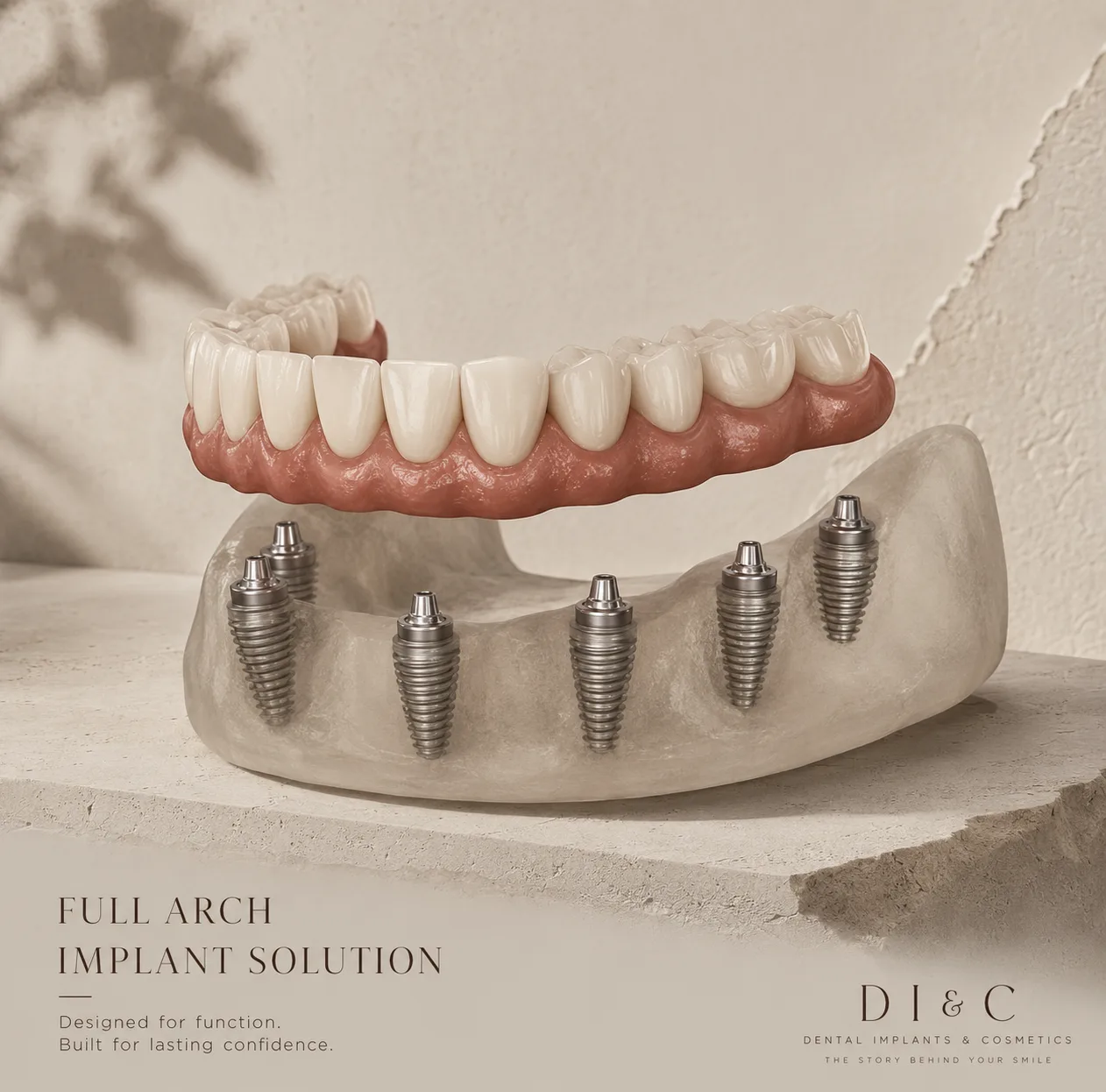
When most or all of the teeth in an upper or lower arch need to be replaced, the discussion moves beyond single implants and into full-arch treatment. You may hear terms such as All-on-4, All-on-6, or All-on-X. These approaches use four to six strategically positioned implants to support a complete fixed bridge within one arch.
Rather than replacing every tooth with an individual implant, full-arch treatment rebuilds the smile as one coordinated system. The implant position, bite, facial support, tooth proportions, and final restoration must all work together.
In Broward County, full-arch treatment may range from approximately $15,000 to $25,000 per arch. More complex cases involving extensive bone reconstruction, additional surgery, or highly customized restorations can cost significantly more, sometimes approaching $49,000.
A full-arch fee may include implant placement, a fixed temporary bridge worn during healing, the final custom restoration, follow-up visits, and adjustments. However, the exact inclusions vary by practice. Patients should ask for a written breakdown before comparing one estimate with another.
Some practices with integrated digital workflows or in-house laboratory capabilities may be able to reduce outside laboratory costs and improve coordination. Promotional savings or price guarantees should still be reviewed carefully to determine what materials, procedures, and follow-up care are included.
For patients restoring both the upper and lower arches, the total investment is substantial. It should be compared with the cost and practicality of placing individual implants for every missing tooth, which is often more expensive and may not be appropriate because of bone limitations. Full-arch treatment is not simply a lower-cost substitute. It is a carefully planned solution designed to use the available bone efficiently while restoring the function and appearance of a complete smile.
The Additional Costs That Can Catch Patients Off Guard
One of the most common surprises during implant planning is the need for a bone graft or sinus lift. Many patients do not realize that bone loss has occurred until they see their 3D scan. A visual examination alone cannot always reveal the width, height, or density of the underlying bone. This is why diagnostic imaging is essential and why an implant estimate given without appropriate imaging should be treated as preliminary.
Diagnostic records, including CBCT imaging and panoramic X-rays, may be included in the treatment fee or billed separately. Ask before treatment begins.
The same applies to temporary teeth. Depending on the case, you may need a temporary crown, bridge, or full-arch restoration while the implant integrates with the bone. Some practices include the temporary restoration in the quoted fee, while others list it separately.
Sedation and anesthesia may also affect the total. Local anesthesia is commonly included, but oral sedation, IV s" "edation, or services provided by an anesthesia professional may carry separate fees.
Follow-up care should also be addressed. Ask whether postoperative visits, adjustments, repairs, and maintenance are included. Some providers offer limited warranties for the implant or restoration, while others charge separately for care after the initial treatment period. The terms should be explained in writing.

Insurance, Financing, and Planning the Investment
Dental insurance may contribute toward implant treatment, but it rarely covers the full cost. Many plans have annual benefit limits, and coverage can vary by procedure. One policy may contribute toward the extraction or crown while excluding the implant itself. Another may classify portions of the treatment differently.
Before relying on insurance, request a written benefit estimate and review the annual maximum, waiting periods, exclusions, missing-tooth clauses, and frequency limitations. Flexible spending account and health savings account funds may also be eligible for qualifying implant-related expenses.
For the remaining balance, third-party financing or structured payment arrangements can divide the cost into monthly payments. Financing terms, interest rates, promotional periods, and credit requirements vary, so the monthly payment should never be considered without also reviewing the total repayment amount.
Dental Implants & Cosmetics offers consultations designed to give patients a clearer understanding of the treatment plan, anticipated costs, and available payment options before they make a decision. The objective is straightforward: you should know what is included, what may be billed separately, and what your financial responsibility is expected to be before treatment begins.
Is a Dental Implant Worth the Investment?
A dental implant is not a short-term purchase. It is a treatment intended to serve you for many years. With proper care and favorable clinical conditions, implants can remain functional for decades, although the crown or bridge attached to them may eventually require maintenance or replacement.
Traditional bridges and removable dentures may have a lower initial cost, but they often require replacement, adjustment, relining, or repair over time. The better comparison is not simply the cost today. It is the total cost, maintenance, function, and impact on surrounding teeth over the life of the restoration.
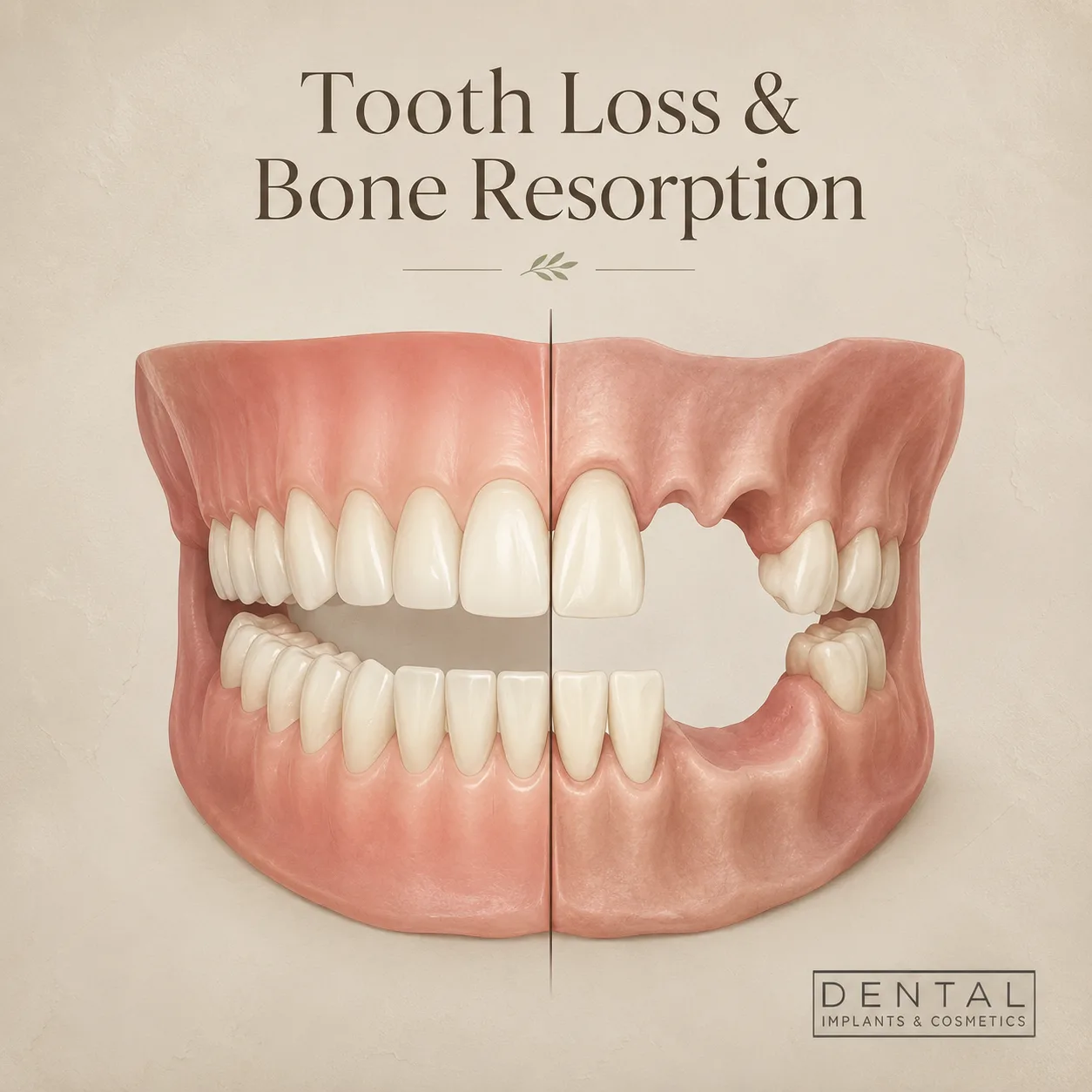
Bone preservation is another important consideration. After a tooth is lost, the surrounding jawbone gradually changes because it no longer receives the same stimulation from the tooth root. An implant transfers functional forces into the bone and can help preserve bone volume in that area.
The value also extends beyond clinical measurements. It may mean eating without constantly favoring one side, speaking with greater ease, laughing without covering your mouth, or feeling comfortable in photographs and conversations. These changes are difficult to assign a number to, but they shape daily life.
When longevity, stability, function, and appearance are considered together, dental implants can represent a strong long-term value for the right patient.
Your Next Step: Understanding What Your Smile Requires
The only reliable way to determine your dental implant cost is through a personalized evaluation. Online estimates can provide a general range, but they cannot assess your bone volume, gum health, bite, medical history, or restorative goals.
A thorough consultation, supported by appropriate imaging, helps establish what is possible and what will be required to achieve it.
When comparing providers, ask direct questions:
Does the estimate include the implant, abutment, and final crown or bridge?
Is bone grafting included?
Are temporary teeth part of the fee?
Are imaging, sedation, follow-up visits, and adjustments included?
What materials will be used?
Who will perform each stage of treatment?
Is there a written warranty or maintenance policy?
Pay attention not only to the answers, but also to how clearly the treatment is explained. Implant care should account for your oral health, facial proportions, bite, daily function, and personal goals. A strong plan is not built around the lowest advertised number. It is built around what your case actually requires.
At Dental Implants & Cosmetics in Plantation, Dr. Noemi Tisminesky and her team approach implant treatment through detailed digital planning, advanced imaging, and an understanding of how dental restoration affects the face as a whole. The purpose of the consultation is not to pressure you into treatment. It is to give you a clear picture of your options, the expected investment, and the path toward a smile that feels stable, natural, and distinctly your own.
Your smile has a story.
Let's design
what comes next.
Begin with a private consultation designed to help you understand your options clearly and confidently with no pressure and no obligation.