
Tooth Extractions
with Comfort and a Clear Next Step
Extraction is always a last resort. When a tooth cannot be predictably saved, we provide careful removal, thorough aftercare guidance, and a replacement plan from the start.
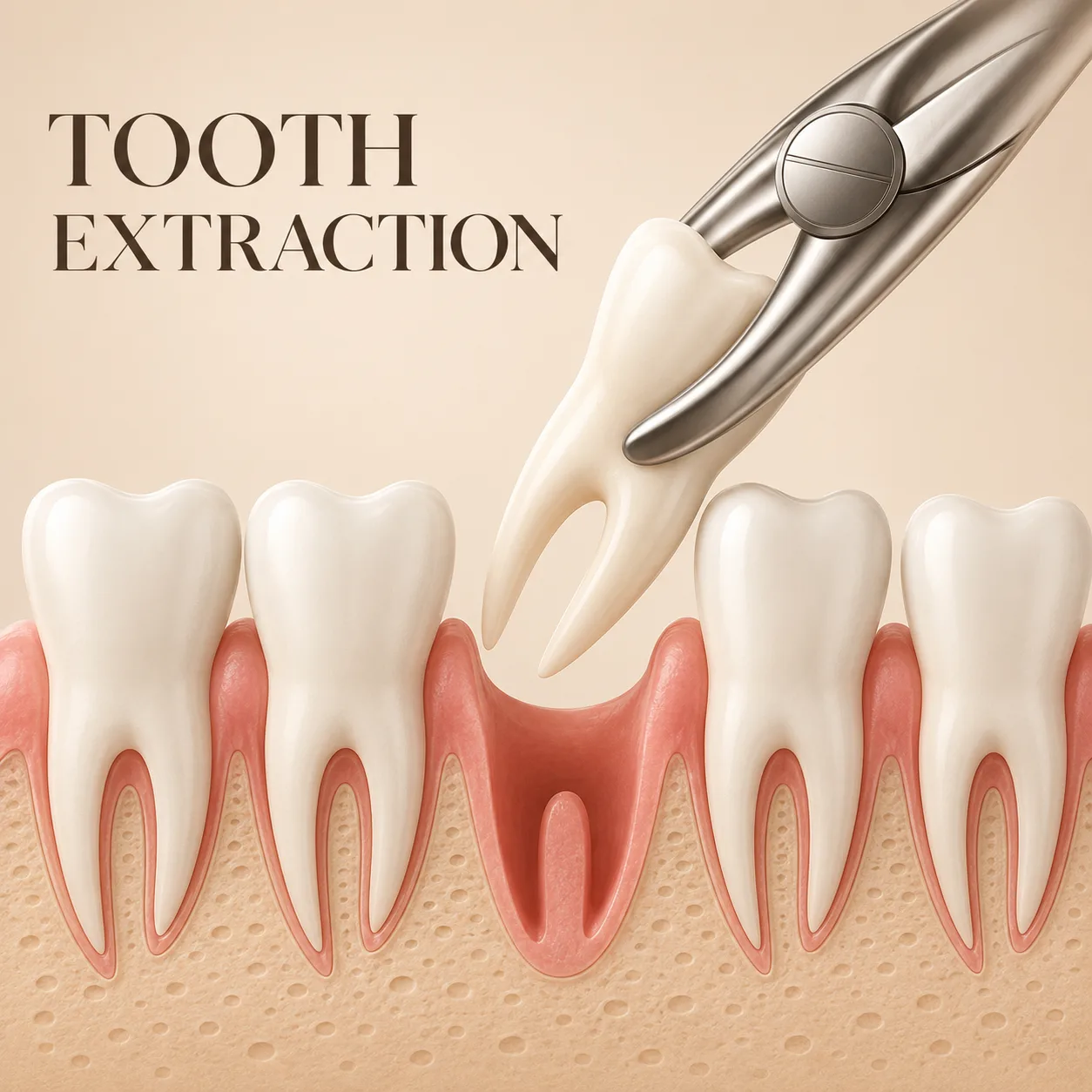
When removing a tooth
is the healthiest choice
We evaluate every tooth with saving it as the goal. When a tooth can be restored predictably, we restore it. When it cannot, keeping it in place can cause more harm than removing it. The threshold for that decision is always based on clinical evidence, not convenience. When clinically appropriate, root canal treatment may be considered as an alternative to extraction.
Common reasons extraction becomes the right recommendation:
Severe decay beyond repair
When decay has destroyed so much tooth structure that no predictable restoration is possible, extraction removes the source of pain and infection. We confirm this with X-rays and clinical evaluation before recommending removal.
Advanced gum disease with bone loss
Periodontitis that has caused significant bone loss around a tooth can leave it without adequate support. In cases where the prognosis is poor, extraction and replacement planning is the more responsible path.
Fracture extending to the root
A crack that extends below the gumline or through the root typically cannot be restored. Extraction followed by a replacement plan protects the surrounding tissue and bone.
Failed or non-restorable root canal
In rare cases, a tooth with prior root canal treatment develops a persistent infection or fracture that cannot be retreated. Extraction ends the problem definitively.
Impacted wisdom teeth
Third molars that are impacted, causing pain, adjacent tooth damage, or recurrent infection may need to be removed. We evaluate the position and clinical situation before recommending surgery.
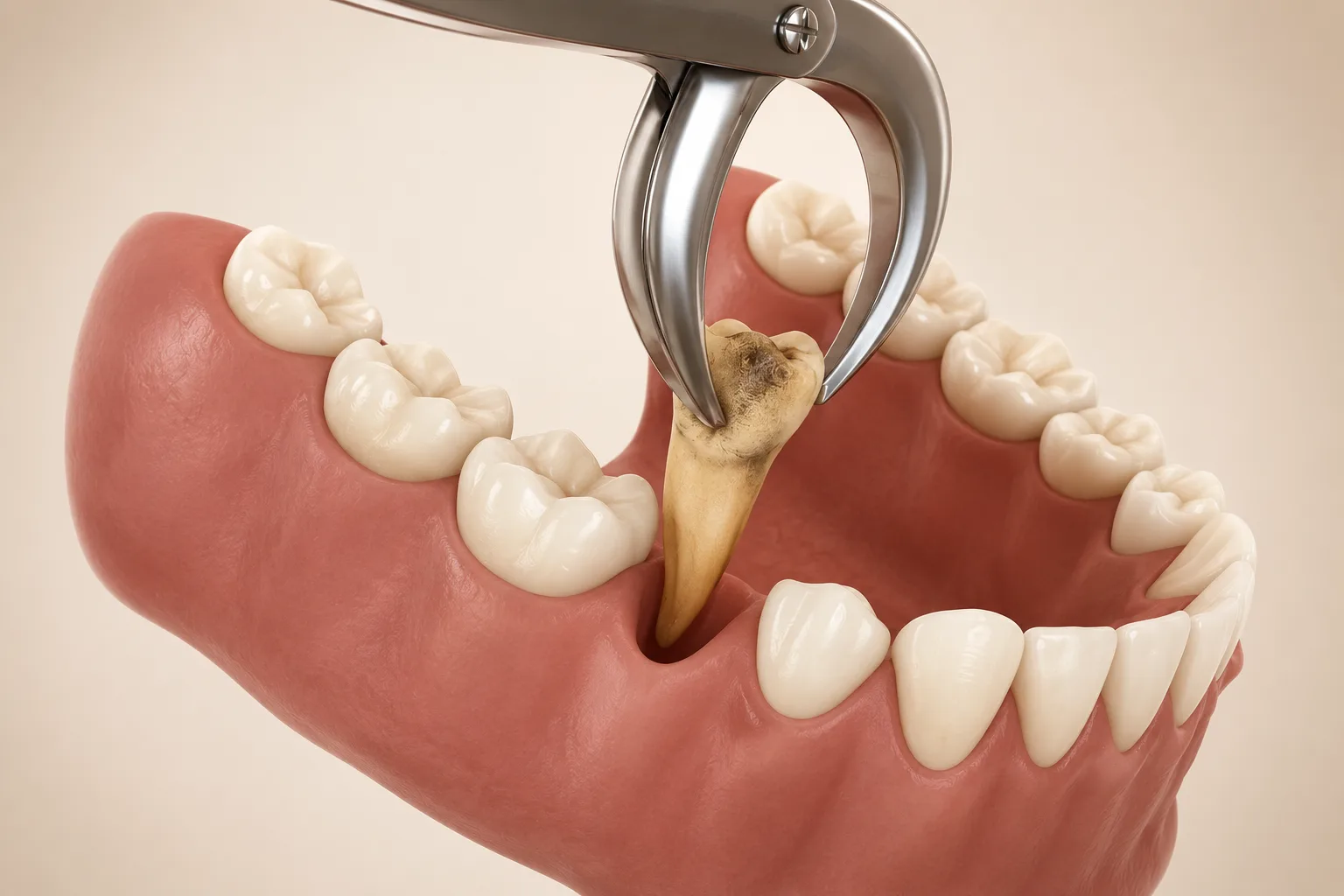
Simple and surgical
extractions explained
Simple extraction
A tooth that is fully erupted and visible above the gumline is typically removed with a simple extraction. After local anesthetic is administered, the tooth is loosened with an elevator and removed with forceps. The socket is cleaned and dressed. Most patients are comfortable within a day or two.
Surgical extraction
Teeth that are impacted, fractured below the gumline, or have root anatomy that complicates removal require a surgical approach. A small incision is made, and the tooth may be sectioned before removal. Recovery involves more swelling and typically three to seven days before full comfort is restored.
Sedation options
For patients with anxiety or for more complex surgical cases, we can discuss sedation options to make the experience significantly more comfortable. Ask about availability at your evaluation appointment.
Healing and aftercare
for a smooth recovery
The first 48 to 72 hours after an extraction are the most important for recovery. What you do and avoid during this window has a significant impact on how quickly and comfortably you heal.
What to do
Bite gently on gauze for the first 30 to 60 minutes to support clot formation
Apply ice to the outside of the face for the first 24 hours to manage swelling
Sleep with your head slightly elevated for the first night
Eat soft foods and stay hydrated with cool liquids for the first few days
Take prescribed or recommended pain medication before the anesthetic wears off
Rinse gently with warm salt water starting 24 hours after the procedure
What to avoid
Do not use a straw for at least 72 hours, suction pressure can dislodge the blood clot
Do not smoke or use tobacco, which dramatically slows healing and increases dry socket risk
Do not probe or disturb the socket with your tongue or fingers
Do not rinse vigorously for the first 24 hours
Do not eat hard, crunchy, or spicy foods until healing is well underway
Do not skip the follow up appointment if one is scheduled
Replacing the missing tooth
with a plan that fits
Every extracted tooth except wisdom teeth leaves a gap that should be addressed. We discuss your replacement options at your evaluation so the extraction and restoration plan work together from the start.
Dental implant
A titanium post placed into the jawbone that functions as an artificial root. It preserves bone, does not affect neighboring teeth, and supports a crown that looks and functions like a natural tooth. The most durable long term option for most patients. If an implant is appropriate for your case, next steps may include bone grafting when needed and planning for single-tooth implant replacement.
Implant supported bridge
When multiple adjacent teeth are missing, implants can support a bridge without requiring crowns on healthy neighboring teeth. Bone is preserved at the implant sites.
Traditional bridge
An artificial tooth anchored between two crowns placed on the neighboring teeth. Faster than implants and appropriate when an implant is not the right choice, though it requires reshaping healthy neighboring teeth.
Partial denture
A removable appliance that replaces one or more missing teeth. Less expensive upfront than implants or bridges, though it does not prevent bone loss and requires daily removal for cleaning.
Questions about tooth extractions



Your smile has a story.
Let's design
what comes next.
Begin with a private consultation designed to help you understand your options clearly and confidently with no pressure and no obligation.